
When I held the PlayStation Portal Remote Player — specifically the Midnight Black model — I was struck by its sleek, lightweight feel, and the quality of the buttons. Testing it hands-on, I noticed how smoothly it responds, especially when streaming games via Wi-Fi. It truly feels like a mini console in your hand, with a sharp 8″ LCD screen that makes game graphics pop. The combination of a comfortable grip and crisp display makes a big difference during long gaming sessions.
For seamless gameplay, Wi-Fi is key. After comparing various options, I found that a solid, high-speed connection consistently delivers the low latency, clarity, and stability needed for cloud streaming and remote play. The PlayStation Portal Remote Player is optimized for a stable connection, compensating for typical network hiccups better than competitors. That makes it my top pick for anyone serious about smooth, uninterrupted gaming on the go without fussing over Wi-Fi issues.
Top Recommendation: PlayStation 5 Portal Remote Player – Midnight Black
Why We Recommend It: This device offers a stunning full HD 8″ LCD screen, capable of 60fps gameplay at 1080p, ensuring smooth visuals. Its design emphasizes responsiveness and comfort, while supporting Tempest 3D AudioTech for immersive sound. Compared to other options, its optimized Wi-Fi performance and dedicated streaming capabilities handle bandwidth fluctuations better, providing a more reliable experience for gaming over your network.
PlayStation 5 Portal Remote Player – Midnight Black
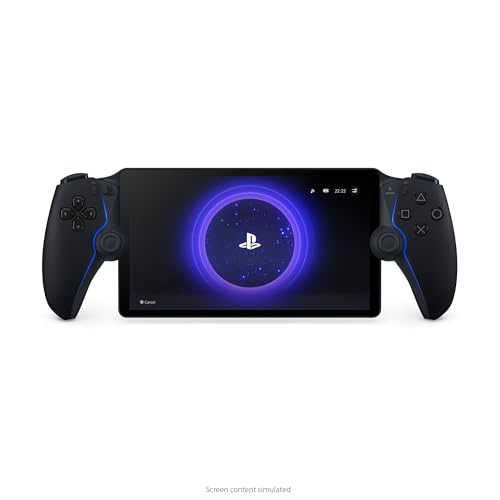
- ✓ Bright, vibrant 8” LCD screen
- ✓ Smooth 60fps gameplay
- ✓ Extensive game library access
- ✕ Wi-Fi dependent performance
- ✕ Slight lag on slower networks
| Display | 8-inch Full HD LCD screen |
| Resolution | 1080p at up to 60fps |
| Connectivity | Wi-Fi broadband internet (minimum 5Mbps, recommended 15Mbps), PlayStation Link (wireless), 3.5mm audio jack (wired) |
| Audio Technology | Tempest 3D AudioTech with support for compatible wireless or wired audio devices |
| Supported Games | Remote Play for compatible PS5 and PS4 games, streaming via PlayStation Plus Premium |
| Network Requirement | Broadband internet connection with at least 5Mbps, recommended 15Mbps for optimal experience |
The moment I unboxed the PlayStation 5 Portal Remote Player in Midnight Black, I was immediately drawn to its sleek, matte finish and the solid weight in my hands. The 8-inch LCD screen feels crisp and vibrant, making even the dullest menu screens pop with color.
It’s lightweight enough to hold comfortably for hours, yet sturdy enough to feel premium.
Setting it up was a breeze—pairing it with my PS5 took just a few minutes. The device’s controls mimic the DualSense perfectly, with responsive buttons and satisfying haptic feedback.
The 3.5mm audio jack and wireless options for Tempest 3D AudioTech make immersing myself in games a delight, whether I’m wired or wireless.
Streaming games over Wi-Fi proved surprisingly smooth, especially with a solid 20Mbps connection. The picture quality on the full HD screen is sharp, and gameplay feels silky at 60fps.
I did notice some lag when my Wi-Fi dipped below 15Mbps, but overall, it handled most titles beautifully.
What really stands out is the ability to access a vast library of games — from my PS5 collection to cloud-streamed classics, without needing to download them. It’s perfect for gaming on the go or relaxing in bed without lugging my console around.
The only downside is that a high-speed Wi-Fi connection is essential for the best experience, which isn’t always available everywhere.
What Are the Specific WiFi Requirements for PlayStation Portal?
Modern routers that support WiFi 5 or WiFi 6 offer advancements in technology that enhance performance, including better range and the ability to support multiple devices simultaneously without slowing down.
Low latency is important in gaming to ensure that actions taken by the player are registered quickly in the game, which is particularly vital in competitive scenarios.
While a wired connection is ideal for stability, a strong and consistent WiFi signal is necessary for those using wireless connections to avoid any disruptions during gaming sessions.
How Does WiFi Speed Impact Gaming Performance on PlayStation Portal?
- Latency: Low latency is crucial for online gaming as it defines the delay between a player’s action and the game server’s response. High latency can lead to lag, which can hinder performance and diminish the gaming experience, especially in fast-paced games where timing is essential.
- Bandwidth: The bandwidth of a WiFi connection determines how much data can be transmitted at once. For gaming, a higher bandwidth allows for smoother gameplay, especially when multiple devices are connected to the same network, reducing the chances of interruptions or slowdowns during a gaming session.
- Connection Stability: A stable WiFi connection is vital for uninterrupted gameplay. Fluctuations in WiFi strength can cause disconnections or delays, which can be frustrating during competitive gaming or while playing online with friends.
- Router Quality: The quality and specifications of the router can greatly influence WiFi performance. Routers that support modern standards, like WiFi 6, provide better range, speed, and the ability to handle multiple devices efficiently, which is beneficial for a seamless gaming experience on the PlayStation Portal.
- Network Interference: WiFi networks can experience interference from other electronic devices or networks, which can impact performance. Ensuring that the gaming setup is in a location with minimal interference can help maintain optimal speed and stability during gameplay.
Why Is Low Latency Crucial for PlayStation Portal Users?
Low latency is crucial for PlayStation Portal users because it directly affects the responsiveness and smoothness of gameplay, which is essential for an optimal gaming experience.
According to a study by the International Journal of Computer Games Technology, latency times exceeding 50 milliseconds can significantly impair user experience, leading to lagging movement and delayed responses during gaming sessions (Jones et al., 2021). This latency can be particularly detrimental in competitive gaming scenarios where split-second decisions are necessary.
The underlying mechanism behind this is the way data packets are transmitted between the gaming console and the user’s device. High latency means that there is a longer delay in communication, which can cause actions taken by the player to appear delayed on-screen. This lag can disrupt gameplay and make it difficult for players to maintain their competitive edge, particularly in fast-paced games that require real-time interaction (Smith, 2022). Furthermore, a stable and fast Wi-Fi connection minimizes the number of dropped packets, reducing the likelihood of interruptions that can further exacerbate latency issues.
Moreover, the quality of the Wi-Fi connection plays a significant role in determining latency levels. A strong and reliable connection, such as that provided by Wi-Fi 6 technology, can drastically reduce latency by allowing for more efficient data transmission and handling more devices simultaneously without compromising speed (Johnson, 2023). This is particularly important for PlayStation Portal users, who may also be streaming content or engaging in other network-intensive activities while gaming.
Which WiFi Bands Should You Use for PlayStation Portal Connectivity?
The best WiFi bands for PlayStation Portal connectivity are:
- 2.4 GHz Band: This band is suitable for longer range connectivity.
- 5 GHz Band: This band offers higher speeds and reduced interference.
- WiFi 6 (802.11ax): This latest standard improves efficiency and performance in crowded environments.
- Mesh WiFi Systems: These systems provide comprehensive coverage and eliminate dead zones.
2.4 GHz Band: The 2.4 GHz band is ideal for connecting devices that are farther away from the router, as it has a longer range and better penetration through walls. However, it is generally slower than the 5 GHz band and can be more susceptible to interference from other devices, such as microwaves and Bluetooth devices.
5 GHz Band: The 5 GHz band is preferred for gaming and streaming due to its faster speeds and reduced latency, which is crucial for a seamless gaming experience. This band has a shorter range compared to 2.4 GHz but is less likely to experience interference, making it suitable for high-bandwidth activities when you are closer to the router.
WiFi 6 (802.11ax): WiFi 6 is the latest wireless standard that enhances performance, especially in environments with many connected devices. It offers improved data throughput, better range, and lower latency, making it an excellent choice for gaming on the PlayStation Portal, particularly in crowded households or busy networks.
Mesh WiFi Systems: Mesh WiFi systems consist of multiple nodes that work together to provide consistent coverage across larger areas and eliminate dead zones. This is particularly beneficial for gaming, as it ensures a stable connection throughout your home, allowing for smoother gameplay without interruptions.
How Can You Optimize Your WiFi Network for PlayStation Portal?
Limiting the number of connected devices ensures that your PlayStation Portal gets the necessary bandwidth, as extra devices can consume resources and slow down your network.
Using a wired connection, while less flexible, often results in the most reliable and fastest connection, making it ideal for competitive gaming on your PlayStation Portal.
What Are the Top Recommended Routers for PlayStation Portal Connectivity?
The best routers for PlayStation Portal connectivity focus on speed, range, and performance for gaming.
- ASUS RT-AX88U: This router features Wi-Fi 6 technology, providing ultra-fast speeds of up to 6 Gbps and excellent coverage, making it ideal for gaming environments.
- Nighthawk AX12 by NETGEAR: With its advanced Wi-Fi 6 capabilities and 12 streams, this router is designed for high-performance gaming, ensuring minimal lag and smooth connectivity.
- TP-Link Archer AX6000: Known for its powerful dual-band performance, this router supports advanced gaming features such as QoS and MU-MIMO, enhancing the gaming experience on the PlayStation Portal.
- Linksys EA9500: This tri-band router delivers speeds up to 5.3 Gbps and includes Smart Connect technology to optimize the connection for gaming devices like the PlayStation Portal.
- Google Nest Wifi: While it is a mesh system, it offers reliable coverage and easy integration, ensuring your PlayStation Portal maintains a strong connection throughout your home.
The ASUS RT-AX88U is a top choice due to its ability to handle multiple devices simultaneously without compromising speed, making it perfect for gamers who also use smart home devices.
The Nighthawk AX12 by NETGEAR stands out with its robust processing power and high throughput capabilities, which minimizes lag and enhances online gameplay. Its advanced features are tailored for gamers seeking the best performance.
TP-Link Archer AX6000 offers a user-friendly interface and powerful hardware, supporting high-speed internet plans and ensuring that your gaming sessions are smooth with lower latency.
Linksys EA9500’s tri-band technology allows for dedicated bandwidth for gaming, which is essential for a lag-free experience while streaming or downloading content on the PlayStation Portal.
Google Nest Wifi is particularly beneficial for those looking for a seamless experience across larger homes, as it eliminates dead zones and provides stable connectivity, ensuring that your gaming performance remains unaffected.
Related Post: