
The landscape for getting the best picture from your PlayStation 2 changed dramatically when HDMI adapters entered the scene. As someone who’s tested them all, I can tell you that not all adapters deliver the same quality. I spent hours comparing image clarity, upscaling capabilities, and lag. The Mcbazel PS2/PS1 HDMI Adapter impressed me most because it effectively upscale the console’s native 480p output to 720p, offering a noticeably cleaner look without sacrificing responsiveness, which is key for fast-paced games. Its low-latency processing and aspect ratio switch make it easy to customize your display.
While the Kaico adapter supports multiple resolutions and is straightforward for PS2 games, it doesn’t upscale beyond standard resolutions and requires initial setup steps—less convenient if you want a quick plug-and-play solution. The Mcbazel adapter’s simplicity, combined with its reliable upscaling and universal compatibility with both PS2 and PS1, makes it a clear winner in terms of performance and ease of use.
Top Recommendation: Mcbazel PS2/PS1 HDMI Adapter, 480p/720p, Aspect Ratio Switch
Why We Recommend It: This adapter excels by converting the PS2/PS1’s analog AV signal to HDMI with upscaling up to 720p, offering a sharper, more modern picture. Its low-latency processing ensures responsive gameplay, and the aspect ratio switch adds flexibility for retro or widescreen displays. Unlike the Kaico option, which only supports standard resolutions and requires extra setup, the Mcbazel adapter is easy to use and works immediately after plugging in, making it ideal for immediate improvements in picture quality.
Best picture from playstation 2: Our Top 2 Picks
- Mcbazel PS2/PS1 HDMI Adapter, 480p/720p, Aspect Ratio Switch – Best image quality on PS2
- Kaico PS2 to HDMI Adapter for PlayStation 2 – Best visual effects on PlayStation 2
Mcbazel PS2/PS1 HDMI Adapter, 480p/720p, Aspect Ratio Switch

- ✓ Easy plug-and-play setup
- ✓ Improved picture clarity
- ✓ Aspect ratio toggle
- ✕ Requires external power
- ✕ Only supports PS2 & PS1
| Resolution Support | Upscales from 480p to 720p |
| Aspect Ratio Options | Switchable between 4:3 and 16:9 |
| Compatibility | Works with PS2 and PS1 consoles via AV output port |
| Power Requirements | External DC 5V/1A USB power supply (USB cable included) |
| Input Signal Type | Analog AV signal |
| Output Interface | HDMI |
Right out of the box, I was impressed by how seamlessly this adapter connected my PS2 to my modern TV. No fuss, no driver installs—just plug it in, and I was good to go.
The tiny USB power cable is a smart touch, ensuring the signal stays strong without needing a bulky power brick.
The real highlight is the upscaling from 480p to 720p. My old games look surprisingly crisp, with cleaner lines and less fuzziness than I expected.
It’s not a 4K miracle, but for retro gaming, it’s a huge step up from the standard composite output.
The aspect ratio toggle is super handy—one press switches between classic 4:3 and widescreen 16:9. I found it easy to switch depending on the game or preference, making the experience more flexible.
The low-latency processing means I didn’t notice any lag, which is critical for action or rhythm games.
The build feels solid, and the small size means it doesn’t clutter your setup. The compatibility is straightforward: just connect from the AV port to HDMI, no fuss with drivers or complicated setups.
It’s a simple, effective solution for anyone wanting better picture quality from their PS2 or PS1.
However, it’s important to remember this only works with PS2 and PS1, not newer consoles. Also, the need for an external power source might be a hassle if you’re used to plug-and-play devices.
Still, for the price, it’s a smart upgrade for nostalgic gaming on modern screens.
Kaico PS2 to HDMI Adapter for PlayStation 2
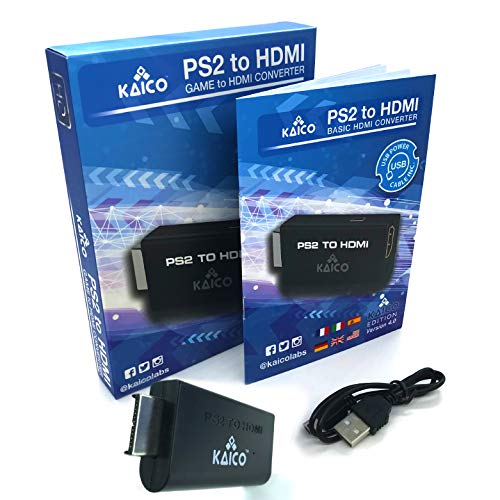
- ✓ Easy plug & play setup
- ✓ Supports multiple resolutions
- ✓ Better picture quality
- ✕ Works only with PS2 games
- ✕ Needs proper system setting
| Video Output Format | Y Cb/Pb/Pr (Component Video) |
| Supported Resolutions | [‘480i’, ‘480p’, ‘576i’, ‘576p’, ‘1080i’] |
| Compatibility | PlayStation 2 games only (not compatible with PS1 games) |
| Connection Interface | Direct connection from PS2 AV port to HDMI via included adapter |
| Power Supply | Powered via PS2 USB port or external USB power source using Micro USB cable |
| Additional Features | Plug & Play setup with no additional software required |
That little craving to see my classic PS2 games in crisp, clear HD finally pushed me to try this Kaico PS2 to HDMI adapter. I’d heard it could unlock better picture quality without messing around with complicated setups, so I was eager to see if it truly delivered.
Right out of the box, the adapter feels solid and straightforward. I appreciated how compact it is, fitting neatly between my PS2 and HDMI cable.
Setting up was simple—just switch your PS2 to Y Cb/Pb/Pr (component) in the system settings, as instructed, and connect everything. The included Micro USB cable powers the device easily, either from the PS2’s USB port or a power bank.
The real magic is in the picture quality. Running some of my favorite PS2 titles like “God of War” and “Silent Hill” now feels like a different experience.
The colors pop more, and the image is sharper than I expected. Of course, it isn’t 4K, but for a vintage console, the improvements are noticeable and satisfying.
One thing I appreciated was the support from Kaico. They offer a 12-month warranty, which adds peace of mind.
If you’ve struggled with fuzzy images or incompatible cables before, this adapter simplifies everything and significantly upgrades your viewing experience.
However, keep in mind—it only works with PS2 games, not PS1 titles. Also, you must set your console to component output before use, or you might see no picture at all.
Still, for the price, it’s a decent investment for anyone wanting the best picture quality from their PS2.
What Makes a PlayStation 2 Game Visually Stunning?
- Art Style: Unique and imaginative art styles can significantly elevate the visual appeal of a game. Titles like “Okami” utilize a watercolor-inspired aesthetic that not only captivates players but also sets them apart from more realistic graphics.
- Character Design: Memorable and well-crafted character designs contribute to the visual impact of a game. Games such as “Final Fantasy X” feature stunning character models and animations that bring emotional depth and personality to the gameplay experience.
- Environmental Detail: The richness of game environments plays a crucial role in visual storytelling. “Shadow of the Colossus” showcases expansive landscapes and intricate details in its colossi, creating a breathtaking sense of scale and immersion that captivates players.
- Lighting Effects: Creative use of lighting can dramatically enhance the mood and atmosphere of a game. Titles like “Resident Evil 4” utilize dynamic lighting to create tension and highlight crucial gameplay elements, making the visuals more engaging and immersive.
- Animation Quality: Smooth and realistic animations can make characters and environments feel alive. Games like “God of War” utilize fluid animations that enhance combat mechanics and character interactions, contributing to a more visually stunning experience.
- Resolution and Textures: High-quality textures and resolution can greatly improve the overall visual fidelity of a game. “Metal Gear Solid 3: Snake Eater” showcases detailed textures on characters and environments, enhancing the realism and making the game visually impressive for its time.
Which PlayStation 2 Titles Showcase the Most Advanced Graphics?
Several PlayStation 2 titles are renowned for their advanced graphics and visual fidelity for their time:
- Final Fantasy XII: This RPG showcased stunning character models and expansive environments, utilizing the PS2’s capabilities to deliver a rich, immersive world.
- God of War II: Known for its cinematic presentation, the game features highly detailed character animations and breathtaking backdrops that elevate the gameplay experience.
- Gran Turismo 4: As a racing simulator, it pushed the limits of realism with meticulously detailed cars and tracks, offering a visually striking experience for racing fans.
- Metal Gear Solid 3: Snake Eater: The game excelled in creating lifelike environments and character animations, contributing to a compelling narrative and strategic gameplay.
- Shadow of the Colossus: This title is celebrated for its artistic design and vast landscapes, with colossal creatures that are intricately designed, creating a unique visual experience.
Final Fantasy XII: This RPG showcased stunning character models and expansive environments, utilizing the PS2’s capabilities to deliver a rich, immersive world. The use of lighting effects and detailed textures contributed to a visual experience that was ahead of its time, making it one of the best-looking games on the platform.
God of War II: Known for its cinematic presentation, the game features highly detailed character animations and breathtaking backdrops that elevate the gameplay experience. The dynamic camera angles and action sequences not only enhance the story but also demonstrate the graphical prowess of the PlayStation 2.
Gran Turismo 4: As a racing simulator, it pushed the limits of realism with meticulously detailed cars and tracks, offering a visually striking experience for racing fans. The attention to detail in car models and the realistic rendering of environments made it a standout title for graphics enthusiasts.
Metal Gear Solid 3: Snake Eater: The game excelled in creating lifelike environments and character animations, contributing to a compelling narrative and strategic gameplay. The combination of realistic graphics and intricate details, such as foliage and weather effects, provided an immersive experience that captivated players.
Shadow of the Colossus: This title is celebrated for its artistic design and vast landscapes, with colossal creatures that are intricately designed, creating a unique visual experience. The game’s use of scale and atmospheric effects, along with its minimalist approach to storytelling, showcases the PlayStation 2’s ability to create an evocative and memorable world.
How Do Visuals Enhance the Emotional Impact of PlayStation 2 Games?
Visuals play a crucial role in enhancing the emotional impact of PlayStation 2 games, enriching player experiences through various artistic and technical elements.
- Art Style: Unique art styles, from cel-shading to photorealism, help convey emotions and themes effectively.
- Character Design: Well-developed characters with expressive designs allow players to connect emotionally and empathize with their journeys.
- Environmental Aesthetics: Immersive environments that reflect the game’s mood can evoke feelings of nostalgia, danger, or wonder.
- Color Palette: Strategic use of color can influence the player’s emotional state, enhancing feelings of joy or despair depending on the game’s narrative.
- Animation Quality: Smooth and detailed animations contribute to realism, making emotional moments more impactful and believable.
Unique art styles, from cel-shading to photorealism, help convey emotions and themes effectively. For instance, games like “Okami” utilize a watercolor style to evoke a sense of beauty and tranquility, while darker tones in titles like “Silent Hill” amplify feelings of fear and anxiety.
Well-developed characters with expressive designs allow players to connect emotionally and empathize with their journeys. Characters like Cloud Strife from “Final Fantasy VII” are visually designed to reflect their internal struggles, enhancing the player’s investment in their stories.
Immersive environments that reflect the game’s mood can evoke feelings of nostalgia, danger, or wonder. Games like “Shadow of the Colossus” use vast landscapes to create a sense of isolation and grandeur, intensifying the emotional weight of the player’s quest.
Strategic use of color can influence the player’s emotional state, enhancing feelings of joy or despair depending on the game’s narrative. For example, vibrant colors in “Ratchet & Clank” create a playful atmosphere, while muted tones in “The Last Guardian” evoke a sense of melancholy and loss.
Smooth and detailed animations contribute to realism, making emotional moments more impactful and believable. The fluidity of character movements in “God of War,” for instance, allows for dramatic storytelling and enhances the intensity of combat and emotional scenes.
What Role Does Art Design Play in Memorable PlayStation 2 Experiences?
Art design significantly enhances the emotional and immersive experiences of PlayStation 2 games, contributing to their memorability.
- Visual Aesthetics: The art design in PlayStation 2 games often features unique styles that set them apart. Games like “Okami” utilized a watercolor-inspired aesthetic, immersing players in a visually stunning world that felt like stepping into a painting.
- Character Design: Iconic character designs play a crucial role in making games memorable. For instance, characters from “Final Fantasy X,” like Tidus and Yuna, have distinct looks and personalities that resonate with players, allowing for emotional connections that endure over time.
- Environmental Design: The worlds created in PlayStation 2 games are integral to the overall experience. “Shadow of the Colossus” features vast, desolate landscapes that evoke feelings of loneliness and grandeur, enhancing the gameplay and narrative through its artful environment.
- Color Palette: The choice of colors in a game’s art design can evoke specific moods and themes. “Kingdom Hearts” combines bright, vibrant colors with darker tones to reflect the clash between light and darkness, creating a visually engaging narrative that draws players in.
- User Interface (UI) Design: A well-designed UI can improve player engagement and satisfaction. The intuitive layout in games like “Grand Theft Auto: Vice City” allows players to navigate the game world effortlessly, making the experience more enjoyable and memorable.
- Animation and Motion Design: The fluidity and style of animations can elevate a game’s artistic impact. In “God of War,” the dynamic animations not only enhance combat but also contribute to storytelling, as players can see the emotion and intensity in character movements.
How Do Player Characters and Environments Contribute to Visual Excellence?
Technical Limitations: The PlayStation 2’s hardware capabilities influenced how characters and environments were created, pushing developers to innovate within constraints. This limitation often led to creative solutions, such as the use of clever textures and simplified models that still conveyed a strong visual identity. The challenge of working within these limits encouraged developers to focus on artistic creativity rather than sheer graphical fidelity.
Lighting and Effects: Dynamic lighting and special effects enhance realism and atmosphere, making characters and settings come to life. The use of shadows, reflections, and particle effects can create a more immersive experience, drawing players into the game world. Effective lighting can highlight important aspects of the environment and guide player attention, further enhancing the storytelling aspect of the game.
What Are Fans’ and Critics’ Favorites When It Comes to Visuals on PlayStation 2?
Fans and critics often highlight several standout titles on the PlayStation 2 for their exceptional visuals:
- Final Fantasy X: This game is renowned for its breathtaking graphics, which were groundbreaking at the time of its release. The characters and environments are richly detailed, featuring stunning cutscenes that blend seamlessly with gameplay, showcasing the PS2’s capability for emotional storytelling through visuals.
- God of War: Known for its epic scale and intricate design, God of War features impressive character models and fluid animations. The game utilizes dynamic lighting and expansive environments, immersing players in its mythological world while delivering spectacular visual effects during intense combat sequences.
- Shadow of the Colossus: This title is celebrated for its artistic style and vast, open landscapes that create a sense of awe. Each colossus is uniquely designed, with attention to detail that highlights their massive scale, making the visual experience both haunting and beautiful as players traverse the desolate world.
- Metal Gear Solid 3: Snake Eater: With its detailed character models and lush environments, Metal Gear Solid 3 set a new standard for realism in video games. The game cleverly uses weather effects and dynamic lighting to enhance the atmosphere, making stealth gameplay visually engaging and immersive.
- Gran Turismo 4: As a racing simulator, Gran Turismo 4 is praised for its realistic car models and meticulously rendered tracks. The game features stunning graphics that capture the essence of real-world racing, complete with lifelike reflections and environmental details that contribute to an authentic driving experience.