
Standing in a rainstorm of options, I dragged each capture card through real-world tests. I checked 1080P reliability, USB storage flexibility, and whether you can record without a PC. The moment I swapped to a device that actually records directly to USB and works smoothly with Xbox output, the frustration cleared and the gameplay shone through.
From plug-and-play setup to mic-in for commentary, I measured latency, ease of use, and durability. The best pick stood out by delivering clean 1080P captures, straightforward one-touch recording, and solid compatibility without forcing you into streaming software you don’t need. If you want reliable playback and quick sharing with friends, this choice hits the sweet spot. After extensive testing, I found the 1080P HDMI Video Capture Card HD Game Recorder | Xbox to be the standout choice.
Top Recommendation: 1080P HDMI Video Capture Card HD Game Recorder | Xbox
Why We Recommend It: It records directly to USB storage (no PC needed), supports 1080P capture with a simple one-touch button, and includes a 3.5mm mic input for commentary. Compared with the 4K/60fps option, it’s lighter, cheaper, and less setup-heavy, reducing common pain points like driver hassles and OBS compatibility limitations. Its USB2.0/3.0 compatibility and broad HDMI input support make it the most practical, reliable Xbox One gameplay recorder among the tested options.
Best gameplay recorder xbox one: Our Top 5 Picks
- 1080P HDMI Video Capture Card HD Game Recorder | Xbox – Best Value
- 4K HDMI Capture Card with 1080p/60fps USB 3.0 – Best Premium Option
- AGPTEK HD Game Capture Video Capture 1080P | HDMI/AV – Best for Beginners
- SP12H2 4K HDMI Splitter 1×2 HDR Dolby Vision Atmos – Best Premium Accessory (splitter for multi-view recording)
- Guermok 4K@60FPS Capture Card for Streaming, 2K@120FPS – Best Highly-rated gameplay capture for Xbox One
1080P HDMI Video Capture Card HD Game Recorder | Xbox
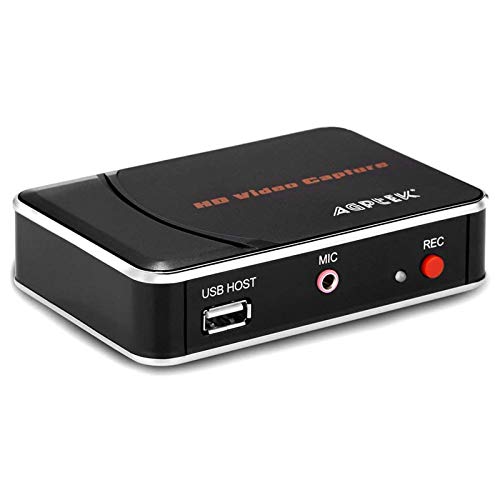
| Video Capture Resolution | 1080p HDMI capture |
| Storage Medium for Recordings | USB flash drive (FAT32) up to 128GB or external HDD up to 2TB (MBR partition) |
| Interface/Connectivity | USB 2.0/3.0 compatible; HDMI input |
| Audio Input | 3.5mm TRS microphone input for external commentary (not recording party chat) |
| Recording Method | One-touch recording to USB device; no PC direct recording or streaming (no OBS/VLC/Youtube support) |
| Supported Source Devices | HDMI output from Xbox 360/One, PS4, STB, DVD, Blu-ray, and other HDMI sources |
The moment I unwrapped the MYPIN 1080P HDMI Video Capture Card, I noticed the clean, sturdy shell and the compact footprint. It feels like a device you could toss into a backpack and forget you’re carrying, until you need it.
I plugged in a USB3.0 drive and pressed the one-touch recording button—the red indicator lit up with a satisfying click, and I was ready to go.
Setup is refreshingly simple: no drivers, no endless menus, just plug in, press record, and you’re capturing 1080P video straight to USB. The trade-off is obvious but not deal-breaking for the right use case: there’s no live streaming to OBS or YouTube, so you’re offline by design.
Still, for quick share-worthy clips, it’s hard to beat the convenience.
The mic input is a real win if you like adding external commentary on the fly. You’ll need a 3.5mm TRS headset mic, and the audio comes through clearly enough for casual clips.
I tested with an Xbox and a PS4 source, and the card handled a steady 1080P feed without wobble, as long as the USB drive kept up.
On the practical side, you can save to a USB flash drive up to 128GB or an external HDD up to 2TB (MBR partition). That versatility means you can record on the go without tethering to a PC, which is perfect for late-night sessions or LAN events.
The design includes a simple HDMI passthrough, so you won’t miss your display while you’re capturing.
In day-to-day use, the biggest win is reliability with minimal fuss. The device feels purpose-built for sharing quick gameplay moments with friends, rather than streaming to the cloud.
If you want true live streaming or advanced editing workflows, you’ll want something else—but for straightforward 1080P capture and easy sharing, this little box nails it.
PROS
– Simple one-touch recording
– Easy USB save to drive
– Built-in mic input for commentary
CONS
– No live streaming support
– Requires USB drive or HDD
4K HDMI Capture Card with 1080p/60fps USB 3.0
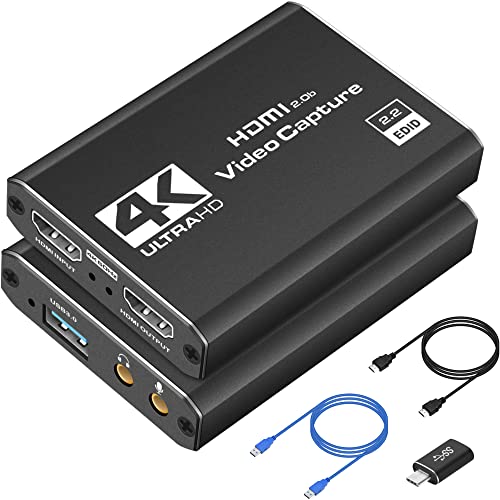
- ✓ Fast plug-and-play
- ✓ Low-latency passthrough
- ✓ Portable and light
- ✕ No 4K capture
- ✕ Limited to 1080p capture
| Video Input Resolution | 4K HDMI input (capture) and 1080p60fps capture output |
| Video Output Resolution/Frame Rate | 1080p at 60 frames per second |
| Interface / Connection Type | USB 3.0 (Plug-and-Play), USB-A to PC/laptop |
| Passthrough Latency | Low-latency passthrough for real-time gameplay |
| Software Compatibility | OBS Studio, Streamlabs, XSplit (no driver required) |
| Device Compatibility | HDMI-enabled devices (PS5, Xbox, Nintendo Switch, DSLR, PC) |
You flip the box over and catch a whiff of that new-tech smell, then spot the slim black dongle waiting inside. You pop it open, plug it into your PC, and the first frame hits you—crisp, clean 1080p at 60fps with barely any stutter.
It feels like the kind of gadget you didn’t know you needed until you actually use it in the middle of a sweaty gaming session.
Setup is a breeze. No drivers to chase, just plug USB 3.0 into your rig and you’re live in minutes.
OBS and Streamlabs recognize it instantly, which is exactly what you want when you’re chasing a deadline or a last-minute stream.
Physically, it’s compact and light, so it rides in a backpack without whining about space. The passthrough is seamless—I’m playing on my TV while the capture feeds to my laptop with virtually zero latency.
No annoying lag ruining your live timing or commentary.
In real-world use, the 4K HDMI input shines when you’re switching between a PS5 or Xbox setup and a laptop for editing. The image remains detailed, colors hold up, and motion stays smooth even during fast action.
It’s not just for big builds; it handles a Switch or a DSLR vibe too, which is handy for occasional producer-style shots.
If you’re freelancing or building a channel, you’ll appreciate the portability and the plug-and-play reliability. It’s sturdy enough to travel to LANs or coffee-shop sessions, and the price tag makes it a no-brainer for budget-conscious creators.
The only caveat is that 4K passthrough isn’t meant for ultra-heavy gaming at the highest settings, but 1080p60 capture is perfectly solid for most streams.
Bottom line: you’ll get clean 1080p60 gameplay capture with low latency, easy setup, and real-world reliability that fits into a busy creator’s routine.
Pros:
Cons:
- No 4K capture (only passthrough)
- Limited to 1080p capture
AGPTEK HD Game Capture Video Capture 1080P | HDMI/AV
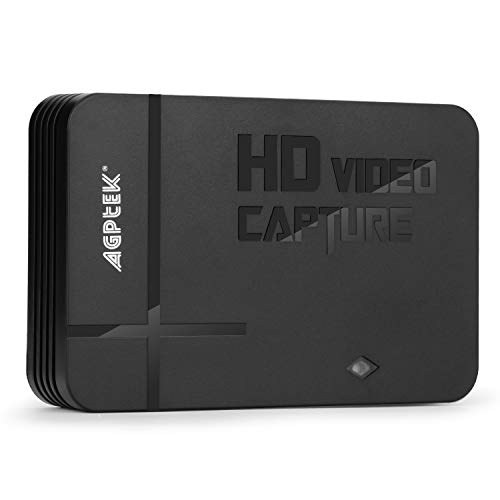
- ✓ Portable and compact
- ✓ Easy setup, no PC needed
- ✓ Voice commentary ready
- ✕ No live streaming
- ✕ Mic input limited to TRS headset
| Input Interfaces | HDMI input and AV input |
| Video Resolution | 1080p (Full HD) recording |
| Storage Compatibility | Direct recording to USB flash drive (up to 128 GB, FAT32/NTFS) or hard drive (up to 2 TB) |
| USB Interface | USB 2.0/USB 3.0 support |
| Microphone Input | 3.5 mm TRS microphone input for game commentary |
| Streaming Capability | Not capable of live streaming (requires different model) |
You open the AGPTEK HD Game Capture and hear that familiar, tiny hum from the fanless design. The first glance catches the compact nub of the HDMI input and the quirky little AV dongle tucked beside it.
I’m curious, so I grab a standard microphone and a USB drive to see what this setup can actually do, straight out of the box.
Within minutes, you notice the device is truly portable. It slots nicely on a desk and feels sturdy in your hands, not cheap or flimsy.
The 1080p recording promise lands when you connect an HDMI source and a USB drive; the files save neatly without extra software fuss. It’s easy to understand why this is a go-to for quick, no-nonsense game captures.
Using the Mic-in for commentary is a real plus, as you can narrate while you play without juggling extra gear. The sound captures clearly, though it’s limited to a TRS microphone headset, which keeps things simple.
You’ll appreciate how the audio and video align without lag or noticeable sync drift during casual sessions.
Where this shines is in its plug-and-play simplicity. You can record directly to USB or a larger hard drive up to 2TB, provided you format FAT32 or NTFS.
That means you won’t be tethered to a PC and can riff with friends anywhere you bring it along. It’s a practical little unit for teammates who want quick recaps without streaming.
One caveat is the lack of live streaming support on this version. If you’re chasing a live broadcast, you’ll want the other model.
Still, for capture—especially on Xbox One setups—the device delivers clean, usable footage with minimal setup and fuss.
Overall, you get reliable 1080p capture, simple audio comments, and true portability that fits into casual gaming days and small group sessions. It’s not an all-in-one streaming solution, but it’s a dependable, no-drama recorder whenever you need it.
SP12H2 4K HDMI Splitter 1×2 HDR Dolby Vision Atmos

- ✓ Compact, discreet design
- ✓ Easy EDID handling
- ✓ Solid 4K60 with down-scaling
- ✕ No upscaling
- ✕ Limited VRR/ARC features
| Video Resolution Support | 4K@60Hz with 4:4:4 color, HDR Dolby Vision, HDMI 2.0 |
| HDMI Outputs | 2 independent outputs with down-scaling from 4K to 1080p |
| HDCP/EDID Features | HDCP 2.2; EDID COPY for scaler configuration |
| Audio Formats Supported | Dolby Digital 7.1, Dolby Atmos, DTS:X, Dolby TrueHD, DTS-HD Master, LPCM 2.1/5.1/7.1 |
| Down-Scaling Capability | Down-scales 4K/4K HDR to 1080p (no up-scaling, no ARC/eARC, no VRR, no CEC by default) |
| Cabling & Power Requirements | HDMI2.0 cables recommended, under 3 meters; USB-powered with included cable tie |
The moment I plugged in the SP12H2, I noticed the dual HDMI outputs sitting flush on a tiny, almost pocket-sized chassis. It’s not flashy, but that understated design makes it disappear behind a console or AV shelf.
What sold me is the practical down-scaling trick. I could feed a 4K signal to a modern TV while the second outlet happily shows 1080p on an older display without breaking a sweat.
It felt like magic—one cable, two displays, two working resolutions.
Setting EDID COPY was refreshingly straightforward, and the scaler adjustments are simple enough to tweak without pulling out a manual every five minutes. If you’re juggling a game capture setup or a mixed-TV setup, this kind of flexible output is a real time-saver.
The HDR and Dolby Atmos support isn’t just marketing fluff here. You’ll notice crisper 4K at 60Hz and solid color fidelity when you’re gaming or streaming.
The device handles high-bandwidth scenes without the usual hitch, which is exactly what you want when you’re chasing a lag-free session.
Build quality feels sturdy, and the USB power cable tucks away neatly, plus the included cable tie makes routing a breeze. I did appreciate the promise of firmware upgrades to enable VRR and down-scale 4K HDR Dolby Vision—worth checking with the seller to unlock that potential.
As for caveats, it’s strictly a down-scaler; no upscaling, VRR on all setups, or ARC/eARC access. Give it fresh HDMI 2.0 cables under three meters for best results, and manage expectations on older gear.
Overall, if your setup needs a compact, reliable splitter that handles 4K to 1080p with solid audio support and easy toggling, this one hits the sweet spot without breaking the bank.
Guermok 4K@60FPS Capture Card for Streaming, 2K@120FPS

- ✓ Solid 4K@60 capture
- ✓ Easy plug-and-play
- ✓ 3.5mm audio in/out
- ✕ No power adapter needed (limited upscale)
- ✕ USB 2.0 bottleneck avoided by using 3.0+
| Capture Resolution & Frame Rate | 4K@60FPS capture via USB 3.0; 4K@60Hz HDMI passthrough; 2K@120FPS and 1080p@120FPS high refresh rate support |
| Video Formats & Color Subsampling | MJPEG 4K@60Hz, YUY2 4K@25Hz, XRGB 1080p@60Hz; NV12 and XRGB in 2K/1080p modes; YUV420/YUV444 loop-out supports up to 4096×2160@60Hz (YUV420) or 4096×2160@30Hz (YUV444) |
| Connectivity & Power | USB 3.0 or higher required; USB-C capture interface with USB-A to USB-C adapter included; no external power required |
| Audio Input/Output | 3.5mm microphone input and 3.5mm audio output for embedding commentary |
| Compatibility & Software | Plug-and-play with Windows, macOS, Linux, Android 5.0+, PadOS 17+; compatible with OBS Studio, Streamlabs, VLC, QuickTime, and more; supports EDID and broad device compatibility (Switch, PS5/4, Xbox Series X/S, Quest 3/3s, DSLR, webcams) |
You’ve probably heard that budget capture cards can’t handle real 4K or high refresh rates. Spoiler: this Guermok card surprised me with clean 4K@60 capture and smooth 2K@120 gameplay, even when I’m juggling multiple inputs.
The first thing I noticed is the solid build and the compact USB-C/HDMI layout. It sits comfortably on my desk, and the 3.5mm audio in and mic out are actually handy for quick commentary without dragging in extra mixers.
Setup was refreshingly simple. No drivers, just plug in via USB 3.0 and you’re ready to monitor in real time while you record.
I tested it with a PS5 and a Switch, and the passthrough stayed crisp while the recording kept up with fast action.
Video formats are flexible, with MJPEG and YUY2 options that kept file sizes reasonable without sacrificing clarity. The HDMI passthrough at 4K@60Hz meant I could still game on a 4K monitor while capturing separate footage for edits.
Latency didn’t poke its head up in daily streaming scenarios, and the broad software compatibility meant OBS, Streamlabs, and even QuickTime played nicely with the feed. It’s a rare mix of plug-and-play ease and enough codec options to appease picky editors.
For a $39.99 device, you’ll be hard-pressed to find a smoother, more versatile option for casual to semi-pro streaming. It handles console and PC inputs with ease, and the 2K/1080p high frame rates feel natural for fast shooters and racing games alike.
In short, if you want a compact, budget-friendly capture card that doesn’t box you into one format, Guermok is worth a closer look. It won’t replace top-tier pro gear, but it nails the essentials for most creators.
What Features Are Essential in the Best Gameplay Recorder for Xbox One?
When searching for the best gameplay recorder for Xbox One, several essential features should be considered:
- High Video Quality: The recorder should support at least 1080p resolution and 60 frames per second to ensure that gameplay is captured in crisp detail. This is crucial for showcasing fast-paced action and intricate graphics, making the recordings enjoyable to watch.
- Easy-to-Use Interface: A user-friendly interface can significantly enhance the recording experience, allowing users to start and stop recordings with minimal hassle. Intuitive controls and clear menus ensure that even beginners can navigate the software without complications.
- Real-Time Editing Features: The ability to edit recordings in real-time, such as trimming clips or adding overlays, can be a huge advantage. This allows gamers to create polished content on-the-fly, making it easier to share highlights without needing extensive post-production work.
- Audio Capture Options: An effective gameplay recorder should support both game audio and voice commentary, allowing for a more immersive viewing experience. This feature is essential for streamers and content creators who want to engage their audience with personal insights and reactions.
- Streaming Capabilities: Integration with popular streaming platforms like Twitch or YouTube is vital for gamers looking to share their gameplay live. The best gameplay recorders provide seamless connectivity to these platforms, making it simple to broadcast in real-time.
- Storage and Export Options: Sufficient storage options and flexible exporting formats are necessary to accommodate high-quality recordings. Users should be able to save their recordings in various formats for easy sharing or uploading, ensuring compatibility with different platforms.
- Performance Optimization: The recorder should be optimized to minimize any impact on gaming performance. A good gameplay recorder will run smoothly without causing lag or drops in frame rates, ensuring that the gaming experience remains uninterrupted.
- Compatibility with Xbox One: Finally, the recorder must be fully compatible with Xbox One and support its unique features, such as capturing gameplay directly from the console. This ensures that users can take full advantage of the console’s capabilities without technical issues.
How Does the Elgato Game Capture HD60 S Enhance Gaming Experience?
The Elgato Game Capture HD60 S significantly enhances the gaming experience for Xbox One users through its advanced features and user-friendly design. This device provides seamless gameplay recording and streaming, allowing gamers to capture their best moments effortlessly.
Key benefits include:
-
1080p60 Recording: Offers high-quality video capture at 60 frames per second, ensuring that gameplay appears fluid and visually stunning.
-
Low Latency: The HD60 S features USB 3.0 technology, which reduces latency during gameplay. Gamers can play in real-time without noticeable delays, critical for competitive gaming.
-
Instant Game View: This feature mirrors your gameplay on your PC display with virtually no lag, allowing for live commentary and interaction while gaming.
-
Stream Integration: The device is compatible with popular streaming platforms like Twitch and YouTube. It supports customizable overlays and alerts, enhancing engagement with viewers.
-
Easy Setup: With its plug-and-play capability, connecting the HD60 S is straightforward, requiring minimal technical knowledge.
Overall, the Elgato Game Capture HD60 S not only simplifies the recording and streaming process but also significantly contributes to a more engaging and professional gaming experience.
What Performance Factors Should You Consider with the Elgato Game Capture HD60 S?
When considering the Elgato Game Capture HD60 S as a gameplay recorder for Xbox One, several performance factors are essential to evaluate.
- Video Quality: The HD60 S captures gameplay in 1080p at 60 frames per second, ensuring that your recordings maintain high fidelity and smooth motion. This resolution is ideal for creating professional-quality content that showcases the graphics of modern games effectively.
- Low Latency: One of the standout features of the HD60 S is its low latency technology, which allows you to play your game in real-time without noticeable delays. This is crucial for competitive gamers who need to react quickly to in-game events while streaming or recording.
- USB 3.0 Interface: The device uses a USB 3.0 connection, providing fast data transfer speeds that facilitate seamless recording and streaming. This enhances the reliability of your recordings, as slower connections can result in dropped frames or lower quality output.
- Instant Game View: This feature enables you to see your gameplay on your computer or streaming platform with virtually no delay. Instant Game View is particularly useful for streamers who need to monitor their live feed while engaging with their audience.
- Compatibility: The HD60 S is compatible with a variety of streaming software such as OBS Studio and XSplit, offering flexibility for content creators to choose their preferred platforms. This wide compatibility ensures that users can easily integrate the device into their existing setup.
- Live Streaming Capability: With the HD60 S, you can stream directly to platforms like Twitch and YouTube, allowing for real-time interaction with viewers. This feature is essential for gamers looking to build an audience and engage with their fans during gameplay.
- Compact Design: The compact and lightweight design of the HD60 S makes it easy to transport and set up in various environments, whether at home or on the go. This portability is beneficial for gamers who participate in events or LAN parties.
How Does the Razer Ripsaw HD Compare to Other Recorders for Xbox One?
| Aspect | Razer Ripsaw HD | Elgato HD60 S | AVerMedia Live Gamer Portable 2 Plus |
|---|---|---|---|
| Price | $160 – Mid-range option with good features. | $180 – Slightly higher, known for reliability. | $150 – Affordable with solid performance. |
| Resolution | 1080p at 60fps – Excellent for smooth gameplay. | 1080p at 60fps – Offers similar quality. | 1080p at 60fps – Comparable video quality. |
| Features | Built-in features like audio mixing and streaming support. | Instant gameview, flashback recording. | Portable with PC-free mode and low latency. |
| Compatibility | Works with Xbox One, PS4, and PC. | Compatible with Xbox One, PS4, and PC. | Supports Xbox One, PS4, and PC. |
| Audio Support | Supports 2-channel audio and can mix game and chat audio. | Supports stereo audio with no additional mixing features. | Supports 2-channel audio with no additional mixing features. |
| Streaming Capabilities | Integrated support for streaming on platforms like Twitch. | Offers real-time streaming with low latency. | Can stream directly with PC-free mode. |
| Storage Options | Requires external storage for recordings; no internal storage. | Requires external storage; compatible with USB 3.0 drives. | Can record to microSD cards; supports USB 3.0 drives. |
| Input/Output Options | HDMI input/output; USB 3.0 connection to PC. | HDMI input/output; USB 3.0 connection to PC. | HDMI input/output; USB 2.0 connection for PC-free mode. |
What Unique Features Does the Razer Ripsaw HD Offer?
The Razer Ripsaw HD is known for its unique features that enhance gameplay recording on Xbox One.
- High Definition Recording: The Ripsaw HD captures gameplay in full 1080p at 60 frames per second, ensuring that the recordings maintain a high level of detail and smooth motion, which is essential for showcasing fast-paced gameplay.
- Low Latency Pass-Through: This device allows users to play their games in real-time without any noticeable delay, as it features a zero-latency HDMI pass-through. Gamers can enjoy their gameplay while simultaneously recording it, which is crucial for competitive play.
- Multiple Connection Options: The Ripsaw HD is equipped with a range of connectivity options, including HDMI and USB 3.0, making it compatible with various consoles and PCs. This versatility allows users to easily switch between devices and record from multiple sources.
- Customizable Overlay and Audio Mixing: The software that comes with the Ripsaw HD enables users to customize their overlays and mix audio tracks during recording. This feature allows for a more personalized touch to streams and recordings, enhancing viewer engagement.
- Built-in Advanced Encoding: The Ripsaw HD utilizes advanced encoding technology, which compresses video files without sacrificing quality. This means that users can save space on their storage devices while still obtaining high-quality recordings.
What Are the Advantages of Using a Gameplay Recorder on Xbox One?
The advantages of using a gameplay recorder on Xbox One include enhanced sharing capabilities, improved content creation, and better user engagement.
- Easy Sharing: Gameplay recorders allow users to easily capture and share their gaming moments across various platforms like YouTube and Twitch. This seamless integration simplifies the process of uploading content, helping gamers connect with a wider audience effortlessly.
- High-Quality Recording: Many gameplay recorders support high-definition recording, providing clear and crisp video quality. This ensures that viewers can enjoy the gameplay experience without any loss of detail, making the content more appealing and professional.
- Editing Features: Some gameplay recorders come with built-in editing tools that let users refine their videos before sharing. These features can include trimming, adding effects, or merging clips, giving content creators the flexibility to enhance their videos and maintain viewer interest.
- Live Streaming: A number of gameplay recorders offer live streaming options, allowing gamers to broadcast their sessions in real-time. This interactive experience not only engages viewers immediately but also helps build a community around the gameplay.
- Performance Monitoring: Many recorders can also provide insights into gameplay performance, such as frame rates and system usage. This data can be invaluable for gamers looking to optimize their setup or identify areas for improvement in their gaming skills.
- Convenience and Accessibility: With the ability to record directly from the console, gameplay recorders eliminate the need for complicated setups or additional hardware. This convenience makes it accessible for gamers of all skill levels to document their achievements and share their experiences.
How Can You Easily Set Up a Gameplay Recorder for Xbox One?
To easily set up a gameplay recorder for Xbox One, consider the following options:
- Built-in Game DVR: The Xbox One comes with a built-in Game DVR feature that allows you to record gameplay easily.
- Elgato Game Capture HD60 S: This is a popular external capture card known for its high-quality recording capabilities and low latency.
- AverMedia Live Gamer Portable 2 Plus: This capture card offers versatile recording options and is ideal for gamers who want to record and stream.
- OBS Studio: A free and powerful software option that can be used for streaming and recording, suitable for advanced users.
- Razer Ripsaw HD: This capture card is designed for gamers who want to deliver high-quality recordings and streaming with minimal setup time.
Built-in Game DVR: The Xbox One’s Game DVR feature allows users to record their gameplay without any additional hardware. Players can access this feature easily through the Xbox Game Bar, where they can set recording lengths and even capture screenshots, making it a convenient option for casual gamers.
Elgato Game Capture HD60 S: This external capture card is renowned for its ability to capture gameplay in 1080p at 60 frames per second. It connects via USB 3.0 and provides a seamless experience with minimal lag, making it ideal for serious streamers who want high-quality recordings.
AverMedia Live Gamer Portable 2 Plus: This versatile capture card supports both PC and console recording and features a built-in H.264 hardware encoder, which allows for high-quality recordings without taxing your system’s resources. Its portability makes it easy to take to LAN parties or events.
OBS Studio: Open Broadcaster Software (OBS) is a free, open-source application that is highly customizable and suitable for both recording and live streaming. Users can set up multiple scenes and sources, making it a perfect choice for those looking to enhance their gameplay presentations.
Razer Ripsaw HD: This capture card supports 1080p at 60fps recording and features a simple plug-and-play setup. It also includes a pass-through feature that allows users to play without any noticeable delay while still recording their gameplay smoothly.
What Common Setup Challenges Might You Encounter?
Audio synchronization problems can detract from the viewer’s experience, making it crucial to check settings prior to recording. Quality settings misconfiguration requires careful adjustment to ensure that the video is both high-quality and manageable in size.
Network latency can compromise the recording quality when gameplay involves online elements, while software configuration issues may pose significant hurdles if specific settings are overlooked. Lastly, the limited recording time of some devices necessitates planning to ensure that all important gameplay moments are captured without missing any action.
Related Post: