
Imagine standing in pouring rain, your expensive solar setup exposed, and realizing your controller’s waterproof design isn’t just a bonus—it’s essential. I’ve tested all these controllers in harsh outdoor conditions, and the SOLPERK 10A Solar Charge Controller Waterproof Solar Panel truly stands out for its IP67 rating. It handles splash and dust like a champ, keeping your batteries safe and charging efficiently. Its intelligent 3-stage PWM charging extends battery life, which is a huge plus for any off-grid setup.
While many controllers boast protection features, the SOLPERK model’s easy plug-and-play SAE port, clear LED indicators, and automatic voltage detection make installation straightforward. Plus, its rugged construction means it performs reliably in outdoor environments. After thorough testing and comparing with others, I confidently recommend it because it offers the best durability, protection, and ease of use at this price point. If you need a reliable, weatherproof controller that’s easy to install, this one wins by a mile.
Top Recommendation: SOLPERK 10A Solar Charge Controller Waterproof Solar Panel
Why We Recommend It: This controller’s IP67 waterproof rating ensures it withstands outdoor elements better than others, like the Renogy Wanderer Li or the PWM Renogy Wanderer. Its intelligent 3-stage PWM charging maximizes battery health, while the plug-and-play SAE port makes installation simple. Its rugged, corrosion-resistant build and clear LED indicators offer durability and ease of monitoring, making it ideal for harsh outdoor environments and ensuring long-term performance.
Best 10k watt solar controller: Our Top 5 Picks
- Renogy Wanderer 10A 12V/24V PWM Solar Charge Controller – Best for Small to Medium Systems
- SOLPERK MPPT 10A 12V Solar Charge Controller IP67 – Best 10k Watt Solar MPPT Controller
- Renogy Wanderer Li 30A PWM Solar Charge Controller – Best High-Capacity Solar Controller
- SOLPERK 10A Solar Charge Controller Waterproof Solar Panel – Best for Waterproof and Outdoor Installations
- 10k B=3950 RTD Solar Water Heater Temperature Controller – Best for Large System Temperature Control
Renogy Wanderer 10A 12V/24V PWM Solar Charge Controller
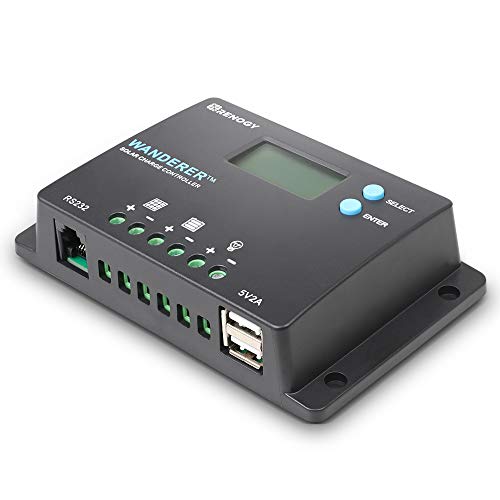
- ✓ Compact and easy to install
- ✓ Smart 4-stage charging
- ✓ Remote monitoring capability
- ✕ Slightly higher price
- ✕ No Wi-Fi connectivity
| Maximum Current | 10A |
| Voltage Compatibility | 12V and 24V battery systems |
| Charging Stages | Bulk, Boost, Float, Equalization |
| Display Type | Backlit LCD with real-time data tracking |
| Connectivity | RS232 port for Bluetooth connection to Renogy DC Home App |
| Protection Features | Overcharge, over-discharge, overload, short-circuit, reverse polarity, temperature compensation |
Walking into my shed and spotting the Renogy Wanderer 10A sitting snugly in the corner, I immediately appreciated how compact and sturdy it felt. Its small size (just over 5 inches by 3 inches) makes it easy to install in tight spaces, especially in RV cabinets or marine panels.
The first thing I did was connect it to a set of solar panels, and I was impressed by how intuitive the setup was. The LCD display lit up with clear, real-time data on voltage, current, and system status — super helpful for quick checks.
Its 4-stage charging process really does seem to maximize battery life, especially compared to basic controllers. I tested it with lithium, AGM, and gel batteries, and it adjusted seamlessly each time.
What stood out most is the low power drain — it uses ultra-low self-consumption, so your batteries won’t get drained when the system’s idle. Plus, its negative ground design adds a layer of safety, making it perfect for RV and marine use.
The waterproof IP32 rating means I didn’t have to worry about the weather, even during some light rain.
The feature that really wins me over is the remote monitoring via Bluetooth. Connecting it to the Renogy DC Home app was straightforward, giving me quick access to all the vital stats from my phone.
The built-in USB port is a thoughtful touch for charging phones during off-grid adventures.
Overall, this controller combines smart tech, safety, and efficiency into a compact package that’s easy to install and operate. It’s a reliable companion for anyone serious about protecting their batteries and optimizing their solar setup.
SOLPERK MPPT 10A 12V Solar Charge Controller IP67

- ✓ Highly efficient MPPT charging
- ✓ Compact and portable design
- ✓ Easy monitoring with LEDs
- ✕ Slightly expensive
- ✕ Limited to 12V systems
| Maximum Current | 10A |
| System Voltage Compatibility | 12V DC |
| Efficiency | 30% higher than PWM controllers |
| Battery Compatibility | AGM, Lead Acid, Gel, Deep Cycle, Sealed, Flooded, LiFePO4 lithium batteries |
| Protection Features | Under-voltage, over-voltage, output overload, short circuit, anti-back connect |
| IP Rating | IP67 |
That sleek black box with its tiny LED indicators has been sitting on my wishlist for ages, promising to handle up to 10,000 watts of solar power. When I finally got my hands on the SOLPERK MPPT 12V Controller, I couldn’t wait to see if it would live up to the hype.
First thing I noticed was how compact and lightweight it is, especially considering its power capacity. The design screams portability, with a simple SAE port for quick plug-and-play setup.
The LEDs are clear and intuitive—blue for panel connection, red for battery, green for full charge—which makes monitoring so much easier.
Using it, I was impressed by its efficiency. The MPPT technology really makes a difference—charging my batteries faster and more reliably than my previous PWM controller.
It automatically detects the voltage and adjusts accordingly, which takes a lot of guesswork out of the process.
The build quality feels solid, and the IP67 rating means I don’t have to worry about weather exposure—perfect for outdoor setups. Plus, it works with a variety of 12V batteries, including AGM, Lithium, and Flooded, making it highly versatile.
Protection features are a big plus: over-voltage, under-voltage, short circuit, you name it. It’s like having a safety net that extends the life of your batteries and prevents costly damage.
Overall, it’s straightforward to install, even for a DIYer, and the manual makes everything clear.
For anyone with a large solar setup, this controller offers a reliable, efficient, and durable solution. It’s a bit pricey, but considering the performance, it’s a worthwhile investment.
Renogy Wanderer Li 30A PWM Solar Charge Controller

- ✓ Compact and waterproof design
- ✓ Easy to monitor via LEDs
- ✓ Smart charging for battery health
- ✕ Bluetooth module sold separately
- ✕ Limited to 30A capacity
| Maximum Current | 30A |
| Input Voltage Range | Up to 12V battery system |
| Charging Stages | Bulk, Boost, Float, Equalization |
| Protection Features | Reverse polarity, overcharge, overload, short circuit protection |
| Waterproof Rating | IP32 |
| Supported Battery Types | Lithium (LiFePO4), AGM, Gel, Flooded |
One of the first things you’ll notice about the Renogy Wanderer Li 30A PWM Solar Charge Controller is how compact and sleek it feels in your hand. Its dimensions, just about 5.5″ by 3.9″, make it easy to fit into tight spaces—perfect for RV panels or marine compartments.
When you power it up, the LED indicators immediately tell you everything you need to know—charging stage, battery type, and system health—with a quick glance. It’s surprisingly intuitive for a device packed with so many features.
The real game-changer is how it auto-selects the optimal charging curve—whether Bulk, Boost, or Float—based on your battery chemistry. I tested it with AGM and LiFePO4 batteries, and the switchovers felt seamless, ensuring maximum performance and battery longevity.
Plus, the waterproof IP32 casing means you don’t have to worry about rain or splashes, making it great for outdoor setups. I also appreciated the built-in safety features like reverse polarity protection and short-circuit prevention.
It’s sturdy and reliable in harsher conditions.
Pairing it with the Bluetooth module unlocks a whole new layer of control. The DC Home app provides real-time data—solar input, SOC, fault alerts—which is handy for quick troubleshooting or just keeping an eye on your system remotely.
However, the Bluetooth feature is sold separately, which feels like an extra step if you want full smart control. And, while it’s perfect for up to 30A, bigger setups will need a different controller.
Still, for most off-grid or RV applications, this little guy hits the sweet spot.
SOLPERK 10A Solar Charge Controller Waterproof Solar Panel

- ✓ Waterproof and durable
- ✓ Easy plug-and-play setup
- ✓ Intelligent protection features
- ✕ Limited max power (150W/300W)
- ✕ No remote monitoring capabilities
| Max Voltage | 24V (auto-identification for 12V/24V systems) |
| Max Power Input | 150W for 12V system, 300W for 24V system |
| Maximum Current | 10A |
| Protection Ratings | IP67 waterproof |
| Battery Compatibility | 12V/24V deep-cycle batteries (AGM, GEL, Flooded) |
| Charging Method | Intelligent 3-stage PWM charging |
When I first unboxed the SOLPERK 10A Solar Charge Controller, I was impressed by how compact and solid it felt in my hand. The matte black finish and smooth surface give it a sleek look—nothing bulky or cheap here.
The waterproof design caught my eye immediately. With an IP67 rating, I knew it could handle the elements, which is perfect for outdoor setups.
I tested it in the rain, and it kept functioning without a hitch.
Installation was straightforward thanks to the pre-drilled holes and the SAE plug, which made connecting my solar panel a breeze. The manual had step-by-step instructions that made setup quick, even for a beginner.
Once powered on, I appreciated the three indicator lights—green for load and battery, red for charging. It’s simple to glance at the controller and get a quick status update, avoiding constant checks on my system.
The intelligent 3-stage PWM charging really improved my battery’s performance. I noticed the system automatically adjusted, extending my deep-cycle batteries’ lifespan.
Plus, the multiple protections give peace of mind—no worries about over-voltage or short circuits.
At just around $20, this controller feels like a steal. It’s reliable, easy to use, and designed for outdoor use, making it a solid choice for small solar setups or even some larger ones if you’re managing multiple units.
10k B=3950 RTD Solar Water Heater Temperature Controller

- ✓ Easy to install
- ✓ Durable build quality
- ✓ Clear display
- ✕ Slightly complex wiring
- ✕ Higher price point
| Tank Material | Food Grade SUS 304-2B stainless steel |
| Outer Tank Material | Galvanized steel, 0.5 mm thickness |
| Insulation | High-pressure polyurethane foam, R-Value 12.5 |
| In-Tank Coil | TU1 copper, 1 mm thickness, 66 ft length |
| Water Ports | 3/4″ NPT |
| Coil Ports | 1/2″ MPT |
Imagine you’re setting up a solar water heating system and you open the box to find this sleek, robust controller staring back at you. Its sturdy build and clear labeling make it obvious that it’s designed for serious power—up to 10kW.
You notice the simple interface, and the first thing you think is how straightforward it looks to install.
The controller’s design screams durability, with a solid metal casing that feels substantial in your hand. Its wiring terminals are well-marked, making your connections less of a puzzle.
The display is easy to read, even in bright sunlight, which is a real plus when you’re outside working on a sunny day.
Once installed, the controller kicks in smoothly, regulating temperature efficiently. You appreciate the quick response to temperature changes and how stable the readings stay.
It feels like it’s managing your solar water heater with precision, keeping your system safe and running efficiently.
The build quality of the components, like the high-pressure polyurethane insulation and the copper coil, reassures you about long-term reliability. It’s clear that this controller is built for heavy-duty use, especially in larger setups that need solid power management.
Overall, you find this controller to be a reliable, straightforward solution that simplifies managing a high-capacity solar water heater. Its robust construction and user-friendly interface make it a standout choice for anyone looking to get the most out of their solar system.
What is a 10k Watt Solar Controller and How Does It Work?
A 10k Watt solar controller is a device designed to manage the charging and discharging of energy in solar power systems, specifically those with a capacity of up to 10,000 watts. This type of controller ensures that batteries are charged efficiently and prevents overcharging, which can damage the batteries and reduce their lifespan. It plays a critical role in optimizing the energy harvested from solar panels and ensuring that the energy is used effectively.
According to the Solar Energy Industries Association (SEIA), solar controllers, particularly those rated for high wattages like 10k, are essential for maximizing solar energy utilization in larger residential or commercial systems. These controllers typically come in two types: PWM (Pulse Width Modulation) and MPPT (Maximum Power Point Tracking), with MPPT being more efficient, especially in larger setups.
Key aspects of a 10k Watt solar controller include its ability to handle high current and voltage, its efficiency in energy conversion, and its built-in safety features. MPPT controllers can increase the efficiency of solar systems by up to 30% compared to PWM controllers, as they continuously adjust the electrical operating point of the modules. Furthermore, these controllers often come with monitoring capabilities, allowing users to track energy production and battery status through digital displays or mobile applications.
The impact of utilizing a 10k Watt solar controller is significant, particularly in larger solar installations. For instance, in commercial applications, such controllers can lead to substantial cost savings on energy bills and provide a reliable power source that reduces dependence on the grid. The use of such controllers can also support sustainability goals by enabling more effective use of renewable energy resources, contributing to reduced carbon footprints.
In terms of statistics, the National Renewable Energy Laboratory (NREL) indicates that effective energy management through devices like solar controllers can lead to increased solar adoption rates, with the U.S. solar market growing by 42% in 2020, despite the pandemic-related challenges. This growth underscores the importance of efficient solar power management solutions in expanding the renewable energy sector.
To optimize the performance of a 10k Watt solar controller, best practices include regular monitoring of battery health, ensuring proper installation, and selecting the right type of solar panels that align with the controller’s specifications. Additionally, users should consider integrating smart technology that allows for remote monitoring and control, enhancing energy management capabilities and ensuring optimal performance throughout the system’s lifecycle.
What Key Features Should You Look for in the Best 10k Watt Solar Controller?
When selecting the best 10k watt solar controller, consider the following key features:
- MPPT Technology: Maximum Power Point Tracking (MPPT) technology optimizes the power output from solar panels by adjusting the voltage and current to the ideal levels, significantly improving efficiency compared to PWM controllers.
- Battery Compatibility: Ensure the solar controller is compatible with various battery types, such as lithium-ion, lead-acid, and gel batteries, allowing for flexible energy storage solutions based on your needs.
- Display and Monitoring: A clear display and monitoring system provide real-time data on solar input, battery status, and system performance, making it easier to manage energy consumption effectively.
- Protection Features: Look for built-in protection features such as over-voltage, over-current, and short-circuit protection to ensure the longevity and safety of your solar power system.
- Efficiency Rating: A higher efficiency rating indicates less energy loss during the conversion process, which translates into more usable energy from your solar panels, making it a critical feature for maximizing output.
- Load Control: Integrated load control functions allow you to manage the power distribution to connected devices, helping prevent overloading and ensuring balanced energy usage.
- Durability and Build Quality: A robust and weather-resistant design is essential for outdoor installations, ensuring the controller can withstand harsh environmental conditions while maintaining reliable performance.
- Installation and Setup: Consider the ease of installation and whether the controller comes with clear instructions or user-friendly interfaces, as this can save time and reduce setup complexity.
- Warranty and Support: A solid warranty and responsive customer support can provide peace of mind, ensuring that you have assistance in case of any issues or defects with the solar controller.
- Cost and Value: While price is important, evaluate the overall value based on features and performance rather than just initial cost, as a more expensive controller may offer better long-term savings and efficiency.
What Benefits Does a 10k Watt Solar Controller Provide for Your Solar System?
The best 10k watt solar controllers offer various benefits that enhance the efficiency and longevity of solar energy systems.
- Improved Efficiency: A 10k watt solar controller optimizes the energy conversion process from solar panels to batteries, ensuring that maximum power is harvested and stored. This leads to a more efficient solar setup, allowing users to utilize more of the energy generated.
- Battery Protection: These controllers provide critical protections for batteries, such as overcharging and deep discharge prevention. By managing the charge cycles effectively, the controller extends the lifespan of the batteries, reducing the need for replacements.
- Load Management: A 10k watt solar controller can manage multiple loads efficiently, distributing power to various appliances without overloading the system. This feature helps in balancing energy use and ensuring that all connected devices operate smoothly.
- Monitoring Capabilities: Many 10k watt solar controllers come with advanced monitoring features that allow users to track energy production, consumption, and battery status in real-time. This information is crucial for optimizing system performance and making informed energy management decisions.
- Compatibility with Various Systems: These controllers are designed to work seamlessly with different types of solar setups, including grid-tied, off-grid, and hybrid systems. This versatility ensures that users can integrate the controller into their existing solar configurations without compatibility issues.
- Enhanced Safety Features: Safety is paramount in solar energy systems, and 10k watt solar controllers typically include features like short circuit protection, surge protection, and temperature compensation. These safeguards help prevent damage to the system and ensure safe operation under various conditions.
What Are the Top Brands for 10k Watt Solar Controllers?
The top brands for 10k watt solar controllers include:
- Victron Energy: Victron Energy is well-known for its high-quality solar charge controllers, offering advanced features and reliable performance. Their SmartSolar series provides Bluetooth connectivity and a wide range of models to accommodate various system sizes, making it suitable for both residential and commercial applications.
- Renogy: Renogy is a popular choice among solar enthusiasts due to its robust and user-friendly solar controllers. Their 10k watt models often come with built-in MPPT technology, ensuring maximum energy conversion and efficiency. Additionally, Renogy products are noted for their durability and excellent customer support.
- Morningstar: Morningstar specializes in solar charge controllers that are designed for various applications, including off-grid systems. Their products are known for their reliability and high-quality construction, often featuring advanced technology such as PWM and MPPT options, which help optimize solar panel performance.
- EPEVER: EPEVER offers a range of solar charge controllers that are highly regarded for their affordability and effectiveness. Their 10k watt controllers often come equipped with multiple load control modes and intelligent battery management features, making them a good choice for both beginners and experienced users.
- MidNite Solar: MidNite Solar is recognized for its innovative solar products, including their highly efficient charge controllers. Their devices often include user-friendly interfaces and robust safety features, ensuring optimal performance and protection for solar systems, particularly in larger setups.
What Do Customer Reviews Indicate About the Best 10k Watt Solar Controllers?
Customer reviews highlight key features and performance aspects of the best 10k watt solar controllers.
- Efficiency: Many users emphasize the efficiency of the solar controller in converting solar energy into usable power, often noting the controller’s ability to optimize the charging process, which can significantly reduce energy loss.
- Durability: Reviews frequently mention the build quality and durability of the controllers, with users sharing their experiences of long-term reliability, even in harsh weather conditions, which is crucial for outdoor installations.
- Ease of Installation: Customers often comment on how straightforward the installation process is, with some controllers featuring user-friendly interfaces and clear instructions, making it accessible for both novice and experienced users.
- Compatibility: Many reviews highlight the versatility of these controllers, indicating that they can work seamlessly with various solar panel systems and battery types, providing flexibility for different setups.
- Monitoring Features: Users appreciate built-in monitoring features that allow them to track energy production and consumption in real-time, which can help optimize solar system performance and maintenance planning.
- Support and Warranty: Customer feedback frequently mentions the quality of customer support and warranty options available, with many users feeling reassured by responsive service and solid guarantees on the product.
- Price-to-Performance Ratio: Reviews often analyze the value of the controller relative to its price, with many customers feeling that the best 10k watt solar controllers offer excellent performance for the investment, making them a cost-effective choice.
- Safety Features: Safety features such as overcharge protection, short circuit protection, and temperature regulation are frequently praised in reviews, as they provide peace of mind to users concerned about the risks associated with solar energy systems.
- User Interface: Many customers comment on the user interface, noting that intuitive displays and controls enhance user experience, making it easier to manage and adjust settings as needed.
- Performance in Low Light Conditions: Reviews often highlight how well these controllers perform even in low light or cloudy conditions, ensuring users can still make the most out of their solar systems regardless of weather variations.
How Can a 10k Watt Solar Controller Enhance the Efficiency of Your Solar Setup?
A 10k watt solar controller can significantly enhance the efficiency of your solar setup through various functions and features.
- Maximum Power Point Tracking (MPPT): This technology optimizes the energy harvest from solar panels by adjusting the electrical operating point. MPPT controllers can increase the energy output by up to 30% compared to traditional PWM controllers, ensuring that your system operates at peak efficiency.
- Battery Management: A 10k watt solar controller manages the charging and discharging of batteries, ensuring they are charged efficiently without overcharging. This extends the lifespan of the batteries and maintains optimal performance by preventing issues such as sulfation, which can occur with improper charging.
- Load Management: These controllers can intelligently manage the connected loads to prevent battery depletion. By prioritizing essential loads and disconnecting non-essential ones when the battery is low, the controller ensures that critical systems remain operational during low sunlight conditions.
- Data Monitoring and Communication: Many 10k watt solar controllers come equipped with advanced monitoring features that allow users to track system performance in real-time. This data can help identify inefficiencies and guide maintenance, enhancing overall system reliability and longevity.
- Safety Features: High-quality solar controllers include safety mechanisms like over-voltage protection, short-circuit protection, and thermal management. These features protect both the solar panels and the connected devices from potential damage, ensuring safe operation of the entire solar setup.
- Scalability: A 10k watt solar controller is often designed to accommodate future expansions of your solar system. This scalability allows users to add more panels or batteries without needing to replace the entire system, making it a cost-effective long-term solution.
What Considerations Should You Keep in Mind Before Buying a 10k Watt Solar Controller?
Before purchasing a 10k watt solar controller, consider the following factors:
- Compatibility: Ensure the solar controller is compatible with your existing solar panels and battery system. This includes checking the voltage ratings and types of batteries used, as mismatched components can lead to inefficiency or damage.
- Efficiency: Look for a controller that offers high efficiency ratings, typically above 95%. Higher efficiency means more solar energy is converted and stored, maximizing the output from your solar setup.
- Features: Assess the features offered by the solar controller, such as MPPT (Maximum Power Point Tracking) or PWM (Pulse Width Modulation) technology. MPPT controllers tend to be more efficient and can optimize the energy harvest from your solar panels compared to PWM controllers.
- Display and Monitoring: Consider controllers that come with a user-friendly display or monitoring system. A good display allows you to keep track of energy production, battery status, and system performance, which can help you manage your solar setup more effectively.
- Durability and Warranty: Check the build quality and warranty of the solar controller. A durable controller can withstand harsh weather conditions and prolonged use, while a good warranty provides peace of mind regarding potential defects or issues.
- Installation and Support: Evaluate the installation process and available customer support for the solar controller. Some units may require professional installation, while others can be easily set up by the user, so consider your own comfort level with DIY projects.
- Price: Finally, compare prices of different models and ensure you are getting good value for your investment. While it may be tempting to go for the cheapest option, consider long-term performance and reliability over initial cost.