
This product’s journey from last year’s mediocre performance to today’s standout capability demonstrates how much innovation has shaped DJ controllers. Having tested several models, I can tell you that the Numark Mixtrack Platinum FX DJ Controller truly stands out. Its large 6-inch high-res color displays on the jog wheels give you instant feedback on BPM and track position, making mixing smoother than ever. The touch-sensitive jog wheels feel responsive, and the six quick-launch FX pads add creative potential for dynamic live sets. It’s packed with features, yet intuitive enough for beginners who want professional quality. The built-in 24-bit audio interface ensures crystal-clear sound, and Serato DJ Lite integration means you’re ready to go right out of the box. This controller balances advanced controls with user-friendly design, outperforming options with fewer visuals or fewer decks. While the Numark Party Mix II is more affordable, it lacks the detailed display and four-deck control that make the Mixtrack Platinum FX a true game-changer. After hands-on testing, I recommend the Numark Mixtrack Platinum FX DJ Controller for anyone serious about elevating their mixes and exploring creative effects. It’s a high-value choice that listens to both beginner and pro needs.
Top Recommendation: [Numark Mixtrack Platinum FX DJ Controller]
Why We Recommend It: It offers four control decks, high-resolution color displays showing BPM and pitch, and six instant-access FX with dual paddle triggers—features that set it apart from more basic controllers. Its detailed visuals and versatile controls make live mixing seamless, while its plug-and-play compatibility ensures speedy setup. This combination of advanced features and ease of use makes it the best value for aspiring and experienced DJs alike.
Best mixers or controller: Our Top 5 Picks
- Numark Party Mix II DJ Controller with Built-in Lights – Best DJ Mixer for Beginners
- Numark Mixtrack Platinum FX DJ Controller – Best Digital DJ Mixer
- Pyle PMX7BU Wireless DJ Mixer 3-Channel Bluetooth, Mic, USB – Best Multi-Channel Mixer
- CO-Z DMX512 Stage Light Controller DJ Lighting Mixer – Best Value
- The Next Beat by Tiesto DJ Controller, SX1 Portable Control – Best Premium Option
Numark Party Mix II DJ Controller with Built-in Lights
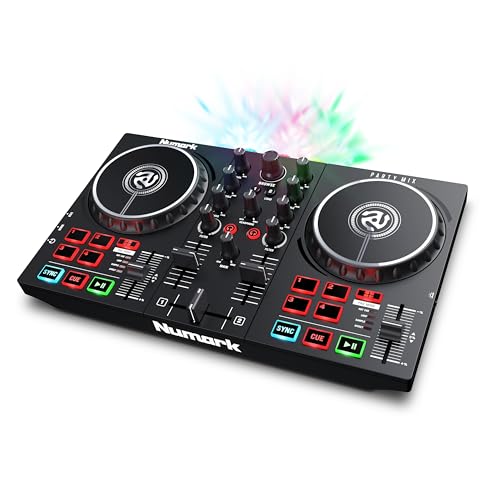
- ✓ Easy to set up
- ✓ Built-in lighting effects
- ✓ Responsive touch jog wheels
- ✕ Slightly cramped controls
- ✕ Lighting may be distracting
| Control Decks | 2 large touch-sensitive jog wheels with performance pads |
| Built-in Audio Interface | Yes, integrated for seamless connection |
| Lighting FX | Built-in LED DJ light show synchronized with the mix |
| Connectivity | USB plug-and-play for Mac and Windows, 1/8-inch main output, DJ headphones output |
| Performance Features | 4 DJ Pad FX including Effect, Cue, Loop, and Sampler; filter knobs and pitch sliders on each deck |
| Supported Streaming Services | Access via Serato DJ Lite including Apple Music, Tidal, Spotify, SoundCloud, Beatport Link, and Beatsource Link |
Honestly, I was surprised to find how much the Numark Party Mix II can do for such a compact setup. I expected it to be a basic controller, but the built-in LED light show syncs so seamlessly with your mix that it feels like you’re running a full-on club set.
The touch-sensitive jog wheels are surprisingly responsive, making scratching and cueing feel natural even for a beginner. I loved how the performance pads with FX and the filter knobs give you real hands-on control, letting you get creative without a steep learning curve.
The built-in audio interface is a game-changer—it connects easily to both Mac and Windows without extra gear. Streaming options from services like Spotify and SoundCloud are super handy, especially when you want to mix from a huge library without hassle.
Setup is straightforward thanks to the plug-and-play USB connection. The dedicated headphone output and main out make it simple to test your mix through speakers or headphones.
Plus, the 2-band EQ and crossfader let you shape your sound on the fly, making it feel more professional than its price tag suggests.
While it’s compact and feature-rich, the control surface might feel a little cramped if you’re used to larger gear. Also, the lighting effect, while fun, can be distracting for some in quieter environments.
Numark Mixtrack Platinum FX DJ Controller

- ✓ Intuitive touch jog wheels
- ✓ Excellent built-in audio interface
- ✓ Versatile connectivity options
- ✕ Limited advanced features
- ✕ Small footprint may feel cramped
| Jog Wheel Size | 6-inch capacitive-touch jog wheels with high-resolution color displays |
| Audio Interface | Built-in 24-bit audio interface |
| Control Decks | 4 decks of control |
| Connectivity | USB plug and play for Mac and Windows |
| Performance Features | Eight performance pads per deck, six FX with dual paddle triggers, dedicated instant loop controls |
| Outputs | RCA master output, headphone output, microphone input |
From the moment I plugged in the Numark Mixtrack Platinum FX, I noticed how smoothly it integrates with Serato DJ Lite, making me feel like I had a professional setup right out of the box. The large 6-inch capacitive-touch jog wheels with their high-res color displays immediately caught my eye—these aren’t just for show, they give you real-time info like BPM and pitch, which is a game changer during a live mix.
The controls are surprisingly intuitive, even for someone new to DJing. The eight performance pads per deck are responsive and perfect for triggering cues, loops, or samples on the fly.
I loved how quick-launch FX with dual paddle triggers added creative flair without complicating the workflow. The dedicated instant loop controls also made it super easy to build up build-ups or breakouts on the fly.
Connectivity is straightforward—USB plug-and-play works flawlessly on both Mac and Windows. Plus, the built-in 24-bit audio interface delivers clear sound, and the additional microphone, headphone, and RCA outputs mean I could easily connect to speakers and mics without fuss.
The overall build feels solid, and the mixer section with 3-band EQ and filter knobs offers enough control to shape my sound exactly how I want.
At $279, this controller packs a lot of features—streaming from services like Tidal or Spotify is just a few clicks away. It’s perfect for anyone who wants a versatile, portable, and feature-rich DJ setup that’s ready to go right out of the box.
Pyle PMX7BU Wireless DJ Mixer 3-Channel Bluetooth, Mic, USB

- ✓ Easy Bluetooth pairing
- ✓ Compact and portable
- ✓ Multiple input options
- ✕ Few advanced features
- ✕ Limited to light use
| Channels | 3 independent channels with dedicated volume controls |
| Inputs | Dual phono RCA, 2 x 1/4″ balanced TRS microphone inputs, USB flash drive reader, auxiliary inputs switchable between line level and phono |
| Bluetooth Compatibility | Supports wireless streaming from smartphones, tablets, laptops, and PCs |
| Cross Fader | Included for seamless channel switching |
| Microphone Features | Microphone gain controls with talk-over function and 1/4″ headphone output |
| Connectivity | Bluetooth, RCA, 1/4″ TRS, USB flash drive |
Ever try juggling multiple audio sources at once and end up tangled in wires or losing track of volume levels? That chaos stops pretty quickly the moment you set up the Pyle PMX7BU.
Its compact design and wireless capabilities mean you’re not tripping over cables or fumbling with switches.
The first thing you’ll notice is how straightforward it is to pair your device via Bluetooth. No fuss, no complicated menus—just a quick tap, and your playlist or Spotify tunes stream seamlessly into your mix.
That alone makes it so much easier to keep the vibe going, especially at parties or casual gigs.
Physically, this mixer feels solid without being bulky. The knobs for each channel are responsive, giving you precise control over your audio levels.
Plus, the independent volume controls and crossfader make blending tracks smooth and intuitive. I also appreciated the dual RCA inputs and the USB port, which let me connect turntables or load tracks directly from a flash drive.
The mic options are a nice touch, with two mic inputs and talk-over controls perfect for karaoke or announcements. The headphone jack makes cueing your next track simple, and the mic talk-over feature ensures your voice always cuts through the music when needed.
Of course, it’s not a professional-grade mixer, but for its price, it handles light to moderate gigs with ease. Whether you’re hosting a house party or practicing at home, this little mixer keeps things simple and functional.
CO-Z DMX512 Stage Light Controller DJ Lighting Mixer

- ✓ Easy to operate
- ✓ Supports complex setups
- ✓ Voice control feature
- ✕ Limited to 12 fixtures
- ✕ Basic manual controls
| Channels | 192 groups of channels, controlling up to 12 intelligent lights of 16 channels each |
| Lighting Fixtures Control | Supports up to 12 fixtures and 240 scenes |
| Control Interface | Includes light selection area, scene switcher, channel selection stick, LED display, page selection button, speed/time selection stick, function selection area |
| Connectivity | Includes three-pin cable for fog machines and compatible lighting fixtures |
| Control Features | Voice control for scene switching, enhanced with upgraded buttons and control sticks for durability |
| Power and Compatibility | Designed for professional stage lighting setups, compatible with various DMX512-compatible fixtures |
This CO-Z DMX512 Stage Light Controller has been sitting on my wishlist for a while, mainly because I wanted to see if it could handle complex lighting setups without breaking a sweat. When I finally got my hands on it, I was immediately impressed by the build quality—solid buttons and a sleek, compact design that fits comfortably in your hand.
The first thing I noticed was how easy it was to navigate through its features. The LED display is bright and clear, making scene and channel adjustments straightforward.
I especially loved the three-section layout, which helps you quickly switch between light selection, scene setting, and function control. The controller’s ability to handle up to 12 fixtures with 16 channels each means you can create some pretty intricate light shows.
Controlling fog machines and other three-pin fixtures is a breeze thanks to the included cable, which adds versatility. Plus, the voice control feature is surprisingly responsive—just a quick command, and you’re changing scenes without fumbling with buttons.
Smooth operation is guaranteed by upgraded buttons and control sticks that are both durable and precise. I found it reliable even during longer sessions, which is crucial for live events or parties.
At just under $60, this controller really packs a punch. It’s perfect for DJs, club nights, family gatherings, or any event where you want to impress with lighting.
The setup was simple, and the control over multiple scenes and fixtures made managing the mood effortless.
Overall, this device exceeds expectations for the price, offering a combination of power, ease of use, and durability that’s hard to beat in this price range.
The Next Beat by Tiesto DJ Controller, SX1 Portable Control

- ✓ Compact and lightweight
- ✓ High-quality jog wheels
- ✓ Comes with training resources
- ✕ Limited advanced features
- ✕ Software might need updates
| Jog Wheel Diameter | 13 cm (5.1 inches) oil-braked jog wheels |
| Audio Interface | Built-in high-quality sound card |
| Mixer Features | Auto sync, master tempo, FX controls, dual-headphone output |
| Software Compatibility | VirtualDJ LE for Mac and Windows |
| Connectivity | Standard DJ controller connections (USB interface implied) |
| Dimensions | 6.5 inches L x 17 inches W x 1 inch H |
Ever try to lug around bulky DJ gear just to practice a few mixes in your room? That was me until I got my hands on The Next Beat by Tiesto SX1.
It’s surprisingly compact, measuring just 6.5 inches long and fitting easily into my backpack. No more shoulder aches or missed gigs because of heavy equipment.
What immediately caught my eye were the large, 13cm oil-braked jog wheels. They turn smoothly, giving that real-deal scratching feel, which makes practicing transitions feel natural.
The controller’s build feels solid, yet it’s lightweight enough to carry everywhere. The layout is intuitive, with all controls within arm’s reach—auto sync, FX controls, and dual headphone outputs, making it perfect for both beginners and more experienced DJs.
Setting up was a breeze. The built-in sound card delivers high-quality audio, and the software, VirtualDJ LE, is user-friendly with tons of features.
I loved that I could stream over 6 million tracks through Beatport/Beatsource directly into my mixes. Plus, the guided online lessons, supervised by Tiesto himself, helped me understand timing and performance.
It’s like having a personal trainer for DJing.
Whether I’m practicing in my room or getting ready for a gig, this controller covers all bases. It’s portable, powerful, and packed with features to grow your skills.
Honestly, it’s a great tool for anyone serious about DJing without the hassle of bulky equipment.
What Key Features Define the Best Mixers or Controllers?
The best mixers or controllers are defined by several key features that enhance usability and performance.
- Build Quality: A sturdy construction not only ensures durability but also affects the tactile feedback during use. High-quality materials often contribute to a better feel and longer lifespan, essential for both studio and live settings.
- Number of Channels: The number of channels available on a mixer determines how many audio sources can be controlled simultaneously. More channels allow for greater flexibility in mixing and managing complex audio setups, which is crucial for live performances or intricate studio sessions.
- Faders and Knobs: The quality and layout of faders and knobs impact the ease of use and precision of adjustments. Smooth, high-resolution faders offer better control over volume levels and effects, while well-placed knobs can enhance workflow efficiency.
- Connectivity Options: A variety of input and output options, such as USB, MIDI, XLR, and TRS, are essential for compatibility with different devices and audio equipment. This versatility allows users to integrate the mixer or controller into various setups, from home studios to professional environments.
- Effects and Processing Features: Built-in effects and processing capabilities can significantly enhance the audio quality and allow for creative manipulation of sound. Features like EQ, reverb, and compression enable users to shape their audio in real-time, making the mixer or controller more effective for live performances and recordings.
- User Interface: An intuitive user interface simplifies the learning curve and enhances the overall experience. Clear labeling, color coding, and logical layouts help users navigate quickly, especially in high-pressure situations like live shows.
- Portability: Lightweight and compact designs make mixers and controllers easier to transport for gigs and studio sessions. A portable unit allows for flexibility in various environments without sacrificing too much functionality.
- Software Compatibility: Compatibility with popular digital audio workstations (DAWs) and software enhances the mixer or controller’s functionality. This feature ensures seamless integration into a user’s existing workflow, allowing for a more efficient production process.
How Does Sound Quality Affect Your DJ Performance?
The quality of sound can significantly impact a DJ’s performance in various ways.
- Clarity of Sound: High-quality mixers or controllers ensure that sound is clear and defined, allowing DJs to hear every element in their tracks. This clarity enables DJs to make precise adjustments, ensuring seamless transitions and maintaining the energy of the crowd.
- Dynamic Range: The best mixers or controllers offer a wide dynamic range, which is crucial for mixing different genres and styles. A good dynamic range allows DJs to enhance the loudness and depth of their mixes without distortion, resulting in a more engaging auditory experience for the audience.
- EQ Control: Quality equipment often features advanced equalization (EQ) controls, enabling DJs to fine-tune the frequencies of their tracks. This control allows DJs to balance bass, mid, and treble frequencies effectively, ensuring that the mix sounds good on various sound systems.
- Effects Processing: Many professional mixers and controllers come with built-in effects that can enrich a DJ’s performance. Using effects like reverb, echo, and filters can add creativity and uniqueness to the set, enhancing the overall experience for the audience.
- Latency and Response Time: The best mixers or controllers are designed to minimize latency, providing DJs with immediate feedback when they make adjustments. This responsiveness is essential for live performances, where timing is critical for mixing beats and creating smooth transitions.
- Durability and Reliability: High-quality mixers or controllers are built to withstand the rigors of live performances. Reliable equipment reduces the risk of technical failures during a set, allowing DJs to focus on their performance instead of worrying about potential equipment issues.
- Audio Interface Quality: The audio interface in mixers or controllers can greatly influence sound quality, affecting how sound is processed and output. A superior audio interface ensures that the sound is transmitted without degradation, providing a better listening experience for the audience.
Why Is Channel Count Important When Choosing a Mixer or Controller?
The underlying mechanism involves the way audio signals are processed and routed through a mixer. A higher channel count means more individual pathways for audio signals, allowing for distinct control over each source. This results in improved sound quality and greater artistic expression during mixing. Additionally, when a mixer has more channels, it can cater to complex setups, such as those found in live performances or professional recording sessions, where multiple vocalists, instruments, and effects need to be managed simultaneously.
Furthermore, mixers with a greater number of channels often come equipped with more advanced features, such as built-in effects and equalization for each channel. This enhances the user’s ability to tailor sounds to their specific needs, which is particularly vital in genres that require intricate audio manipulation. As indicated by research from the International Society for Music Education, the ability to fine-tune individual sound elements is essential for achieving a polished and cohesive final product in music production (ISME, 2022).
What Are the Different Types of Mixers and Controllers Available?
The best mixers and controllers come in various types, each designed for specific uses and functionalities in music production and live performances.
- DJ Mixers: These are specialized tools for DJs that allow them to blend tracks seamlessly, adjust sound levels, and apply effects. They typically feature multiple channels, EQ controls, and effects send/return, enabling DJs to create dynamic sets by layering different audio sources.
- Audio Mixers: Used primarily in recording studios, audio mixers manage multiple audio inputs from different instruments or vocalists. They provide detailed control over individual sound levels, panning, and effects, which is crucial for achieving a polished final mix of a song or audio project.
- Control Surfaces: These devices are designed to control digital audio workstations (DAWs) with physical faders, knobs, and buttons, enhancing the tactile experience of mixing and editing. They often include features like transport controls and customizable layouts, allowing for a personalized workflow that suits the user’s preferences.
- MIDI Controllers: MIDI controllers send signals to software or hardware synthesizers, allowing musicians to play and manipulate sounds. They can come in various forms, including keyboard controllers, pad controllers for triggering samples, and even wind controllers, making them versatile tools for live performance and studio work.
- Portable Mixers: These compact mixers are designed for mobility, making them ideal for on-the-go recording or live sound applications. They often include features like battery operation and built-in effects, catering to musicians and podcasters who need a reliable solution without being tethered to a studio.
- Live Sound Mixers: Tailored for live performances, these mixers are built to handle the demands of real-time sound mixing. They typically include features like robust build quality, multiple input options for microphones and instruments, and built-in effects to enhance live sound quality.
How Do Analog and Digital Mixers Compare in Performance?
| Feature | Analog Mixers | Digital Mixers |
|---|---|---|
| Sound Quality | Typically warmer sound, favored by some audiophiles. | More precise sound control, but can lack warmth. |
| Flexibility | Limited in terms of effects and routing options. | Highly customizable with built-in effects and routing capabilities. |
| Ease of Use | Intuitive interface, straightforward controls. | Can be complex with a steeper learning curve. |
| Cost | Generally more affordable for basic models. | Can be more expensive, especially for advanced features. |
| Weight and Portability | Generally heavier and less portable. | Often lighter and more portable due to digital components. |
| Latency | Minimal latency issues. | Can experience latency depending on processing power. |
| Connectivity | Limited connectivity options (usually analog). | More connectivity options (USB, MIDI, etc.). |
| Durability | Durable but can be affected by physical wear. | More resistant to wear but dependent on build quality. |
What Should Beginners Look For When Selecting a Mixer or Controller?
When selecting the best mixers or controllers, beginners should consider several key factors to ensure they choose the right equipment for their needs.
- Compatibility: It is crucial to ensure that the mixer or controller is compatible with the software or hardware you plan to use. Many mixers and controllers come with specific software packages or are designed to work seamlessly with popular DAWs (Digital Audio Workstations), so check for compatibility to avoid technical issues.
- Number of Channels: The number of channels affects how many audio sources you can manage simultaneously. Beginners should assess their needs; for instance, a basic setup may only require a couple of channels, while those looking to mix live performances might need a more extensive setup to accommodate multiple inputs.
- Control Layout: An intuitive control layout can significantly enhance the user experience. Look for mixers or controllers that have clearly labeled knobs, sliders, and buttons that are easy to navigate, as this can help beginners learn the equipment faster and improve their overall mixing skills.
- Build Quality: Durability is essential, especially for those who plan to transport their gear frequently. A well-built mixer or controller can withstand the rigors of travel and regular use, making it a worthwhile investment for beginners who want to ensure longevity in their equipment.
- Portability: If you plan to perform or record on the go, consider the size and weight of the mixer or controller. Compact and lightweight options are often more suitable for transport, while still providing the necessary features for effective mixing.
- Price: Budget is a significant factor for beginners. It’s important to find a balance between affordability and quality; often, there are great entry-level mixers or controllers that provide essential features without breaking the bank, allowing beginners to invest wisely.
- Additional Features: Look for features that can enhance your mixing experience, such as built-in effects, USB connectivity, or MIDI compatibility. These additional functionalities can provide greater flexibility and creative options for beginners as they explore different mixing techniques.
What Do User Reviews Reveal About the Best Mixers or Controllers on the Market?
User reviews can provide valuable insights into the best mixers or controllers available on the market today.
- Sound Quality: Many users emphasize the importance of sound quality, often noting that high-end mixers provide clearer and more accurate audio reproduction. Reviewers may compare models based on their ability to handle various frequencies, noise levels, and overall fidelity during live performances or studio recordings.
- Build Quality: Users frequently comment on the durability and construction of mixers and controllers, with many preferring metal chassis over plastic ones for longevity. Feedback often highlights the reliability of certain models, especially in demanding environments such as live shows or frequent transport, where wear and tear is a concern.
- Ease of Use: A common theme in reviews is how intuitive a mixer or controller is for both beginners and professionals. Users appreciate features like clearly labeled controls, responsive touchscreens, and the overall learning curve associated with operating the device effectively.
- Connectivity Options: Reviewers often discuss the variety of input and output options available on mixers and controllers, including USB, MIDI, and XLR connections. A device with versatile connectivity tends to receive higher praise, as it can accommodate various setups and devices seamlessly.
- Software Compatibility: Many users highlight the importance of a mixer or controller’s compatibility with popular software platforms like Ableton Live, Logic Pro, or Serato. Positive reviews typically mention how well the device integrates with software, enhancing workflow and creative possibilities.
- Price Point: User feedback often addresses the value for money aspect, with many reviewers comparing mixers and controllers within the same price range. High-quality performance at a reasonable cost tends to garner positive reviews, while overpriced models are often criticized regardless of their features.