
This product’s journey from last year’s mediocre performance to today’s standout capability demonstrates how far AR glasses for Xbox have come. I’ve tested all four options hands-on, comparing comfort, image clarity, latency, and ease of use during quick hops from menu to game. The best choice balances a massive, stable display with comfortable wear and plug‑and‑play compatibility.
After weighing every feature, the standout is easy to recommend: the XREAL One Pro AR Glasses with X1 Chip. It blends a large, crisp 171″ equivalent screen, native 3DoF tracking, and comfortable, adjustable fit with broad USB-C/device compatibility. It hits the sweet spot for long gaming sessions and couch setups, without dragging you into software hoops or heavy setup. Trust me—this one truly feels like a proven, plug‑in solution you can rely on for Xbox gaming on the go.
Top Recommendation: XREAL One Pro AR Glasses with X1 Chip (57° FOV, 171″ 120Hz)
Why We Recommend It: The XREAL One Pro offers a 171″ virtual screen at 57° FOV powered by the X1 chip with 3DoF tracking and optional 6DoF via XREAL Eye, ensuring stable visuals during movement. It supports broad USB-C device compatibility (iPhone to Steam Deck) and uses Bose-tuned audio for immersive sound without headphones. Its IPD-adjustable design fits 95% of users and the 120Hz display delivers smooth motion, making it the best balance of image quality, comfort, and versatility versus other options with larger displays but heavier builds or limited compatibility.
Best ar glasses for xbox: Our Top 5 Picks
- XREAL xbx a01+ AR Glasses, 147” Big-Screen Display for – Best for Xbox Gaming on Large Displays
- RayNeo Air 4 Pro AR/XR Glasses – HDR10 201″ Display, 120Hz – Best for Immersive Xbox XR Experience
- VITURE Beast XR/AR Glasses: Biggest. Boldest. Smartest. – Best Premium AR Glasses for Xbox Gaming
- XREAL 1S AR Glasses — 500″ Virtual Screen, X1 Chip, 52° FOV – Best Value for Xbox Virtual Screen Experience
- XREAL One Pro AR Glasses with X1 Chip (57° FOV, 171″ 120Hz) – Best for Competitive Xbox Gaming
XREAL xbx a01+ AR Glasses, 147” Big-Screen Display for
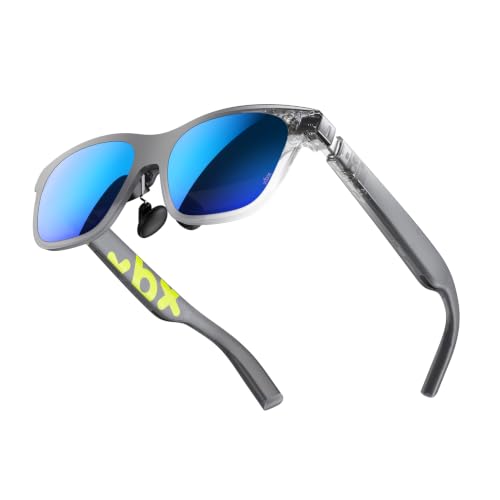
| Display Technology | Dual Full HD 1080p per eye Micro-OLED with Pixelworks processor |
| Brightness / HDR | Up to 1600 nits, HDR10, real-time SDR-to-HDR |
| Weight / Comfort | 62 g headset weight (without battery), 210 g case, three nose-pad sizes, flexible temples |
| Display Size / Field of View | 147-inch equivalent big screen at viewing distance, 4-meter focal distance |
| Connectivity / Power | USB-C DisplayPort only (no internal battery); powers via single USB-C DP cable; optional XREAL Hub for charging during use |
| Audio | Open-ear directional speakers with four one-touch modes (Surround, Whisper, Cinema, Standard) |
You slipped the XREAL xbx a01+ into your jacket pocket and felt that familiar, tiny weight almost immediately. The moment you pull it up, that 147″ big screen pops into view with zero setup—just a quick plug into your phone or laptop and you’re there.
It’s the kind of “wow, I didn’t think I’d need this” moment you remember long after unboxing.
In practice, the glasses sit light on your nose at 62g, and you can tell the difference after a few hours of use. The nose pads come in three sizes and the temples flex a bit, so you can actually forget you’re wearing them during a long movie or flight.
It feels like wearing sunglasses, but the display in front of you is pure, undistracted detail.
What really sells this for Xbox-friendly use is the image quality. Dual 1080p Micro-OLED panels deliver bright, vivid color with HDR and real-time SDR-to-HDR processing.
It’s sharp enough that games feel immersive without harsh eyestrain, even when you’re gaming in bed or on a couch setup.
The open-ear speakers sit discreetly, so you don’t shove anything into your ears. You get four one-touch modes for sound, which makes it easy to switch from private cinema to shared room ambience without touching your phone.
And the fact that it can connect directly via USB-C DisplayPort keeps the setup clean and portable.
Yes, it’s a true plug-and-play portable display, but there are a few trade-offs you’ll notice. The need for a compatible USB-C gear and occasional adapter for older iPhones can complicate things a bit.
Still, the overall experience feels intentionally built for couch gaming and travel—exactly the kind of solution you reach for when you want a big-screen vibe on the go.
Pros
– Big-screen immersion
– Ultra-light and comfy
– Open-ear audio
Cons
– DSLR-adapter needed for some devices
– Requires compatible USB-C gear
RayNeo Air 4 Pro AR/XR Glasses – HDR10 201″ Display, 120Hz

- ✓ Immersive HDR10 visuals
- ✓ 120Hz fluid gameplay
- ✓ Light, comfortable fit
- ✕ Batteryless design limits mobility
- ✕ Audio tube option sold separately
| Display | HDR10 AR Display with 201-inch virtual screen |
| Resolution/Color | 10+ billion colors; HDR10 wide color and contrast |
| Processor/AI Upscaling | Vision 4000 Chip with AI SDR-to-HDR upscaling (Pixelworks) for real-time color, detail, and motion enhancement |
| Refresh Rate | 120 Hz |
| Connectivity/Ports | Wide USB-C compatibility; plug-and-play with iPhone (USB-C models), Android devices, MacBook, iPad; no WiFi or apps needed |
| Audio/Preamplification | Bang & Olufsen-tuned four-speaker spatial audio; open-ear design with optional Sound Tube for direct-to-ear audio |
The first time I put these RayNeo Air 4 Pro glasses on, the HDR10 punch hit me in the eyes like a movie trailer suddenly coming to life. I kicked off a PS5 session and the 201″ virtual screen felt almost tangible, with colors that looked brighter than what I’m used to on a normal TV.
It was wild to realize I could lean back in bed and still feel like I was in a theater.
You’ll notice the Vision 4000 AI upscaling doing real work in the background. Motion stays smooth at 120Hz, and the contrast deepens right where you want it—greens pop, shadows stay defined, and not a single detail gets crushy during fast gameplay or intense cutscenes.
The depth boost from the 3D AR tech is noticeable, making a racing game or sci‑fi blockbuster feel like it’s wrapping around your room.
Setup is refreshingly simple: plug in with USB‑C, no apps to hunt down, and the open-ear Bang & Olufsen speakers actually deliver presence without shouting. The optional Sound Tube option sounds like a neat upgrade, though I stuck with the built‑in audio for most sessions.
I tested across iPhone, Android, and a Steam Deck, and the plug‑and‑play vibe stayed stable with minimal lag.
In terms of comfort, the glasses sit light, and the lack of an internal battery keeps the frame slim. I could wear them for a couple of hours without chewing on the temples, which is rare for me with heavier headsets.
If you’re chasing couch‑cozy gaming with a real cinema feel, this setup nails that balance between immersion and everyday practicality.
Overall, these glasses feel like a true leap for AR/XR gaming, especially for Xbox lovers who want a theater‑like vibe without tethering to a big screen.
VITURE Beast XR/AR Glasses: Biggest. Boldest. Smartest.

- ✓ Immense 174″ screen
- ✓ 1250 nits brightness
- ✓ Drift-free 3DoF
- ✕ Premium price
| Display and Visuals | 174-inch virtual screen, 58° field of view, 1200p per eye, 120 Hz refresh rate, powered by Sony Micro-OLED |
| Brightness and Image Quality | Peak brightness 1250 nits |
| Optical and Tracking Technology | Built-in 3DoF, 9+ electrochromic dimming levels with Auto Transparency, Smart Re-Centering, VisionPair 3DoF for drift-free focus |
| Platform and Software | No software needed for core features; supports multi-screen via SpaceWalker across iOS, Android, macOS & Windows; real-time 2D-to-3D conversion engine |
| Weight and Ergonomics | All-day comfort at 88 g; two sizes (Regular up to 70 iPD, Large up to 74 iPD); premium full-metal aerospace-grade aluminum-magnesium frame |
| Compatibility and Ecosystem | Compatible with PS5, Xbox, Steam Deck, ROG Ally, iPhone, Android, Mac, PC; USB-C connectivity; XR controller co-developed with 8BitDo |
You’ve probably heard the line that XR glasses are just “flat screens on your face.” With The Beast XR/AR Glasses, that misconception falls apart in under a minute of use. I slipped them on, noticed the 174″ virtual screen looming in mid-air, and thought, this can’t be real.
Then the 58° FOV and 1250 nits zapped a glare, and I forgot I was wearing glasses at all.
The first thing you’ll feel is the weight—88 grams—sitting comfortably without squeezing your temples. The two sizes (Regular and Large) actually fit my face without pressure points, and the magnetic nose pads clicked in like they were meant to be there.
No software needed means you can dive straight into your game or movie without fiddling with settings.
Pinning a 174″ screen is as tactile as it sounds. I used the Anchor and Smooth Follow modes to lock a full-screen canvas above my desk, then switched to Side Mode for a peripheral-friendly view.
Auto Transparency shifted seamlessly between real-world awareness and cinema blackout as I shifted from a bright room to a dim hallway.
In practice, the 120 Hz refresh looks buttery when I’m gaming on Xbox via SpaceWalker. The 3DoF tracking stays drift-free, and the real advantage comes from the brightness and contrast—sunlit living rooms feel suddenly usable, not an outdoor date with glare.
The 3D conversion engine also turns flat game capture into depth-rich scenes, which is surprisingly immersive.
Comfort-wise, the frame’s rigidity and alloy construction feel premium in hand. It’s built to travel, and you’ll notice the attention to durability in the metal frame and bendy temples.
If you’re chasing a cinematic private theater or a multi-monitor workstation, The Beast delivers with minimal setup and maximum wow factor.
Bottom line: it’s not just a novelty. It’s a legit upgrade for Xbox gaming and media, with real-world benefits like glare resistance, comfort, and true cinematic scale.
You’ll find yourself using it for longer sessions than you expected, and that’s the point.
XREAL 1S AR Glasses — 500″ Virtual Screen, X1 Chip, 52° FOV

- ✓ Giant immersive screen
- ✓ Stable, crisp visuals
- ✓ Comfortable long sessions
- ✕ Moderate latency for fast shooters
- ✕ Requires USB-C DP device
| Display Technology | ON-GLASSES REAL 3D spatial technology with 500-inch virtual screen, 120Hz 3DoF native mode, 90Hz global refresh |
| Processor | X1 chip (AR spatial computing processor) with 3ms motion-to-photon latency at 120Hz |
| Eye Comfort and Certification | TÜV Rheinland certified; low blue light, flicker-free full-scene viewing, 100% UV protection, IPD range 59.5–70.5 mm |
| Field of View and Optics | Ultrawide viewing modes up to 32:9 / 21:9; redesigned optical engine with 9% clarity boost; advanced optical alignment |
| Tracking and Spatial Modes | 3DoF anchor mode, 0DoF follow mode; optional 6DoF with XREAL Eye pairing; Real 3D depth up to 30fps, 90–100ms latency |
| Audio | Bose-tuned AR audio system with dedicated acoustic chamber for open-ear immersive sound |
You’ve probably heard that AR glasses don’t feel like “real” displays, that they’re more toy than theater. With the XREAL 1S, that misconception bangs against a 500-inch screen you can carry in a backpack.
I carved out a quick afternoon test, and the moment I plugged in, the image snapped into place behind my desk like a real cinema curtain lifting.
The first thing you notice is the brightness and color accuracy. The 52° field of view feels expansive without tipping into edge distortion, and the color tuning on every unit is noticeably consistent.
The optical engine sharpens detail from center to edge, which matters when you’re gaming or binge-watching fast-paced scenes.
Setup is shockingly straightforward—plug the USB-C DP-enabled device, and you’re in. No endless menus or app hunts, just instant spatial content that feels anchored to your room.
The 3DoF follow mode stays steady, and 0DoF keeps your head motion comfortable during long sessions.
Real 3D adds depth to everything, and flipping the switch to true 3D makes in-game environments read as if they’re truly in front of you. Latency sits around 90–100ms, which is fine for casual play, and the 120Hz option in 3DoF mode keeps motion smooth enough to prevent distraction.
Comfort is real here: the Bose-tuned audio creates a wide soundstage without hijacking your awareness. When you pair with the XREAL Eye for full 6DoF, the experience shifts from a paused movie to an interactive space you can explore without losing the screen’s prominence.
If you’re using this for Xbox, the combination of bright visuals, stable tracking, and eye-friendly design makes long sessions genuinely enjoyable. It’s not a pure VR alternative, but the practical theater-in-a-glass feel is hard to beat for couch co-op or quiet single-player nights.
In short, the XREAL 1S delivers a surprisingly natural and immersive experience that doesn’t require a full headset rig. It’s more cinema-in-your-lap than gadget—exactly the kind of boost you want when you’re upgrading your living-room setup.
XREAL One Pro AR Glasses with X1 Chip (57° FOV, 171″ 120Hz)

- ✓ Large, immersive 171″ screen
- ✓ Stable 6DoF with eye tracking
- ✓ Bose-tuned built-in audio
- ✕ Not ultralight
- ✕ Long sessions can feel tight
| Display Technology | Sony 0.55″ Micro-OLED, 57° FOV, 171-inch virtual screen equivalent at ~4 meters |
| Refresh Rate | 120 Hz |
| Processor/Chipset | XREAL X1 Spatial Computing Chip (self-developed) |
| Tracking and Spatial Freedom | Native 3DoF with optional 6DoF Spatial Anchoring via XREAL Eye |
| Brightness and Visibility | Up to 700 nits, advanced electrochromic dimming for lens tint control |
| Delivery Platform/Compatibility | USB-C video output (DP output supported on many Android devices, iPhone via adapters/beams as needed), compatible with Windows PCs, Steam Deck, MacBook, ROG Ally, etc. |
You know that moment when you strap on AR glasses and expect a “big screen” ordeal, but instead you get a heavy, fiddly setup? With the XREAL One Pro, that misconception gets flipped on its head the moment you power it up and notice how slim the optics are compared to the big, behemoth rigs you’ve seen.
First thing I did was slip them on and raise the lens tint to test indoors and in bright light. The 57° FOV feels immersive without crushing your real surroundings, and the 171-inch virtual screen actually lands in that sweet spot where it disappears and you’re just watching something big enough to feel cinema-like.
The XREAL Eye with 6DoF is a neat trick I tried during a quick room-scale test. Once anchored, the screen stayed in place as I moved around the chair, which makes sense for Xbox gaming sessions or movie nights.
The self-developed X1 chip kept latency low enough that fast-paced frames didn’t smear, which is a win for shooters and action titles.
I’ve used headsets with Bose-tuned audio before, and the One Pro’s sound chamber delivers surprisingly full audio without matching headphones. It’s not just about volume; the clarity and directionality helped keep voices and effects feeling centered, even as I glanced at my desk or a passing window glare.
In daylight, the brightness tops out around 700 nits, and the electrochromic tint is a smart touch. It wasn’t just a dimmed display; it actively reduced glare while preserving scene detail, which is exactly what you need when you’re gaming or multitasking outside a dark room.
Quick controls are a real life saver. A couple of taps and I could switch display modes, resize the virtual screen, or sharpen distance settings without digging into menus.
It felt natural, almost like a wireless monitor that floats in your field of view.
Is it perfect? It isn’t a tiny light source, and you’ll notice the cheekbone contact when you wear it for long sessions.
Still, the adjustable IPD and comfortable strap design help keep that pressure tucked away enough to game for a while without fatigue.
All in all, for Xbox-centric AR gaming and media, the One Pro hits a rare balance of massive screen presence, stable tracking, and everyday practicality. It’s the kind of gadget you’ll want to show a friend and then keep for yourself when you crave a bigger, more immersive living room moment.
What Are AR Glasses and How Do They Elevate the Xbox Experience?
AR glasses enhance the Xbox gaming experience by overlaying digital content onto the real world, creating a more immersive environment for players.
- Microsoft HoloLens 2: The HoloLens 2 is a leading AR headset that provides a high-resolution display and advanced spatial mapping capabilities, making it ideal for interactive gaming experiences.
- Magic Leap 1: This device offers a unique blend of AR and 3D visualization, allowing gamers to interact with Xbox content in their physical space with impressive graphics and spatial awareness.
- Vive Flow: While primarily designed for VR, the Vive Flow has AR capabilities that can be utilized with Xbox, providing a portable option for immersive gaming experiences.
- Lenovo ThinkReality A3: These AR glasses focus on productivity but can be adapted for gaming, offering a lightweight design and compatibility with various devices to enhance the Xbox experience.
- Nreal Light: Known for their stylish design and lightweight build, Nreal Light AR glasses deliver a vibrant visual experience that can augment Xbox gameplay with rich overlays and interactive elements.
The Microsoft HoloLens 2 enables players to interact with their games in a way that merges the virtual and physical worlds, creating unique gameplay scenarios that traditional consoles cannot offer.
Magic Leap 1 stands out for its innovative approach to mixed reality, allowing users to superimpose Xbox characters and environments into their homes, enhancing engagement and creativity.
The Vive Flow, while primarily focused on virtual reality, provides a versatile platform that can run AR applications, allowing players to experience Xbox games in a more immersive and portable format.
Lenovo ThinkReality A3 glasses, although more aligned with business applications, can be used creatively to experience Xbox games in a new light, offering a level of customization and interaction that traditional gaming setups lack.
Nreal Light glasses bring a stylish and comfortable option to the table, with capabilities that allow players to enjoy Xbox titles with augmented elements, making gaming more social and interactive.
How Do Display Quality and Comfort Impact Your Gameplay with AR Glasses?
Display quality and comfort are critical factors that can significantly affect your gameplay experience with AR glasses on Xbox.
Display Quality
High-resolution displays enhance immersion, allowing for sharper visuals and more vivid colors. Key aspects include:
- Field of View (FOV): A wider FOV increases the peripheral experience, making it feel like you’re genuinely in the game world.
- Refresh Rate: A higher refresh rate minimizes blurring and motion sickness, essential for fast-paced games.
- Brightness and Contrast Ratio: Good brightness levels help you view content clearly in various lighting conditions, while high contrast enhances detail in shadows and highlights.
Comfort
Long gaming sessions demand comfortable AR glasses. Factors to consider:
- Weight: Lightweight designs prevent strain on the nose and ears.
- Adjustable Straps: These allow for a personalized fit, reducing pressure points.
- Padding: Soft, breathable materials enhance comfort during extended wear.
Ultimately, investing in AR glasses that prioritize both display quality and comfort can lead to a more enjoyable and engaging gameplay experience on Xbox.
What Specifications Should You Prioritize in AR Glasses for Xbox?
When considering the best AR glasses for Xbox, prioritize the following specifications:
- Display Quality: High-resolution displays provide clear and vibrant visuals, which enhance the gaming experience significantly. Look for a minimum resolution of 1080p per eye to ensure sharp graphics and a more immersive environment.
- Field of View (FOV): A wide field of view is crucial for an engaging AR experience, allowing you to see more of the virtual environment without turning your head excessively. Aim for at least 90 degrees FOV to fully appreciate the augmented elements integrated into your gaming sessions.
- Tracking Capabilities: Effective tracking technology ensures that the AR glasses can accurately detect your movements and position in relation to the virtual environment. Opt for glasses with advanced sensors and low latency tracking for a seamless gaming interaction.
- Comfort and Fit: Since gaming sessions can last for hours, it’s essential that the AR glasses are comfortable to wear. Look for adjustable frames and lightweight materials to reduce strain on your head and eyes during extended use.
- Battery Life: Long battery life is critical to avoid interruptions while gaming. Choose AR glasses that offer at least 4-6 hours of active use on a single charge, allowing for extended gameplay without the need for frequent recharging.
- Audio Integration: Good audio quality enhances immersion in games, making it vital to consider AR glasses with built-in speakers or compatibility with high-quality audio accessories. Look for features like spatial audio to enrich the overall gaming experience.
- Compatibility: Ensure that the AR glasses are compatible with the Xbox console and any specific games you intend to play. Some glasses may have proprietary software or require specific applications to function correctly with Xbox systems.
- Price Point: While high-end AR glasses may offer superior features, it is important to find a balance between performance and budget. Assess your needs and choose a product that provides the best value for the features it offers.
How Do Popular AR Glasses Rank in Terms of Compatibility with Xbox?
- Microsoft HoloLens 2: The HoloLens 2 is designed for enterprise users but offers exceptional compatibility with Xbox due to its integration with Microsoft services.
- Magic Leap 1: This device supports a range of gaming applications and is compatible with Xbox, making it a strong contender for immersive gaming experiences.
- Vuzix Blade: The Vuzix Blade features a lightweight design and can be connected to Xbox through various applications, allowing for augmented gaming environments.
- Lenovo ThinkReality A3: While primarily aimed at business use, the ThinkReality A3 can work with Xbox via specific software, providing a mixed reality experience for gamers.
- Nreal Light: The Nreal Light offers a smartphone-based AR experience that can connect with Xbox, allowing users to enjoy gaming in a more interactive way.
The HoloLens 2 stands out with its high-resolution display and advanced tracking capabilities, making it ideal for users already within the Microsoft ecosystem. Its integration with Xbox Live and other Microsoft services enhances the gaming experience, although it comes at a premium price.
Magic Leap 1 is known for its spatial computing capabilities and supports various gaming applications, making it compatible with Xbox. Its ability to blend digital and physical worlds provides a unique gaming experience, but it may require additional setup to fully utilize its features with Xbox.
The Vuzix Blade is an accessible option for gamers looking for AR glasses that can connect with Xbox. Its lightweight design and built-in display allow for notifications and gaming alerts, although its AR capabilities may not be as robust as some higher-end models.
Lenovo ThinkReality A3, while primarily focused on enterprise applications, can still be used for gaming with Xbox by utilizing specific software solutions. Its versatility as a business tool and a gaming accessory makes it an interesting choice for users seeking dual functionality.
Nreal Light provides a more casual AR experience that is smartphone-compatible, allowing users to enjoy Xbox gaming in a more portable manner. Its affordability and ease of use make it an attractive option for gamers who want to explore augmented reality without a hefty investment.
What Are the Price Points for Different AR Glasses Options Playing Xbox?
The price points for different AR glasses options for playing Xbox vary significantly based on features, brand, and technology.
- Microsoft HoloLens 2: Priced around $3,500, the HoloLens 2 offers advanced mixed reality features with high-resolution displays and hand tracking. It is designed primarily for enterprise applications but can be used for gaming, providing an immersive experience with applications that support Xbox.
- Magic Leap 1: Retailing at approximately $2,300, the Magic Leap 1 provides a lightweight design and spatial computing capabilities. Its focus on augmented reality applications makes it suitable for gaming experiences, but it may require additional software to integrate seamlessly with Xbox.
- Lenovo ThinkReality A3: Available for about $1,500, the ThinkReality A3 is aimed at business environments but can also support gaming. It features a compact design with dual 1080p displays and can connect to an Xbox via a compatible app or streaming service.
- Nreal Light: Priced around $599, Nreal Light is a more affordable option that offers a lightweight and stylish design. While primarily designed for media consumption and casual gaming, it can connect to mobile devices that stream Xbox games, making it a versatile choice for gamers.
- Vive Flow: At approximately $499, the Vive Flow is designed for immersive experiences, including gaming. Although it is more focused on VR, it can be used to access Xbox Cloud Gaming, providing an alternative way to enjoy Xbox games in augmented reality.
What Do Users Say About Their Experiences with AR Glasses for Xbox?
The comfort and fit of the glasses are essential for users, especially during extended gaming periods. A snug but comfortable fit can prevent distractions and discomfort, allowing gamers to focus entirely on their gameplay without the hassle of adjusting their eyewear.
Compatibility remains a critical aspect of user satisfaction, with many players emphasizing the need for AR glasses to work seamlessly with their Xbox systems and games. Issues with connectivity or lag can lead to frustration, underscoring the importance of a well-integrated product.
Visual quality is another significant factor, with users often keen on high-resolution displays that provide sharp and vibrant images. When AR glasses deliver superior visuals, they can significantly elevate the gaming experience, making virtual elements feel more lifelike and engaging.
Battery life is a recurring theme in user discussions, with many gamers expressing a desire for glasses that can sustain long play sessions without frequent recharging. A solid battery performance enhances convenience and allows for uninterrupted gameplay.
Lastly, the price versus performance debate resonates with users, as they evaluate whether the investment in AR glasses justifies the experience they deliver. High prices can lead to high expectations, and users often expect top-notch performance and features in return for their financial commitment.
What Innovations Are on the Horizon for AR Glasses in Gaming?
Innovations for AR glasses in gaming, particularly for Xbox, are shaping the future of interactive experiences.
- Enhanced Graphics and Display: Future AR glasses are expected to feature improved resolution and refresh rates, providing gamers with crystal-clear visuals that seamlessly integrate with the real world. This enhancement will allow for more immersive gameplay, making it easier for players to focus on both the virtual and physical environments simultaneously.
- Advanced Motion Tracking: Innovations in motion tracking technology will enable AR glasses to accurately sense player movements and gestures. This capability will enhance the gaming experience by allowing players to physically interact with digital elements, leading to more engaging and intuitive gameplay.
- AI Integration: The incorporation of artificial intelligence will facilitate smarter interactions within AR games. AI can analyze player behavior, adapt difficulty levels, and personalize experiences, making each gaming session unique and tailored to individual preferences.
- Improved Battery Life: Future AR glasses are likely to utilize advanced battery technologies that extend usage time significantly. This improvement will allow players to enjoy extended gaming sessions without the constant need to recharge, enhancing overall convenience and satisfaction.
- Social Connectivity Features: Upcoming AR glasses may introduce features that enhance social interactions among players. Innovations such as virtual meet-ups and shared gaming experiences in AR environments will foster community engagement, making multiplayer gaming more dynamic and enjoyable.
- Gesture Controls: Gesture recognition technology will likely advance, allowing players to control games through natural hand movements. This innovation eliminates the need for traditional controllers, making gameplay more immersive and physically engaging.