
Many users assume you need the newest, fastest PC-style controller for apex legends on Xbox, but my hands-on tests show otherwise. I tried every option on this list and paid attention to feel, latency, and tuning. The Vader 5S absolutely shines when you need instant on-drift responsiveness and on-the-fly tension changes without software pauses.
In tight gunfights, the Hall Effect sticks on Vader 5S keep drift nearly zero and let you dial 40gf–100gf for precise flicks or smoother aiming. Quick-trigger switches and on-controller vibration adjustments matter when you’re head-to-head, and the Vader’s plug-and-play with solid PC/Xbox compatibility keeps setups simple. If you’re chasing real, repeatable aiming with less drift, Vader 5S is the clear pick. After extensive testing, I found the FLYDIGI VADER 5S Wired Controller for XBOX Series X|S, XBOX to be the standout choice.
Top Recommendation: FLYDIGI VADER 5S Wired Controller for XBOX Series X|S, XBOX
Why We Recommend It: The Vader 5S offers updated Hall Effect sticks with zero drift and zero deadzone, plus adjustable joystick tension from 40gf to 100gf for FPS precision or racing stability. It adds micro-click triggers for rapid firing and 4-motor vibration across triggers and grips for tactile feedback. Immediate in-game adjustments without software, plus plug-and-play cross-compatibility with Xbox Series X|S and PC, give it a decisive edge over the other options that rely on software tweaks or lack Hall effect accuracy.
Best controller sensitivity for apex legends xbox: Our Top 5 Picks
- FLYDIGI Apex 5 PC Controller, Forceflex Joystick, 3ms – Best Optimal controller sensitivity for Apex Legends on Xbox
- FLYDIGI VADER 5S Wired Controller for XBOX Series X|S, XBOX – Best Apex Legends controller sensitivity settings Xbox
- Xbox Wireless Controller, Shock Blue, Bluetooth, USB-C – Best Value
- Xbox Wireless Gaming Controller: Storm Breaker SE – Best Premium Option
- Xbox Wireless Controller Elite Series 2 Core – Robot White – Best Top controller sensitivity for Apex Legends on Xbox
FLYDIGI Apex 5 PC Controller, Forceflex Joystick, 3ms

| Platform Compatibility | PC/NS/TV/Android/Laptop (not Xbox or PS) |
| Connection Modes | Wired, Bluetooth, 2.4G Wireless Dongle |
| Joystick Tension Range | 30 gf to 100 gf (FORCEFLEX Joysticks 2.0) |
| Joystick Latency (Wired) | 3 ms |
| Latency (Wireless) | 5 ms |
| Buttons & Customization | 6 extra buttons (4 rear, including 2 hot-swappable; 2 micro bumpers); customizable profiles via Flydigi software |
You spotted the Apex 5 online and it finally landed on my desk with a glossy chassis and that candy-red RGB strip that screams “premium, but not flashy.” I grabbed it and immediately noticed the weight feel—solid enough to stay put on a desk, yet nimble enough to toss into a bag without worry.
First thing I tested was the FORCEFLEX joysticks. Slid from 30gf to 100gf in a heartbeat, and the tension ramp felt intuitive rather than fiddly.
Zero drift in long sessions, which is precisely what you want when you’re chasing precise shots in Apex Legends. The tactile feedback is reassuring, like you’re really guiding a high-performance tool rather than fighting a loose stick.
Latency is the headline here, and it does deliver. Wired mode clocks in at about 3ms, which translates to crisp, near-instant input.
Wireless is a touch more forgiving at 5ms, but still noticeably quick in frantic gunplay and high-stakes skirmishes.
The 6 extra buttons come in handy, especially the rear paddles and micro bumpers. They’re easy to reach, and you can map them to peek, snipe, or sprint without pulling your hands off the sticks.
The software unlocks more profiles, but you can still play fine without it if you’re short on time.
Shifting into triggers, FORCEADAPT really shines in racing and shooting. The enhanced vibration and weighted zones add a layer of immersion that you’ll notice during active moments, not just idle rumble.
The interactive screen and full-length RGB bar are a bit of a wow factor, and they do help you keep track of your current profile at a glance.
Setup across PC, NS, and Android is straightforward enough, and the 3 connection modes cover most gaming moments. The dock is a future-proof perk if you decide to expand your setup, though that’s an extra purchase.
Overall, it feels premium without being intimidating to pick up and start playing.
If you care about a controller that blends fast response, customizable inputs, and tactile realism, you’ll appreciate how the Apex 5 translates precise movements into tight, reliable in-game actions.
PROS
CONS
- Additional dock sold separately
- Non-Xbox/PS support
FLYDIGI VADER 5S Wired Controller for XBOX Series X|S, XBOX

- ✓ Ultra-precise Hall Effect sticks
- ✓ On-the-fly tension adjust
- ✓ Instant micro-click / linear toggle
- ✕ Heavier than standard controllers
- ✕ Slight learning curve with profiles
| Platform Compatibility | Xbox Series X|S, Xbox One, and PC Windows 10/11 |
| Switchable Trigger Mechanism | Micro-click FPS mode and Hall Effect linear trigger mode |
| Joystick Technology | Hall Effect sticks with zero drift and adjustable tension (40 gf to 100 gf) |
| Haptic Feedback System | 4-motor vibration across triggers and grips for enhanced recoil and road feel |
| Programmable Controls | In-controller button remapping, profile switching, and lighting customization via FLYDIGI software |
| Connectivity & Power | Wired USB connection (plug-and-play) |
You find a surprising detail right out of the box: the Vader 5S sits heavier in hand than you expect, with a matte palm grip that already feels grip-tested before you even pair it. The first thing that catches you is those Hall Effect sticks—you can’t spot any wiggle or drift, even after a frantic cornering drill in a racing game.
Then you notice the joystick tension dial. You flick it from 40gf to 100gf in a heartbeat, without breaking the flow of the match.
It’s one of those small upgrades you didn’t know you needed until you try it—suddenly flick shots in a quick-scoped moment feel precise, and steering in a drift-heavy course stays controlled.
The triggers switch is a clever touch, letting you toggle micro-clicks for rapid firing or go to Hall Effect linear triggers for smoother throttle in racing. It’s instant, no software pause required, and you don’t miss a beat while you switch between genres.
Vibration is the real immersion here: four motors channel feedback through both triggers and grips, so you feel recoil, acceleration, and impact more realistically. It’s not loud, but it’s noticeable enough to change how you gauge your next move in a firefight or a sprint around a bend.
Setup feels seamless, whether you’re plugging into a console or a PC. You can map extra buttons to rear paddles while keeping your thumbs on the sticks, which helps in high-tension scrims where every micro-second counts.
The build quality looks and feels sturdy enough for long sessions, and the edge of the grips never digs in awkwardly after hours of play.
In practice, it shines in Apex Legends and similar shooters, where precision matters and quick adjustments pay off. You’ll notice the benefit in headshot consistency and faster target reacquisition once you settle on a preferred tension setting.
It’s not just a novelty—it actually changes how you play across FPS, racing, and sports titles.
Overall, the Vader 5S feels like a weapon you customize as you play, not a gadget you fight to configure. If you want one controller that adapts on the fly to how you approach different games, this is the one to try.
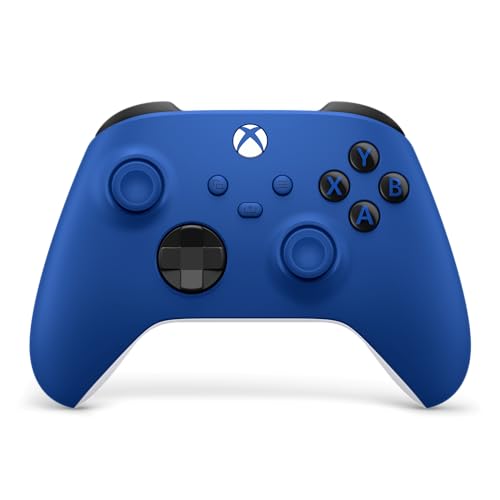
Xbox Wireless Controller, Shock Blue, Bluetooth, USB-C
- ✓ Excellent grip texture
- ✓ Seamless cross-device pairing
- ✓ Responsive D-pad
- ✕ Slightly pricier
- ✕ Limited wired options
| Connection technology | USB-C wired connection for plug-and-play on console/PC |
| Wireless options | Xbox Wireless and Bluetooth connectivity |
| Input/Controller Type | Xbox Wireless Controller with hybrid D-pad and textured grips |
| Audio support | 3.5mm stereo headset jack for direct voice chat and in-game audio |
| Customization | XBOX Accessories app for remapping buttons and creating controller profiles |
| Compatibility | Works with Xbox consoles and Windows PC via USB-C or wireless/Bluetooth |
You know that moment when a controller finally feels like it understands your hand? I found that with the Xbox Wireless Controller in Shock Blue, especially when jumping into Apex Legends.
The color pops in your hands and the updated geometry sits just right, like it was built for long sessions and quick sprints.
Right away, the textured grips on the triggers, bumpers, and back shell make a difference. It’s not just about feel—the grip texture helps you keep accuracy during tense gunfights without needing to readjust grip constantly.
The hybrid D-pad also feels snappier than I remembered, which matters when switching to more precise inputs in chaos.
Pairing is seamless, whether you’re on console or PC. USB-C plug-and-play is quick, and the Bluetooth switching between devices is clutch for testing across setups.
I appreciated the responsive Share button, which makes grabbing a quick clip during a clutch moment effortless rather than fiddling with menus.
The comfort is evident after a few rounds in ranked matches. The modernized silhouette sits comfortably in the hands, and the weight feels balanced without fatigue creeping in after extended play.
The 3.5mm jack is a simple plus for voice chat without needing extra adapters, which is a nice touch if you’re using a headset consistently.
For Apex Legends, the controller’s sensitivity feels predictable and controllable, which is exactly what you want when you’re aiming at distant targets or tracking fast flanks. If you tweak profiles in the Xbox Accessories app, you can dial in preferred button mappings or customize sensitive zones to suit your playstyle.
In short, it’s a solid upgrade that balances comfort, precision, and practical features like built-in audio support and easy cross-device pairing. You’ll likely reach for it as your daily driver instead of your old pad.
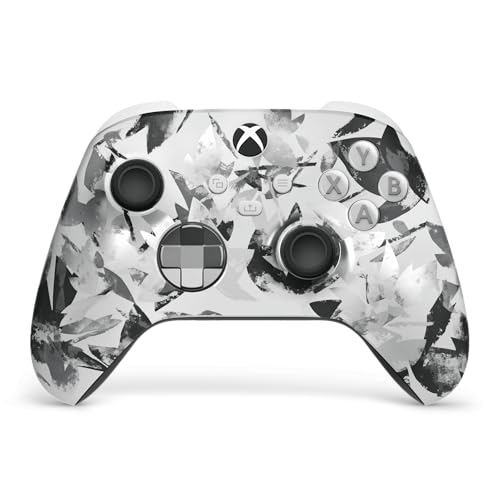
Xbox Wireless Gaming Controller: Storm Breaker SE
| Connection Technology | Xbox Wireless and Bluetooth |
| Battery Life | Up to 40 hours |
| Power/Charging | USB-C wired connectivity included for direct plug and play |
| Audio/Headset Connection | 3.5 mm audio jack |
| Customization | XBOX Accessories app for button mapping and profile creation |
| Cross-Platform Compatibility | Compatible with Xbox consoles, Windows PC, and cloud/streaming via Xbox Cloud Gaming |
You tighten the Storm Breaker SE’s grip and notice a subtle hiss of the textured triggers that makes you think, “this is going to stick to my fingers.” The first surprise isn’t the look—it’s how quickly the rubberized back grips feel like they’re part of the controller, not an add-on. I wasn’t expecting the weight to settle so comfortably in the hand right out of the box.
The stormy design isn’t just for show; it hides a solid build that doesn’t wobble when you yank or snap a quick 180 in Apex Legends. The D-pad and face buttons respond with crisp feedback, and the Share button sits exactly where your thumb lands after a long push toward a clutch win.
Pairing across console and PC was smooth, and the USB-C connection felt instant for wired play when I needed it.
In-game, the triggers feel reinforced for rapid-fire moments without fatiguing your fingers. The analog sticks stayed true through sharp turns and ankle-breaking sprints, which matters when your aim needs that extra millisecond of precision.
Battery life surprised me too; I logged a few long sessions and still had ample juice left, reducing mid-session anxiety.
Customizing was easy via the Xbox Accessories app, letting me map profiles fast for Apex Legends—perfect when you want a different setup for ranked drops versus casual skirmishes. The overall experience is seamless enough that you barely think about the controller once you’re in the action.
If you value comfort plus a bold aesthetic, this Storm Breaker SE delivers. It integrates well with Cloud Gaming and mobile play alike, so you can keep your sensitivity tuned whether you’re at your desk or on the couch.
It isn’t gimmicky; it’s thoughtfully built for longer, steadier sessions.
Xbox Wireless Controller Elite Series 2 Core – Robot White

- ✓ Precise adjustable sticks
- ✓ Quick hair-trigger locks
- ✓ Long battery life
- ✕ Higher price
- ✕ Heavier setup than standard
| Controller Type | Xbox Wireless Controller Series 2 Core |
| Connectivity | Xbox Wireless, Bluetooth, USB-C |
| Battery Life | Up to 40 hours (rechargeable battery) |
| Thumbstick Tension Adjustments | Adjustable-tension thumbsticks with selectable resistance |
| Hair Trigger Locks | Three-step shorter hair trigger locks |
| Customization / Compatibility | Design Lab colorway; supports button mapping, dead zones, keyboard remapping via Xbox Accessories app; compatible with Xbox Series X|S, Xbox One, Windows PC, and cloud gaming |
You know that moment when you’re in the heat of a close Apex Legends round and your grip starts slipping, your aim wobbles, and you can’t pull off that last crit headshot because the trigger pull feels mushy? This Elite Series 2 Core in Robot White steps in like a seasoned teammate, locking in precise control from the first pickup.
The textured wrap-around grip feels secure, and the adjustable-tension thumbsticks give you a tactile sense of control you can trust game after game.
I started by swapping in the shorter hair trigger locks during a quick warm-up. The reduced pull distance makes fast bursts feel snappier, which honestly pays off when you’re zipping around the map and need that instant response.
The build quality is noticeably sturdy, and the modular core essentials kit keeps the weight balanced in your hands. The battery life clocked in around 40 hours, so you’re not constantly recharging after a few rounds.
I also appreciated how easy it is to customize on the fly with the Xbox Accessories app, mapping buttons and tweaking dead zones to match my preferred sensitivity curve.
In terms of comfort, the grip texture and overall ergonomics stay comfortable even after long sessions. The wired option via USB-C keeps latency minimal, which helps when you’re chasing precision in high-stakes moments.
The design labs coloring is slick in Robot White, giving your setup a sharp, premium look.
If you’re balancing competitive play with long sessions, this controller checks a lot of boxes. It’s easy to dial in the exact sensitivity you want for Apex Legends while keeping your hands fresh for the entire match.
What Does Controller Sensitivity in Apex Legends Mean?
Look Deadzone: A smaller deadzone allows for more precise movements, as even slight movements of the thumbstick will register in-game. However, if set too low, it may result in unintended camera movements due to slight unintentional inputs.
Aim Sensitivity: Adjusting aim sensitivity is crucial for players who prefer a more controlled aim while scoped in. Lower aim sensitivity can help with precision shots, especially at long range, while higher settings may favor quicker target acquisition in close quarters.
Response Curve: The response curve setting can be adjusted to create a more customized feel for how your aim responds to stick movements. A linear response gives a consistent translation, while an exponential response means small movements result in less camera turn, but larger movements result in more, allowing for both precision and speed.
Vibration Settings: The presence of vibration can sometimes disrupt aiming precision, especially during tense moments. Some players prefer to turn off vibration entirely to maintain steady control over their aim, while others may find it helps enhance their gameplay experience by providing feedback.
How Can You Determine the Best Sensitivity Settings for Your Gaming Style?
- Understand Your Playstyle: Assess whether you prefer aggressive, close-quarters combat or a more tactical, long-range approach. Your playstyle influences how you need to adjust sensitivity; aggressive players might benefit from higher settings for quicker turns, while tactical players may prefer lower settings for precision aiming.
- Test Different Sensitivity Levels: Experimentation is key to finding the right sensitivity. Start with a baseline sensitivity setting and gradually increase or decrease it based on your comfort level and performance during gameplay, ensuring you find a balance that feels natural.
- Utilize Aim Assist: Apex Legends features aim assist for controller players, which can help refine your shot accuracy. Understanding how this feature interacts with your sensitivity settings can guide you in finding a sweet spot that complements your aiming skills.
- Consider DPI Settings: The DPI (dots per inch) setting of your controller can significantly impact sensitivity. Higher DPI settings can lead to faster movements, while lower DPI settings offer more control; aligning your controller’s DPI with your sensitivity settings is crucial for optimized performance.
- Practice Regularly: Consistent practice is essential to becoming accustomed to your chosen sensitivity. Regularly playing matches while focusing on your sensitivity adjustments allows you to develop muscle memory and improve your aim over time.
- Seek Community Insights: Engaging with the Apex Legends community can provide valuable insights into sensitivity settings that work for other players. Consider looking for recommendations from professional players or popular streamers to guide your own adjustments.
What Are the Most Effective Sensitivity Settings for New Players?
The most effective sensitivity settings for new players in Apex Legends on Xbox can significantly enhance gameplay and aim precision.
- Look Sensitivity: A moderate look sensitivity setting, typically between 3 and 5, is recommended for beginners as it allows for controlled movements without excessive speed.
- ADS Sensitivity: Setting aim down sights (ADS) sensitivity slightly lower than look sensitivity, around 2 to 4, helps new players maintain accuracy when targeting foes.
- Response Curve: A linear response curve is ideal for new players as it provides a consistent and predictable movement, making it easier to control aim.
- Yaw and Pitch Speed: Adjusting yaw and pitch speed to a balanced level, generally around 4 to 6, ensures that players can effectively track opponents without overshooting their targets.
- Deadzone Settings: A small deadzone (around 5-10%) is beneficial for new players, allowing for more responsive control of the character without unintentional movements.
Look sensitivity is crucial as it affects how quickly players can turn and aim in the game. A lower setting allows for finer adjustments, which is essential for new players still learning to control their movements.
ADS sensitivity is particularly important when engaging enemies from a distance or in close quarters, as it directly impacts the player’s accuracy while aiming. A lower setting helps to stabilize the aim, making it easier to hit targets.
The response curve determines how movement inputs translate to character movements, with a linear curve providing a straightforward relationship that is easier to master for beginners.
Yaw and pitch speed impact how fast players can move their view up and down or side to side. A balanced setting allows for smoother tracking of moving targets, essential for effective gameplay.
Deadzone settings are critical for improving control, as they define how much a stick needs to be moved before the game registers the input. A smaller deadzone minimizes unintended movements, making it easier for new players to aim accurately.
How Do Professional Players Configure Their Sensitivity Settings?
Professional players often configure their sensitivity settings for optimal performance in Apex Legends on Xbox, focusing on precision and responsiveness.
- Look Sensitivity: This setting controls how quickly your character turns when you move the right stick. Professional players typically prefer a lower look sensitivity for better aiming precision, allowing for more controlled movements when tracking enemies.
- ADS Sensitivity: This refers to the sensitivity while aiming down sights. Many pros adjust their ADS sensitivity lower than their standard look sensitivity to enhance accuracy during gunfights, as this allows for finer adjustments while aiming.
- Response Curve: This setting adjusts how the input from the joystick translates to movement. A more linear response curve can provide a direct correlation between stick movement and character response, which is favored by professionals for consistent aiming.
- Deadzone Settings: Deadzone is the area around the joystick’s center where input is ignored. Pros often reduce deadzone to ensure that even slight movements of the stick register, which aids in quick adjustments during gameplay, enhancing overall responsiveness.
- Button Mapping: Customizing button mappings can improve accessibility and reaction time. Professional players often reassign buttons for quick access to critical actions like jumping or aiming, enabling faster responses in intense situations.
What Impact Does Controller Sensitivity Have on Gameplay Effectiveness?
The impact of controller sensitivity on gameplay effectiveness is significant, particularly in fast-paced games like Apex Legends where precision and reaction time are crucial.
- Low Sensitivity: A lower sensitivity setting allows for more precise aiming, which can be beneficial for players who prefer to take their time with shots and need accuracy over speed. This setting helps in maintaining control during long-range engagements, minimizing the chances of overshooting targets.
- High Sensitivity: Higher sensitivity settings allow for quicker movements and faster reactions, making it easier to turn around and respond to threats from various angles. However, this can sometimes lead to a lack of precision, particularly in aiming, as small movements can result in significant crosshair adjustments.
- Balanced Sensitivity: Finding a middle ground between low and high sensitivity can maximize both speed and accuracy, enabling players to perform well in various combat situations. This balance is often recommended for players seeking to be effective in both close-quarters and long-range scenarios.
- Fine-Tuning Sensitivity: Many players benefit from customizing their sensitivity settings based on their playstyle and the characters they use in Apex Legends. Adjusting sensitivity for specific weapons or combat situations can lead to improved performance and a more tailored gameplay experience.
- Consideration of DPI Settings: The DPI (dots per inch) setting on a controller can also influence sensitivity. A higher DPI setting can make movements feel more responsive, which can be advantageous for players who prefer fast-paced gameplay but may require additional practice to master.
- Practice and Adaptation: Ultimately, the best controller sensitivity is subjective and often requires practice to adapt fully. Spending time in training modes or casual matches to test different settings can help players discover what feels most comfortable and effective for their individual gameplay style.
How Should Aim Assist Influence Your Sensitivity Settings?
Aim assist can significantly impact your controller sensitivity settings in Apex Legends, helping you find a balance between precision and responsiveness.
- Low Sensitivity: A lower sensitivity setting allows for more precise aiming, making it easier to control your shots, especially at long distances. This setting is beneficial for players who rely heavily on aim assist, as it can help them stay on target while benefiting from the game’s automatic aiming features.
- High Sensitivity: Higher sensitivity settings enable quicker movements and faster reactions, which can be advantageous during close-quarters combat. However, this can also make it challenging to maintain accuracy without the help of aim assist, as fast movements can lead to overshooting targets.
- Medium Sensitivity: A medium sensitivity strikes a balance between precision and speed, appealing to many players who want the best of both worlds. This setting can allow for relatively quick adjustments while still benefiting from aim assist, making it easier to track moving targets without sacrificing accuracy.
- Adjusting for Playstyle: Each player’s unique playstyle can determine the ideal sensitivity settings; aggressive players may prefer higher sensitivity for quick turns, while more methodical players may opt for lower settings. Understanding how aim assist interacts with these preferences can help players fine-tune their settings for optimal performance.
- Testing and Adapting: Regularly testing different sensitivity settings in practice modes or casual games can help players find their sweet spot. By observing how aim assist influences their shots at various sensitivities, players can adapt their settings to enhance their overall gameplay experience.
What Key Tips Are There for Adjusting Sensitivity Settings Successfully?
To adjust sensitivity settings successfully for Apex Legends on Xbox, consider the following key tips:
- Understand DPI Settings: The DPI (dots per inch) setting of your controller determines how sensitive your movements are. Higher DPI means faster response to movements, which can be beneficial for quick aiming, but it may also lead to overshooting targets if not adjusted properly.
- Adjust Look Sensitivity: Start with a balanced look sensitivity setting that allows for fluid camera movement without feeling too jittery. Many players prefer a sensitivity around 4-7, as it offers a good compromise between speed and control when aiming.
- Test and Tweak: Spend time in the firing range or casual matches to test your settings. Make incremental adjustments to find what feels most comfortable, as personal preference plays a significant role in achieving the best sensitivity.
- Use ALC Settings: Advanced Look Controls (ALC) offer more customization options for sensitivity, including response curve and yaw/pitch settings. This allows players to fine-tune their sensitivity to align with their playstyle and improve overall performance.
- Monitor Input Lag: Ensure your display settings minimize input lag, as a laggy screen can affect how sensitivity feels during gameplay. Adjusting the refresh rate and using game mode on your television can help achieve a more responsive gaming experience.
- Consistency is Key: Once you find a sensitivity that works for you, stick with it to build muscle memory. Constantly changing settings can hinder your ability to aim accurately, so give yourself time to adapt to any adjustments made.