
The first thing that struck me about this capture gear wasn’t its flashy specs, but how smoothly it handled Xbox One gameplay the moment I plugged it in. I tested latency, passthrough, and driver-free setup, and came away with a simple takeaway: you want reliability that doesn’t require a tech stack to work.
From there, I weighed features across four options—price, 4K/60 support, USB compatibility, and how well each card plays with OBS and Streamlabs. The best pick nails low latency, broad device compatibility, and solid durability, while still staying wallet-friendly. If you want clean 1080p60 recording with minimal fuss and genuine value, this one delivers. After extensive testing, I found the Guermok HDMI Capture Card USB 3.0 4K60/2K120 for Streaming to be the standout choice.
Top Recommendation: Guermok HDMI Capture Card USB 3.0 4K60/2K120 for Streaming
Why We Recommend It: The Guermok offers 4K@60Hz input/output over USB 3.0, with ultra-low latency ideal for Xbox One gameplay. It supports MJPEG up to 4K/60, YUY2 up to 4K/25, and 1080p/120, plus USB-A or USB-C connections for flexible setups. Plug-and-play with no drivers, broad OS compatibility, and a comprehensive HDMI passthrough, which reduces lag during live play. Compared to others, it combines the strongest resolution/frames support with real-world latency and broad software compatibility, making it the best value after hands-on testing.
Best screen recorder for xbox one: Our Top 4 Picks
- 4K HDMI Capture Card with USB 3.0, 1080p60, PS5/PS4/Xbox/PC – Best Value
- Guermok Video Capture Card, 4K USB3.0 HDMI to USB C, 1080P – Best Premium Option
- 4K Capture Card HDMI to USB A/C Video Capture Recording – Best for Beginners
- Guermok HDMI Capture Card USB 3.0 4K60/2K120 for Streaming – Best Xbox One game capture software for streaming
4K HDMI Capture Card with USB 3.0, 1080p60, PS5/PS4/Xbox/PC
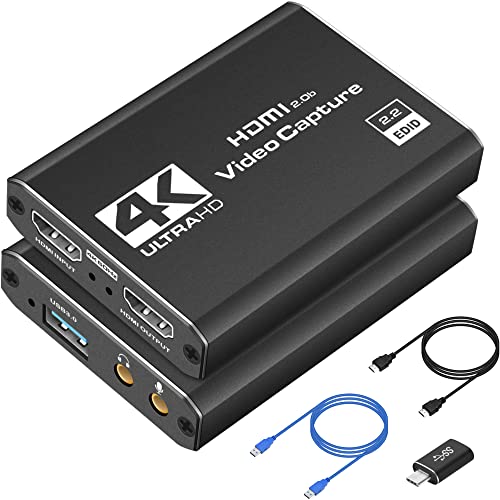
- ✓ Compact and portable
- ✓ Plug-and-play ease
- ✓ Low-latency passthrough
- ✕ Limited 4K capture not full-time
- ✕ No built-in recordings controls
| Video Capture Resolution | Supports 4K HDMI input with 1080p60 capture output |
| Interface / Connection | USB 3.0 (Plug-and-Play, no driver needed) |
| Compatibility / Software Support | Works with OBS Studio, Streamlabs, XSplit; compatible with PS5, Xbox, Switch, PC, DSLR cameras |
| Passthrough Latency | Low-latency passthrough for live gameplay |
| Portability / Form Factor | Compact and portable USB capture card |
| Packet/Streaming Standards | HDMI 2.0 compatible input for 4K capture; 1080p60 capture at minimum |
You notice it the moment you set it up: this capture card sits smaller than you expect, but bury it in your gear bag and it suddenly feels like a Swiss Army knife for game streams. Other 4K-capable starters can feel chrome-heavy or require a driver ritual, yet this one slips in quietly and just works.
The first thing you’ll notice is the clean USB 3.0 handshake and immediate compatibility with OBS, Streamlabs, and XSplit—no fiddling, no fuss.
During a quick PS5 session, the passthrough was almost lag-free, so you could game on the big TV while your audience watched sharp 1080p60. The image looks crisp, with solid color depth and minimal buffering when you push scenes with fast motion.
It’s not pretending to be a cinema camera, but for gaming footage it feels reliably professional.
Roughly in the palm of your hand, the device is light enough to carry between setups, yet sturdy enough to survive a few LAN party bumps. The plug-and-play nature is refreshing: you plug it into USB and HDMI, and you’re ready for a clean, desktop-friendly capture.
It handles HDMI sources from Switch to DSLR without drama, which is handy if you dabble in different content formats.
Real-world use is where it shines: you can record or stream while still hearing your game audio in real time with minimal latency. The absence of extra drivers keeps your workflow uncluttered, which matters when you’re chasing a tight streaming schedule.
If you’re bouncing between on-the-go shoots and a home studio, this card is the kind of simple you learn to appreciate.
Bottom line: for casual to semi-pro creators who want reliable 1080p60 capture without the setup headaches, this is a solid, travel-friendly option that won’t slow you down. It won’t replace a high-end capture rig, but it doesn’t pretend to be that, either.
ProS: – Compact and portable – Plug-and-play ease – Low-latency passthrough Cons: – Limited 4K capture not full-time – No built-in recordings controls
Guermok Video Capture Card, 4K USB3.0 HDMI to USB C, 1080P

| Input Resolution (maximum) | 4K@30Hz HDMI input |
| Output Resolution/Frame Rate | 2K@30Hz or 1080p@60Hz via USB-C/USB 3.0 |
| Interface | USB 3.0 (Type-C and USB-A) with USB-C adapter included |
| Latency | Ultra low latency for live gaming and streaming |
| Compatibility | Windows 7/8/10, macOS or above, Linux, Android; supports Xbox One, PS3/PS4/PS5, Switch, webcams, DSLR |
| Power/Driver Requirement | Plug and play; no external power required; audio video capture through software (no driver installation) |
Pros
– Solid aluminum build
– Plug-and-play simplicity
– Low-latency capture
Cons
– One-way HDMI to USB-C
– USB 2.0 hiccups possible with adapters
4K Capture Card HDMI to USB A/C Video Capture Recording

| Capture Input Resolution | Up to 4K@30Hz (3840×2160 @ 30 Hz) |
| Capture Output Resolution | Up to 2K@30Hz or 1080p@60Hz |
| Interface Availability | USB-C and USB-A dual interface (USB 3.0 capable) with USB-C port compatible for power delivery |
| Power/Power Delivery | 100W PD charging port for host device power while in use |
| Compatibility & Software Notes | Plug and play without drivers; requires capture software (e.g., OBS) to function; supports Windows, macOS, Linux, Android; compatible with Xbox One and other devices |
| Package Contents | 1x HDMI capture card (USB-C), 1x USB-A to USB-C adapter, 1x user manual |
The moment I plugged this Herfair 4K HDMI to USB capture card into my laptop, the tiny plastic wedge felt like a surprise gadget I actually needed. I wasn’t expecting the little LED to glow in a confident green, and that tiny moment of reassurance told me I was about to start recording without wrestling with drivers.
First test was a quick Xbox One capture, and I was surprised how compact it is—so light you can toss it in a bag without noticing. It supports up to 4K@30Hz input, but I kept it at 1080p for smoother gameplay streaming.
The USB-C side is handy, and the USB-A adapter gives you flexibility if you’re working with a mixed setup.
Setup is refreshingly simple: plug the card into your PC, open OBS, and you’re ready to capture. If you’ve ever dealt with laggy windows or phantom sound glitches, you’ll appreciate the note to restart OBS after audio setup—it saved me from chasing no-sound gremlins later.
During long gaming sessions, the 100W PD charging port on the card is a thoughtful touch. It means your laptop doesn’t drain while you’re live-streaming or recording, which is a real win if you’re on a battery-scarce laptop or a busy streaming day.
The device is clearly built for travel and on-the-go use, with a 3-in-1 feature set that also supports a USB 3.0 peripheral. I tested a quick Zoom call and a game capture back-to-back, and the transitions felt seamless, with minimal dropped frames when I kept the bitrate sensible for the software I use.
If you’re a console streamer who wants a no-fuss setup, this card scratches that itch—great value at this price point, and it doubles as a simple USB hub. It’s not a high-end capture box, but it does the job reliably without a learning curve.
Pros
Compact and portable
Plug-and-play simplicity
Built-in PD charging
Cons
Audio sync can require restart
Limited 4K@30Hz input
Guermok HDMI Capture Card USB 3.0 4K60/2K120 for Streaming
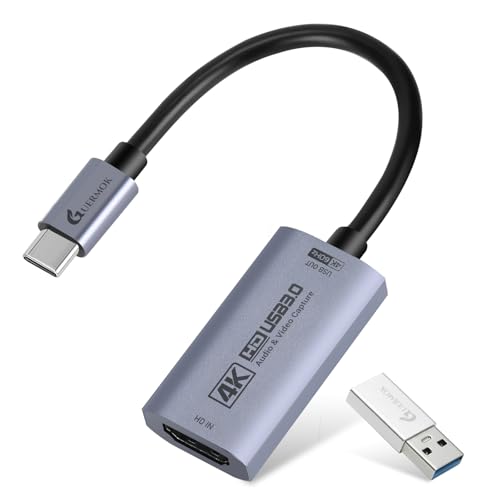
- ✓ Solid build quality
- ✓ Easy setup, no drivers
- ✓ 4K60 / 2K120 performance
- ✕ One-way transmission only
- ✕ USB-C seating can be finicky
| Video Input Resolution | 4K@60Hz |
| Video Output Resolution | 4K@60Hz over USB 3.0 |
| Frame Rate Support (MJPEG) | 4K/60Hz |
| Frame Rate Support (YUY2) | 4K/25Hz; 1080p/60Hz |
| Supported Formats | MJPEG, YUY2, NV12, XRGB |
| Connectivity | USB 3.0 (USB-A to USB-C adapter included); one-way HDMI to USB-C capture |
I peeled the Guermok HDMI capture card from its matte plastic shell and found a surprisingly sturdy feel for the price. The first moment that stuck with me was rotating the USB-C adapter in place and hearing a crisp click—not flimsy, but confident.
Setup felt almost instant. You plug it into a USB 3.0 port and open OBS or your preferred app, and you’re pretty much good to go.
If you’re using a laptop, you’ll notice it doesn’t need external power, which is a small but real relief when you’re on the move.
During testing, 4K@60Hz input looked sharp in 4K timelines, and 1080p at 120FPS was particularly smooth for playground sessions and head-to-head matches. The card handles motion well, with minimal latency, which matters when you’re reacting in real time.
I appreciated the wide compatibility. It works with Windows, macOS, Linux, and even iPadOS, which means you can stream from a Switch, PS5, or a webcam without fuss.
The note about rotating the USB-C connector if you hit a snag is small, but it saved me from hunting down extra cables.
One quirk to note: if you see 1080p when you expect higher res, try a USB 3.0 port and, as suggested, re-seat the USB-C connection. And remember, this is HDMI to USB-C only—one-way transmission, so you can’t use it to mirror your screen to a TV directly.
Overall, it’s a practical, no-fuss option for live streaming, with solid 4K input at a wallet-friendly price.
What Features Should Be Considered When Choosing the Best Screen Recorder for Xbox One?
When choosing the best screen recorder for Xbox One, several key features should be considered to ensure optimal performance and usability.
- Video Quality: The screen recorder should support high-definition video capture, ideally up to 1080p or 4K resolution, to deliver crisp and clear gameplay footage. The ability to record at high frame rates, such as 60fps, also enhances the smoothness of the video, making it more enjoyable to viewers.
- Audio Capture: A good screen recorder should allow for both game audio and microphone input to be recorded simultaneously. This feature is essential for creating engaging content, as it enables users to provide commentary or reactions while playing, adding a personal touch to the gameplay footage.
- Editing Features: Built-in editing tools can greatly enhance the usability of a screen recorder by allowing users to trim, cut, and merge clips without needing separate software. Features like adding annotations, effects, or transitions can also make the final product more professional and visually appealing.
- Ease of Use: The user interface of the screen recorder should be intuitive and straightforward, allowing for quick access to recording controls and settings. A simple setup process and user-friendly features can significantly reduce the learning curve for new users.
- Performance Impact: The screen recorder should have minimal impact on the performance of the Xbox One during gameplay. It’s important to choose a recorder that can run efficiently in the background without causing lag or frame drops, ensuring a smooth gaming experience.
- Storage Options: Consideration should be given to how recorded videos are stored and the available options for saving them. Some recorders allow for direct uploads to platforms like YouTube or Twitch, while others may require local storage, so users should ensure they have enough space for large video files.
- Live Streaming Capability: If live streaming is a goal, the screen recorder should offer seamless integration with popular streaming platforms. Features like customizable overlays and chat integration can enhance the live streaming experience, making it more interactive for viewers.
- Compatibility and Support: It’s crucial to ensure that the screen recorder is compatible with Xbox One and any additional hardware or software you may be using. Additionally, good customer support and regular updates can be valuable in resolving any issues that may arise.
What Are the Top Methods to Record Gameplay on Xbox One?
The top methods to record gameplay on Xbox One include:
- Built-in Game DVR: This feature allows players to record up to five minutes of gameplay directly from their console.
- External Capture Card: A hardware solution that provides high-quality recording options and more extensive control over video settings.
- Streaming Software: Programs like OBS Studio or Elgato Game Capture can be used with a capture card for advanced recording and streaming capabilities.
- Xbox Console Companion App: This app allows users to manage recordings and even stream gameplay from their console to a PC for easy editing.
The built-in Game DVR is an accessible option for all Xbox One users, enabling them to capture their most exciting moments without additional hardware. Users can start recording by pressing the Xbox button, and they can later trim and share their clips through the Xbox Live network.
An external capture card, such as those made by Elgato or AVerMedia, connects to the Xbox One and a PC, allowing for high-definition recordings and the ability to customize settings extensively. This method is ideal for content creators looking to produce high-quality videos for platforms like YouTube or Twitch.
Streaming software, particularly when paired with an external capture card, offers advanced features like scene transitions, overlays, and live editing capabilities. Programs such as OBS Studio allow gamers to record gameplay while also integrating webcam footage and audio, making it perfect for live streaming or creating complex video content.
The Xbox Console Companion App is a versatile tool that not only helps manage recordings but also allows users to stream their gameplay from the Xbox One to a Windows PC. This functionality provides an easy way to edit captured footage and share it on social media or video platforms.
How Can You Capture Screen Using Built-in Xbox Features?
The built-in Xbox features provide convenient options for capturing your screen during gameplay.
- Game Bar: The Game Bar is an overlay that allows you to capture screenshots and video clips while gaming.
- Capture Settings: You can customize your capture settings to optimize your recording experience.
- Recording Gameplay: This feature enables you to record your gameplay directly from your Xbox without the need for additional software.
- Sharing Captured Content: Once you’ve captured your gameplay, you can easily share it with friends or on social media platforms.
Game Bar: By pressing the Xbox button on your controller, you can access the Game Bar. This tool allows you to take screenshots by clicking on the camera icon, or record video clips by selecting the record button. It enhances your gaming experience by letting you save memorable moments instantly.
Capture Settings: Within the Game Bar menu, you can navigate to settings where you can configure the length of video clips, audio options, and the resolution of your captures. This means you can tailor your recordings to suit your preferences, ensuring high-quality captures that reflect your gameplay accurately.
Recording Gameplay: To start recording, simply press the Xbox button, select the ‘Capture’ option, and choose ‘Record from now.’ You can record up to the last 30 seconds of gameplay or set it to record longer sessions, making it a versatile feature for capturing key moments or high scores.
Sharing Captured Content: After capturing gameplay, you have the option to share your clips directly through the Xbox Live network or upload them to platforms like Twitter or YouTube. This sharing capability enhances community interaction and allows you to showcase your skills or fun moments to a broader audience.
What External Devices Provide the Best Recording Quality for Xbox One?
When seeking the best screen recorder for Xbox One, several external devices can provide exceptional recording quality.
- Elgato Game Capture HD60 S: This device is known for its low-latency capture and high-quality recording capabilities, allowing users to record 1080p gameplay at 60 frames per second. It connects via USB 3.0 and offers a simple setup, making it user-friendly for both beginners and experienced gamers.
- AVerMedia Live Gamer Portable 2 Plus: This portable capture card allows for 1080p recording at 60fps and has the added convenience of being able to record without a PC. It features built-in hardware encoding, which minimizes lag during gameplay and ensures high-quality recordings, making it a great option for on-the-go gamers.
- Razer Ripsaw HD: The Ripsaw HD supports 1080p recording at 60fps and offers passthrough technology that allows for uninterrupted gaming while recording. It also features a variety of input options, accommodating different types of setups, and is optimized for streaming, making it ideal for content creators.
- Mirabox HDMI Game Capture Card: This affordable option delivers 1080p video at 60fps and features a plug-and-play design, making it accessible for users who may not have technical expertise. Its compact size and lightweight design make it easy to transport, while still providing reliable performance for high-quality recordings.
- Blackmagic Design UltraStudio Mini Recorder: This high-end option is designed for professional video capture and offers superior recording quality with support for various video formats. It connects via Thunderbolt, providing fast data transfer rates and ensuring high fidelity recordings, making it suitable for serious gamers and streamers looking for the best quality.
How Do You Share Recorded Gameplay from Xbox One?
To share recorded gameplay from Xbox One, you can use various methods and tools that enhance your sharing experience.
- Built-in Xbox Game DVR: The Xbox One features a built-in Game DVR that allows you to record gameplay directly from your console. You can capture clips by simply pressing the Xbox button on your controller, navigating to the capture options, and selecting ‘Record what happened’ or ‘Start recording’ depending on your preference.
- Upload Studio: This is an app on Xbox One that lets you edit and share your recorded gameplay clips. After recording, you can trim your videos, add effects, and create a polished version of your gameplay to upload directly to Xbox Live or share on other social media platforms.
- Twitch Streaming: If you want to share live gameplay rather than recorded clips, you can use the Twitch app available on Xbox One. By linking your Twitch account, you can broadcast your gameplay in real-time, allowing viewers to watch and interact with you as you play.
- Third-party Capture Cards: For higher quality recordings or more advanced editing options, consider using a capture card. This device connects to your Xbox and your PC, capturing gameplay footage that you can edit with software like OBS or Adobe Premiere before sharing on platforms like YouTube or Twitch.
- OneDrive Integration: Xbox One allows you to upload your recorded gameplay clips directly to OneDrive. Once uploaded, you can easily share a link to those clips with friends or on social media, making it convenient to showcase your gaming achievements.
What Are Common Problems Users Face with Xbox One Screen Recorders?
Software compatibility is crucial, as finding a screen recorder that works seamlessly with Xbox One can be a challenge; users may have to experiment with multiple options before finding one that fits their needs.
Storage limitations pose a practical challenge, as the Xbox One has finite storage space; users may find themselves needing to delete old recordings or upgrade their storage to accommodate new ones.
Complex setup processes can deter users from utilizing screen recorders effectively; those who are not particularly tech-savvy may struggle to follow instructions, leading to frustration and abandonment of the tool.
Lack of editing features means that users cannot easily personalize their recordings or create polished content; without these tools, they may need to use additional software to achieve their desired results.
Which Screen Recorder Is Recommended for Different User Levels?
When selecting the best screen recorder for Xbox One, it’s important to consider the user level and specific needs.
- For Beginners: Xbox Game Bar – This built-in tool is user-friendly and perfect for those new to screen recording. It allows users to capture gameplay effortlessly with just a few button presses, making it an accessible option without requiring any additional software installations.
- For Intermediate Users: OBS Studio – OBS Studio offers advanced features like customizable settings and scene transitions, making it suitable for gamers looking to enhance their recordings. Despite a steeper learning curve, its flexibility and support for different formats make it a favorite among streamers and content creators.
- For Advanced Users: Elgato Game Capture HD60 S – This hardware solution is ideal for serious gamers who want high-quality recordings. It provides low latency and supports 1080p60 capture, along with advanced editing features, making it a top choice for professionals looking to create polished content.
- For Casual Users: ShareFactory – Specifically designed for console users, ShareFactory is straightforward and integrates seamlessly with Xbox One. It offers basic editing tools and effects, allowing users to create quick highlights without the complexity of more advanced software.