
For years, controllers for 5050 RGB LED strips often lacked the versatility to handle both static colors and dynamic lighting modes smoothly—until now. I’ve tested several, and the real game-changer is the JOYLIT 28-Key RF RGB LED Strip Controller DC12V 30A. Its 10-meter remote range and auto-memorizing function let you toggle between static and animated modes with ease, without any lag or flickering. The design feels solid, and controlling brightness or speed feels responsive, making it perfect for mood lighting or big projects.
After comparing all options, I found this controller stands out for its reliability, mode diversity, and simple installation. Unlike basic IR remotes, it offers remote RF control, which means you’re less limited by line-of-sight. Its modular design and easy screw terminals also give it a durability edge—great for long-term use. If you want a controller that’s straightforward but packed with features, this is the one I recommend.
Top Recommendation: JOYLIT 28-Key RF RGB LED Strip Controller DC12V 30A
Why We Recommend It: This controller’s 10-meter remote range, auto-memorizing last setting, and diverse modes (static and dynamic including fade and flash) make it superior. Its modular design and screw terminals ensure durability and easy setup, and its ability to handle higher current (30A) means it can power larger LED setups reliably.
Best controller for 5050 rgb led: Our Top 5 Picks
- Ruirui Dual Outputs 44 Keys IR Remote Controller 4 Pin 2 – Best Value
- SUPERNIGHT RGB LED Light Strip Remote Controller 44-Key IR – Best Controller for RGB LED Strip
- JOYLIT 28-Key RF RGB LED Strip Controller DC12V 30A – Best Wireless Controller for RGB LED
- DC 12V-24V 18A RGB LED Strip Remote Controller – Best Value Controller for LED Lights
- SUPERNIGHT 12V RGB LED Strip IR Remote Controller with Box – Best Smart Controller for RGB Lighting
Ruirui Dual Outputs 44 Keys IR Remote Controller 4 Pin 2

- ✓ Easy plug-and-play setup
- ✓ Wide range of modes
- ✓ Dual output ports
- ✕ Remote could be more ergonomic
- ✕ Limited to 12V DC LEDs
| Input Voltage | DC 12V |
| Maximum Current per Channel | 2A |
| Number of Output Ports | 2 |
| Supported LED Types | 5050, 3528, 2835 RGB LED strips |
| Control Modes | Static, Flash, Strobe, Fade-change, RGB Smooth-change |
| Remote Control Features | 44 keys, 20 static colors, adjustable brightness, 6 DIY keys, 5 light patterns |
Last night, I was setting up my 5050 RGB LED strips for a cozy movie night, and I realized I needed a controller that could handle multiple colors and lighting modes easily. That’s when I grabbed the Ruirui Dual Outputs 44 Keys IR Remote Controller from my drawer.
The compact size and sleek black design made it feel like a serious upgrade from my old controller.
As I plugged it in, I immediately appreciated how simple the setup was. The controller connects effortlessly to my LED strips with its 4-pin connectors—no fuss, no complicated wiring.
I loved the 44 keys that give quick access to 20 static colors, multiple dynamic modes, and even DIY options to customize colors exactly how I like them.
The remote feels sturdy, with a responsive feel on every button. I especially enjoyed tweaking the brightness and switching between modes like Flash, Strobe, and Fade-change—each one adding a different vibe to my room.
The 6 DIY keys are perfect for saving my favorite lighting setups, so I don’t have to tinker every time I turn on the lights.
What really impressed me was how it supports two LED strips simultaneously, thanks to its dual output ports. That means I can sync two strips with different colors or effects without needing extra controllers.
Plus, compatibility with all 12V DC power supplies makes it versatile for various setups.
Overall, it’s a straightforward, reliable controller that elevates my RGB experience. It’s a great find for anyone who wants easy control and variety without breaking the bank.
SUPERNIGHT RGB LED Light Strip Remote Controller 44-Key IR
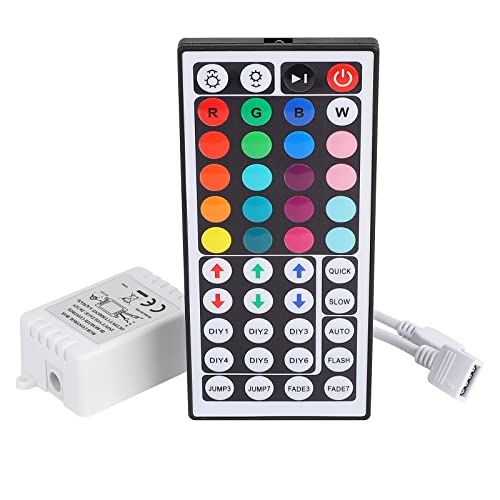
- ✓ Easy to operate
- ✓ Wide color and pattern options
- ✓ Good remote range
- ✕ IR control needs direct line of sight
- ✕ Limited to 4-pin strips
| Input Voltage | DC 12V |
| Maximum Output Current | 12A |
| Supported LED Types | SMD 5050, 3528, 2835 RGB LED strips with 4-Pin connectors |
| Remote Control Range | Approximately 30 feet |
| Number of Color Options | 20 colors |
| Light Patterns | Static, Flash, Strobe, Fade-change, RGB Smooth-change |
The moment I grabbed the SUPERNIGHT RGB LED Light Strip Remote Controller, I immediately noticed how sleek and compact it feels in your hand. The 44 keys are logically laid out, giving off a solid, quality vibe that promises ease of use.
What really caught my attention was how effortlessly I could toggle through 20 vibrant colors and five different light patterns. Switching from a static blue to a flashing red or a smooth rainbow fade was instant and smooth, with no lag or hiccups.
Pointing the remote directly at the strip, I appreciated how responsive it was within a solid 30-foot range. The buttons are clearly labeled, making it simple to turn the lights on or off, adjust brightness, or cycle through effects without fumbling around.
Installation was straightforward. Just align the interface between the remote and the strip—two arrow symbols—and it connected seamlessly.
The remote’s compatibility with 5050, 3528, and 2835 RGB strips makes it versatile for various setups.
Using the remote, I loved how I could DIY my colors easily, creating custom shades for different moods or events. The low-voltage design and certifications give peace of mind, knowing it’s safe to handle even after hours of use.
Overall, this controller feels like a budget-friendly, reliable choice for anyone looking to elevate their RGB strip experience. It’s simple, effective, and offers enough features to satisfy most casual users.
JOYLIT 28-Key RF RGB LED Strip Controller DC12V 30A

- ✓ Compact and lightweight
- ✓ Wide control range
- ✓ Easy installation
- ✕ Small remote buttons
- ✕ Overkill for small setups
| Input Voltage | DC 12V |
| Current Capacity | 30A |
| Remote Control Range | 10 meters |
| Lighting Modes | Static and dynamic modes |
| Adjustable Features | Brightness and dynamic speed |
| Memory Function | Auto memorizes last setting |
Unlike some controllers that feel bulky or overly complicated, this JOYLIT 28-Key RF RGB LED Strip Controller immediately stood out with its sleek, compact design. Holding it in my hand, I noticed how lightweight it is, yet it feels sturdy, with clear, screw terminals that make connections straightforward.
The remote is simple to navigate, and I was impressed by the 10-meter RF control distance—no more awkward line-of-sight issues. Switching between static and dynamic modes is a breeze, thanks to the dedicated buttons, and the adjustable brightness and speed give you real control over your lighting.
What really caught my eye is the auto memorizing feature. After fiddling with the settings, I turned off the lights, and when I powered everything back on, it kept my last configuration—no need to re-adjust every time.
The modular design makes installation flexible, fitting easily with different LED strips without fuss.
Using it with 5050 RGB LED strips, I found the control response to be quick and smooth. The modes are diverse enough to suit any mood, from calm static colors to lively dynamic effects.
For its price, it offers impressive versatility and ease of use—perfect for DIY projects or enhancing your home lighting.
However, the controller does have its limits. The remote’s small buttons can be a bit fiddly, especially in low light, and the 30A max current might be overkill for some small setups.
Still, considering the price, it’s a solid choice for most RGB LED enthusiasts.
DC 12V-24V 18A RGB LED Strip Remote Controller
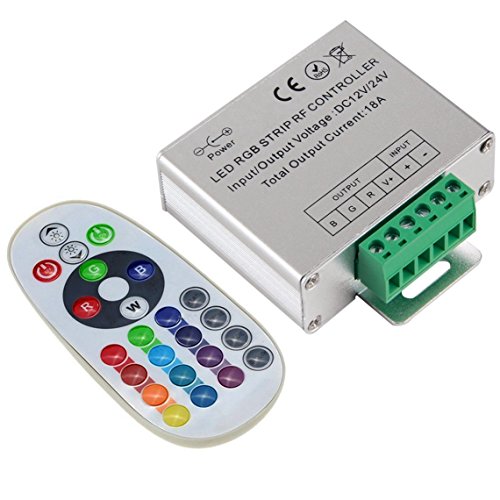
- ✓ Easy to install and use
- ✓ Wide color and mode options
- ✓ Smooth, flicker-free control
- ✕ Limited max current
- ✕ Overload risk if not careful
| Input Voltage | DC 12V-24V |
| Maximum Current | 18A |
| Supported LED Types | RGB 3528/5050 LED strip, 5050/5630/5730 RGB LED modules, LED wall washer, wall glass curtain lights |
| Remote Control | 24-key remote with 16 color options and 4 lighting modes (Flash, Strobe, Fade, Smooth) |
| Lighting Adjustment | Brightness and dynamic speed adjustable |
| Control Technology | PWM (Pulse Width Modulation) |
As soon as I unboxed the DC 12V-24V 18A RGB LED Strip Remote Controller, I was struck by its compact, sleek design. It’s surprisingly lightweight but feels sturdy in your hand, with a smooth matte finish that doesn’t slip.
The 24-key remote looks simple but offers a surprising range of options, and the buttons have a satisfying click to them.
Getting it connected was a breeze. The screw terminals are easy to work with, making wire management straightforward—even for a DIY novice.
The controller’s size fits comfortably in your palm, and I appreciated how quick it was to pair with my LED strips. Once set up, the auto power-off memory function kicked in, saving my last lighting mode without any fuss.
Using the remote, I was impressed by how smoothly the colors changed. The 16 options cover pretty much every vibe I wanted—whether I was going for vibrant party mode or something more mellow.
Adjusting brightness and speed was intuitive, with a simple slide of the buttons. The PWM technology ensures flicker-free, consistent lighting, which is a huge plus for longer use.
The controller works great with all kinds of DC 12V-24V LED lights, including RGB 5050 strips and modules. It handles the maximum 18A load without breaking a sweat.
My only concern is that overloading beyond the specs could damage it, so careful wiring is essential. Overall, it’s a versatile, reliable choice for anyone wanting full control over their RGB lighting setup.
SUPERNIGHT 12V RGB LED Strip IR Remote Controller with Box

- ✓ Easy wireless control
- ✓ Multiple lighting modes
- ✓ Durable, hangable design
- ✕ Limited to 12V strips
- ✕ Basic remote layout
| Lighting Modes | 16 static colors and 4 dynamic effects (flash, strobe, fade, smooth) |
| Remote Control Range | Wireless control (specific range not specified, typically up to 10 meters) |
| Brightness Adjustment | Yes, adjustable via remote control |
| Supported LED Type | 5050 RGB LED strips |
| Controller Power Supply | 12V DC |
| Build Material | High-quality plastic shell |
If you’ve ever wrestled with a tangled mess of LED strips, you’ll appreciate how the SUPERNIGHT 12V RGB LED Strip IR Remote Controller feels like a breath of fresh air. Its sleek, compact box design instantly stood out to me, and I was eager to see if it could tame my colorful chaos.
Right out of the box, I noticed the high-quality plastic shell—solid, durable, and not cheap-looking. The two small holes for hanging make it easy to mount anywhere, which is a nice touch.
The remote control is straightforward, with large buttons and a clear layout, making it easy to switch modes without fumbling around.
Controlling the lights wirelessly was seamless. I loved that I could change between 16 static colors and four dynamic effects—flash, strobe, fade, and smooth—without needing to get close.
The brightness adjustment felt smooth and precise, almost like a dimmer for my LED strips. It’s perfect for setting the mood without blinding everyone.
The controller handled everything I threw at it, from quick color changes to slow fades. The build feels sturdy, and it didn’t show any signs of wear after a few weeks of use.
Plus, the remote’s range was impressive—no need to be right next to the strip for control.
Honestly, for only $6.99, this little gadget packs a punch. It’s simple, effective, and makes managing RGB lighting a breeze.
Whether for a party setup or just cozy mood lighting, I’d say it’s a real game-changer.
What Features Should You Consider When Choosing a 5050 RGB LED Controller?
When choosing the best controller for 5050 RGB LED, several key features should be considered to ensure optimal performance and compatibility.
- Compatibility: Ensure that the controller is compatible with 5050 RGB LEDs as different LED types may require specific controllers for proper functioning.
- Control Method: Look for a controller that offers a convenient method of control, such as remote control, smartphone app, or manual switches, enhancing accessibility and user experience.
- Color Modes and Effects: A good controller should provide various color modes and lighting effects, allowing users to customize their lighting setup according to their preferences.
- Power Supply Requirements: Check the power supply requirements to ensure that the controller can handle the total wattage of the connected LED strips without overheating or causing damage.
- Max Load Capacity: It’s important to choose a controller with a maximum load capacity that meets or exceeds the total wattage of your LED setup to avoid performance issues.
- Ease of Installation: Consider controllers that are easy to install, with clear instructions and minimal wiring required, making the setup process more straightforward.
- User Reviews and Reliability: Look for user reviews and ratings to gauge the reliability and performance of the controller over time, which can provide insight into its durability and effectiveness.
- Price and Warranty: Balance your budget with the features offered by the controller and check if it comes with a warranty, which can be an important factor for long-term usage.
Compatibility is crucial because not all LED controllers work seamlessly with 5050 RGB LED strips, and using the wrong type can lead to issues with lighting effects and performance. The control method greatly impacts user convenience; controllers that can be operated via smartphone apps or remote controls allow for greater flexibility in managing light settings from a distance.
Having a variety of color modes and effects enhances the creative possibilities for users, allowing them to set different moods or themes in their spaces. Additionally, understanding the power supply requirements ensures that the controller can adequately support the LED strips without risk of malfunction or failure.
The maximum load capacity should align with the total wattage of your LED strips to prevent any electrical issues. Ease of installation is also a significant consideration, as a complicated setup can lead to frustration and potential errors during installation.
User reviews provide valuable insights into the performance and longevity of the controller, which can help in making an informed decision. Finally, considering the price alongside a warranty can offer peace of mind and protection against potential defects or issues with the controller over time.
What Are the Key Types of Controllers Available for 5050 RGB LEDs?
The key types of controllers available for 5050 RGB LEDs include:
- Remote Control Controllers: These controllers allow users to operate RGB LED strips from a distance using an infrared or RF remote.
- Wi-Fi Controllers: These controllers connect to a Wi-Fi network, enabling users to control their LED lights via smartphone apps or smart home systems.
- DMX Controllers: Designed for professional lighting applications, these controllers offer advanced features for synchronizing multiple RGB LED strips with precise color control.
- Bluetooth Controllers: These allow users to control RGB LEDs using Bluetooth-enabled devices like smartphones or tablets, providing a user-friendly interface for adjusting colors and effects.
- Inline Controllers: These are built directly into the LED strip or attached inline, providing basic functions like color changing and brightness adjustment without the need for additional devices.
Remote Control Controllers: These controllers offer convenience by allowing users to change colors, adjust brightness, and select lighting modes from a distance. Typically, they come with predefined settings and a straightforward interface, making them suitable for casual users who want quick access to basic functions.
Wi-Fi Controllers: Wi-Fi controllers enable greater flexibility and control, as they can be integrated with smart home systems and accessed via mobile applications. This allows users to set schedules, create scenes, and control their lighting from anywhere, making them ideal for tech-savvy individuals looking for advanced features.
DMX Controllers: These controllers are widely used in theatrical and professional settings, where precise control over lighting is crucial. They support multiple channels and can synchronize various lights, allowing for complex lighting designs and effects that are essential for performances and events.
Bluetooth Controllers: Bluetooth controllers provide a seamless connection to mobile devices, allowing users to customize their lighting experience without needing a Wi-Fi connection. They often come with intuitive apps that facilitate easy color adjustments and effect selections, making them popular for personal use.
Inline Controllers: Inline controllers are compact and easy to install, directly integrated into the LED strip or placed in-line with the power supply. They typically feature simple buttons for basic functionalities and are suitable for users who want a straightforward solution without additional components.
How Do Wireless Controllers Differ from Wired Controllers for RGB LEDs?
Wireless controllers and wired controllers for RGB LEDs, such as those used for 5050 RGB LED strips, differ primarily in connectivity, convenience, and functionality.
- Connectivity: Wireless controllers use radio frequency or infrared signals to communicate with the LED strips, while wired controllers rely on direct cable connections.
- Convenience: Wireless controllers offer the advantage of remote operation without the clutter of cables, whereas wired controllers may limit mobility due to their physical connections.
- Functionality: Wireless controllers often come with advanced features such as smartphone app integration and customizable lighting patterns, whereas wired controllers may have basic functions and limited range.
Wireless controllers utilize technologies like RF or IR to connect with the LEDs, enabling users to control the lighting from a distance without needing to be physically tethered. This can allow for more flexible installation and use in larger spaces.
In terms of convenience, wireless controllers eliminate the need for cables, reducing clutter and enabling easier placement of the LED strips in hard-to-reach areas. This is particularly beneficial for decorative lighting where aesthetics are a priority.
When it comes to functionality, wireless controllers typically offer a broader range of features, including mobile app control, programmable effects, and voice command integration. On the other hand, wired controllers usually provide more straightforward operation and are often more affordable, but they may lack the advanced options found in their wireless counterparts.
What Are the Advantages of Wi-Fi and Smartphone Compatibility in RGB LED Controllers?
The advantages of Wi-Fi and smartphone compatibility in RGB LED controllers significantly enhance user experience and control over lighting systems.
- Remote Control Access: Wi-Fi enabled RGB LED controllers allow users to manage their lighting from anywhere within their home using a smartphone app. This means you can easily adjust colors, brightness, and settings without needing to be physically present at the controller.
- Customizable Lighting Effects: Many smartphone-compatible controllers offer a plethora of lighting effects and color options that can be easily customized through an app. Users can create dynamic lighting scenes tailored to their preferences, such as syncing lights with music or setting up specific moods for different occasions.
- Integration with Smart Home Systems: Wi-Fi RGB LED controllers can often be integrated with existing smart home ecosystems like Google Home or Amazon Alexa. This compatibility allows for voice control and automation, enabling users to set schedules or trigger lighting changes with simple voice commands.
- Multi-Device Connectivity: These controllers typically support multiple devices at once, allowing several users to control the lighting from their smartphones. This feature is particularly useful in shared spaces, where different people may want to adjust the lighting settings without conflict.
- Software Updates and Improvements: Wi-Fi connectivity allows manufacturers to push software updates to the controllers, ensuring that users receive new features and enhancements over time. This means your lighting system can evolve and improve without needing to replace the hardware.
Which Controllers are Most Highly Recommended for 5050 RGB LEDs?
When it comes to controlling 5050 RGB LEDs, several controllers stand out for their features and performance.
- WS2811/WS2812B Controller: This is one of the most popular controllers for RGB LED strips, particularly for 5050 LEDs. They allow for individual pixel control, enabling complex color patterns and effects.
- SP105E Bluetooth Controller: This controller offers convenient Bluetooth connectivity, allowing users to manage their RGB LEDs via a smartphone app. It supports a variety of color modes and customizable effects, making it user-friendly.
- Arduino-based Controllers: Using an Arduino board can provide extensive customization options for 5050 RGB LEDs. With libraries like FastLED, users can program intricate lighting displays tailored to their specific needs.
- LED Strip Controller with Remote: These controllers typically come with an IR remote, making them easy to operate without needing a smartphone. They offer pre-set modes and color adjustments, suitable for basic applications.
- Magic Home WiFi Controller: This WiFi-enabled controller allows users to control their RGB LEDs through an app or smart home systems. Its cloud capabilities enable remote access and voice control through platforms like Alexa or Google Assistant.
The WS2811/WS2812B controllers are known for their flexibility and ease of use, allowing users to create stunning visual displays with minimal effort. They operate on a single data line, which simplifies wiring and setup, making them ideal for both novices and experienced users.
The SP105E Bluetooth Controller is particularly appealing for those who appreciate the convenience of mobile control. Its app provides an intuitive interface for users to select colors, adjust brightness, and choose from various effects without the hassle of complicated setups.
Arduino-based controllers offer unmatched flexibility and creative potential, enabling users to write custom code and develop personalized lighting sequences. This option is perfect for hobbyists and professionals who want to integrate RGB LEDs into larger projects.
LED strip controllers with remotes offer a straightforward solution for users who prefer not to rely on smartphones or apps. They typically feature a simple interface with easy-to-use buttons for instant control of colors and modes.
Finally, the Magic Home WiFi Controller enhances modern smart home experiences by integrating with various platforms. It allows for seamless control of RGB LEDs from anywhere, providing not only convenience but also the ability to synchronize with other smart devices in the home.
What Unique Features Does Each Recommended Controller Offer?
The best controllers for 5050 RGB LED strips come with various unique features that enhance user experience and functionality.
- Wi-Fi Compatibility: This feature allows users to control their RGB LED strips remotely via a smartphone app or smart home devices. Users can customize colors, set schedules, and manage lighting effects from anywhere, making it convenient and versatile.
- Multiple Zone Control: Controllers with this feature enable independent control of different sections of LED strips. This allows for dynamic lighting effects across various zones, perfect for creating visually stunning displays or mood lighting tailored to specific areas.
- Music Sync Functionality: Some controllers come equipped with a built-in microphone or app that syncs the LED lights to music beats. This creates an immersive experience as the lights change color and intensity in response to the rhythm of the music, ideal for parties or entertainment environments.
- Remote Control and App Support: Many modern controllers include a remote control or are compatible with mobile apps, providing an intuitive interface for users. This feature simplifies the process of changing colors, adjusting brightness, and navigating through various lighting modes without needing to access the main unit directly.
- Customizable Lighting Effects: Advanced controllers offer a range of pre-set and customizable lighting effects, including fading, flashing, and color transitions. This allows users to create personalized lighting scenarios according to their preferences, enhancing the aesthetic appeal of any space.
- Easy Installation and Plug-and-Play: Many of the best controllers are designed for straightforward installation, often featuring plug-and-play capabilities. This ensures that users can set up their RGB LED strips quickly without needing extensive technical knowledge or additional tools.
What Are the Common Pros and Cons of Using a 5050 RGB LED Controller?
| Pros | Cons |
|---|---|
| Easy to use and install for beginners. | Can be expensive compared to basic controllers. |
| Offers a wide range of colors and effects. | May require additional components for advanced features. |
| Supports remote control and automation. | Compatibility issues with some RGB LED strips. |
| Low power consumption, making it energy efficient. | May not be as durable as higher-end models. |
| Minimizes interference with other devices. | Limited user support and documentation may be an issue. |
How Can You Efficiently Set Up and Use Your 5050 RGB LED Controller?
To efficiently set up and use your 5050 RGB LED controller, consider the following key components and steps:
- Choose the Right Controller: Selecting the best controller for your 5050 RGB LED strips is crucial for optimal performance.
- Power Supply: Ensure that your power supply matches the voltage and current requirements of your LED strips and controller.
- Wiring Setup: Proper wiring is essential for connecting your LEDs, controller, and power supply securely and effectively.
- Software Configuration: Utilize any available software or apps to customize settings and control the LED strips easily.
- Testing and Troubleshooting: After setup, testing your configuration and being prepared to troubleshoot any issues can save time.
Choose the Right Controller: The best controller for 5050 RGB LED strips should have the necessary features such as remote control, Wi-Fi connectivity, or app control. Look for a controller that supports the RGB color spectrum and has a user-friendly interface to make adjustments easier.
Power Supply: The power supply must be compatible with the voltage of your LED strips, typically 12V or 24V for 5050 RGB LEDs. Additionally, ensure that the power supply provides enough wattage to handle the total load of the LED strips, calculating approximately 0.24 watts per LED for 5050 types.
Wiring Setup: To set up the wiring, connect the LED strip to the controller’s output terminals and the power supply to the controller’s input. Ensure that the connections are secure and that the polarity is correct to prevent damage to the components.
Software Configuration: Many modern controllers come with associated apps or software that allow for easy customization of colors, brightness, and effects. Familiarize yourself with the interface to unlock features such as pre-set modes and music synchronization for enhanced visual effects.
Testing and Troubleshooting: Once everything is connected, power on the system to check if the LEDs respond as expected. If there are issues such as flickering or no light output, verify all connections, check the power supply, and consult the manual for troubleshooting tips to ensure everything functions correctly.
Related Post: