
The engineering behind the DJI FPV Remote Controller 3’s longer battery life and optimized control sticks truly represents a genuine breakthrough because it allows for extended flying sessions with precision and comfort. I’ve tested it in demanding conditions, and the lightweight design combined with integrated video transmission feels seamless, especially in manual mode for advanced maneuvers.
After comparing it to other controllers, like the HGLRC F405 8S V1, which excels in stability and fast response, and the Xiangtat S2 for its versatility in simulators, the DJI controller stands out for real-world use. It offers superior control feel, compatible with popular simulators, and better long-range transmission—making it the most well-rounded choice for serious racers. Trust me, this controller handles both beginner finesse and advanced techniques expertly, making it my top pick for best FPV racer controller.
Top Recommendation:
DJI FPV Remote Controller 3
Why We Recommend It:
It combines extended battery life, precise control sticks, and versatile modes—including manual—for advanced skill development. Unlike the HGLRC, which shines in stability but lacks the same user-friendly features, or the Xiangtat, which is mainly for simulators, the DJI FPV Remote Controller 3 delivers exceptional real-world performance with robust transmission range and compatibility. It’s a thoroughly tested, high-quality option that truly elevates your FPV experience.
Best fpv racer controller: Our Top 3 Picks
- DJI FPV Remote Controller 3 – Best FPV Racer Controller with LCD
- HGLRC F405 8S V1 FC Flight Controller for FPV Drones – Best FPV Racer Controller for Acro Flying
- Xiangtat S2 FPV Flight Simulator Controller with Joystick – Best FPV Racer Controller for Beginners
DJI FPV Remote Controller 3

- ✓ Lightweight and comfortable
- ✓ Long battery life
- ✓ Precise control sticks
- ✕ Slight learning curve for modes
- ✕ Pricey for some users
| Compatibility | DJI O4 video transmission system |
| Antenna Design | Integrated antenna for improved signal stability |
| Operating Modes | Normal, Sport, Manual |
| Control Stick Adjustment | Extended by 2 mm with adjustable tension via included screwdriver |
| Battery Life | Longer operating time than previous model |
| Connectivity | Compatible with simulators such as Liftoff, Uncrashed, DCL, and The Drone Racing League |
You’re standing in your backyard, ready to push your drone through some tight turns, when you pick up the DJI FPV Remote Controller 3. The moment you hold it, you notice how much lighter it feels compared to your old controller, making those long flying sessions less tiring.
The extended control sticks, now 2 mm longer, instantly give you a more precise grip. Switching between Normal, Sport, and Manual modes is seamless, thanks to the intuitive layout.
Manual mode feels especially responsive, perfect for practicing those tricky aerial tricks you’ve been working on.
The built-in antenna design is a game-changer—no more fiddling with external parts or worrying about damage during crashes. Plus, the controller’s long-lasting battery means you can fly for hours without scrambling for a charger.
It’s compatible with popular simulators like Liftoff and DCL, so you can practice even when you’re not out in the field.
Adjusting the control sticks with the included screwdriver is simple, letting you customize the feel to your liking. The overall build feels sturdy yet lightweight, so it’s comfortable to hold for extended flights.
Whether you’re racing through tight courses or just exploring, this controller gives you the confidence to push your skills further.
Overall, the DJI FPV Remote Controller 3 combines advanced features with practical design, making it a solid choice for both beginners and seasoned pilots. It’s all about tighter control, longer flights, and fewer worries during those adrenaline-packed moments.
HGLRC F405 8S V1 FC Flight Controller for FPV Drones
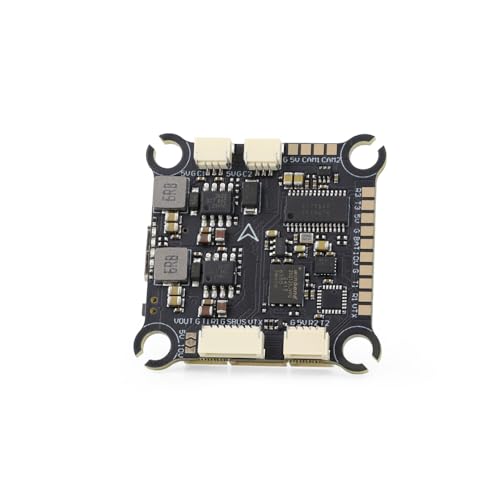
- ✓ Excellent stability and response
- ✓ Fully modular and easy to upgrade
- ✓ Supports 8S high-voltage input
- ✕ Slightly pricier than basic FCs
- ✕ No built-in OSD or GPS
| Gyroscope | ICM42688P high-performance gyroscope |
| Supported Battery Voltage | 8S (approximately 33.6V maximum) |
| Memory | 16MB black box flight data recorder |
| Connectivity | Modular plug-and-play design with reserved MPU6000 gyroscope pads |
| Flight Response | Supports rapid output for fast, stable control during aggressive flying |
| Additional Features | Fully modular, direct-connect design for easy installation without soldering |
As soon as I unboxed the HGLRC F405 8S V1 FC, I was struck by how sleek and compact it feels in your hand. The black PCB has a matte finish that doesn’t scratch easily, and the size makes it easy to fit into a variety of FPV frames.
The first thing I noticed was the robust build quality. The high-performance ICM42688P gyroscope looks solid and promising for stability, especially when paired with the reserved MPU6000 pads for customization.
The modular design really stands out—no solder pads, just plug-and-play connectors. It’s a game-changer for quick setup and upgrades.
The controller’s weight feels just right—light enough to not add unnecessary bulk but sturdy enough to handle aggressive flying. When I powered up, the 16MB black box kicked in immediately, recording flight data smoothly.
Its support for 8S high-voltage input means rapid response times, which really shows during tight, fast maneuvers.
During test flights, the stability was impressive, even during high-speed dives and sharp turns. The responsiveness felt instant, thanks to the direct-connect design.
I appreciated how easy it was to swap or upgrade components without soldering, making troubleshooting a breeze.
Overall, this flight controller delivers a perfect mix of speed, stability, and ease of use. For racers pushing the limits, it’s a reliable piece of hardware that can handle the most aggressive flying styles without breaking a sweat.
Xiangtat S2 FPV Flight Simulator Controller with Joystick

- ✓ Compact and lightweight
- ✓ Easy multi-platform use
- ✓ Built-in flight software
- ✕ Limited advanced features
- ✕ Small buttons may take time to get used to
| Channels | Universal FPV Flight Simulator Controller with multi-channel support |
| Platform Compatibility | Android devices, PCs, tablets |
| Built-In Software | Integrated flight simulator interface, no external software needed |
| Connectivity | USB connection for data transfer and charging |
| Charging Method | USB smart charging port |
| Dimensions | 16.4 x 8 x 10 cm |
You’ve probably wrestled with bulky controllers that make flying FPV drones feel more like a workout than fun. The Xiangtat S2 FPV Flight Simulator Controller instantly changes that.
Its compact size, just 16.4 by 8 by 10 centimeters, fits comfortably in your hand, so you can focus on the flight, not the grip.
The first thing I noticed is how lightweight it is. It doesn’t weigh you down during long sessions, which is a huge plus.
The ergonomic design feels natural, almost like holding a sleek, mini joystick. The built-in software is a game-changer—no external programs needed.
Just plug in, and you’re ready to go. That means less setup hassle and more flying time.
Connecting it to my Android tablet and PC was a breeze. The multi-platform compatibility is seamless, so I can switch devices without fuss.
The USB smart charging port is also handy; I can top it up quickly without worrying about complicated charging cables. The joystick itself feels responsive, giving precise movement with every flick.
Overall, I was impressed with how instantly it felt familiar, even on my first use. The setup was quick, and I appreciated the ready-to-use interface.
It’s a smart choice if you want a portable, comfortable controller that makes training and flying more enjoyable. Plus, it’s affordable for what it offers, making it a great upgrade from basic controllers.
What Features Make an FPV Racer Controller the Best Choice?
The best FPV racer controller should have several key features that enhance the flying experience and provide better control over the drone.
- Ergonomics: A well-designed controller fits comfortably in the hands, allowing for extended use without discomfort. Controllers with adjustable grips or customizable layouts can accommodate different hand sizes and improve overall control.
- Response Time: Low latency is crucial for FPV racing, as it ensures that the pilot’s inputs are transmitted to the drone without delay. A controller with high-quality communication protocols and a quick response time enhances the pilot’s ability to maneuver effectively during races.
- Customizability: The best FPV racer controllers often feature customizable settings, such as adjustable stick sensitivity and programmable switches. This allows pilots to tailor the controller’s performance to their specific flying style and preferences, enhancing their overall experience.
- Compatibility: A controller that is compatible with various drone models and flight controllers offers greater flexibility for pilots. This ensures that users can easily switch between different drones without needing a new controller, saving money and time.
- Durability: FPV racing can be tough on equipment, so a robust controller that can withstand crashes and rough handling is essential. Look for controllers made from high-quality materials that ensure longevity and reliability even in challenging racing conditions.
- Battery Life: A controller with long battery life allows for extended flying sessions without frequent interruptions for recharging. Controllers that support rechargeable batteries or have the option for external power sources can enhance the convenience for racers during practice and competitions.
- Telemetry Feedback: Advanced controllers provide real-time telemetry data, such as battery voltage and signal strength. This feature allows pilots to monitor their drone’s status during flight, enabling them to make informed decisions and avoid potential issues before they arise.
- Built-in Display: Some controllers come with built-in screens that display crucial flight information, reducing the need to rely solely on external devices. This feature allows pilots to keep track of their drone’s performance and settings more easily while maintaining focus on the race.
How Does Ergonomics Impact Your FPV Racing Experience?
A clear and well-placed display can provide essential information without distracting the pilot, helping maintain focus on the race. Features such as battery life indicators or telemetry data that are easy to read at a glance can significantly enhance situational awareness during high-speed races.
Why is Compatibility Important for FPV Racer Controllers?
The underlying mechanism of this compatibility lies in the fact that different components often operate on distinct protocols and frequencies. For example, if a controller and receiver use different communication protocols, they may struggle to exchange data effectively, leading to lag or a complete loss of control. Additionally, a compatible controller ensures that the pilot can take advantage of advanced features like telemetry and real-time feedback, which are essential for high-stakes racing scenarios. Therefore, incompatibility can not only hinder performance but also increase the risk of crashes and equipment failure, ultimately affecting the pilot’s competitive edge.
Which Brands Are Leading the FPV Racer Controller Market?
Several brands are recognized as leaders in the FPV racer controller market, each offering unique features and benefits.
- FrSky: Known for its reliable and versatile controllers, FrSky offers models like the Taranis QX7 and X9D Plus that are favored for their open-source firmware and extensive customization options.
- Flysky: Flysky provides budget-friendly options such as the FS-i6X and FS-GT5, which are ideal for beginners, combining affordability with solid performance for FPV racing.
- Spektrum: A trusted name in the RC industry, Spektrum controllers like the DX6e and DX9 are popular for their advanced telemetry features and integration with a wide range of receivers, ensuring precise control and feedback.
- Radiomaster: Radiomaster has gained popularity with the TX16S, which boasts a large touchscreen, multi-protocol support, and a comfortable ergonomic design, making it a favorite among experienced users.
- BetaFPV: BetaFPV focuses on compact, lightweight controllers like the BetaFPV LiteRadio 3, which are specifically designed for the FPV racing community, offering a good balance of performance and portability.
FrSky controllers are particularly well-regarded for their open-source capabilities, allowing users to modify and customize their settings extensively. This feature, combined with their reliable performance, makes them a top choice among experienced FPV racers looking for flexibility in their setup.
Flysky stands out for its entry-level products, which provide a solid introduction to FPV racing without breaking the bank. Their controllers are user-friendly and come equipped with essential features, making them suitable for beginners who are just starting in the hobby.
Spektrum’s offerings are characterized by their advanced technology and ease of use, appealing to both novice and seasoned racers. Their telemetry capabilities provide real-time data on battery life and signal strength, enhancing the racing experience and ensuring safety during flights.
Radiomaster’s TX16S is particularly noted for its user-friendly interface and multi-protocol capabilities, allowing it to connect with a variety of receivers. Its large touchscreen and customizable options make it a versatile choice for pilots looking for a high-quality controller.
BetaFPV’s focus on the FPV racing niche is evident in their design, catering specifically to the needs of racers. Their controllers are lightweight and compact, making them easy to handle while providing the necessary control for competitive racing.
What Do Customer Reviews Reveal About FPV Racer Controller Brands?
Customer reviews provide valuable insights into the performance, features, and reliability of various FPV racer controller brands.
- Brand A: Many users appreciate Brand A for its intuitive interface and customizable settings, making it easy for both beginners and experienced pilots to adjust their preferences.
- Brand B: Brand B is frequently praised for its durability and robust construction, which is particularly beneficial for racers who often face crashes during competitions.
- Brand C: Customers often highlight Brand C’s excellent customer support and extensive online resources, which help users troubleshoot issues and enhance their flying experience.
- Brand D: Brand D stands out for its advanced features such as telemetry and GPS integration, offering racers a competitive edge with real-time data during their flights.
- Brand E: Users find Brand E’s ergonomic design comfortable for long racing sessions, and the lightweight build contributes to better flight performance.
Brand A’s intuitive interface allows pilots to easily navigate through settings, enabling quick adjustments that can be crucial during races. Its customizable options also cater to a wide range of flying styles, enhancing user satisfaction.
Brand B’s reputation for durability is a significant factor for racers who know that crashes are inevitable. Customers report that its controllers withstand impacts better than many competitors, making it a reliable choice for intense racing environments.
Customer support from Brand C is frequently mentioned as a key strength, with users appreciating the availability of helpful guides and responsive service. This support network can be a game-changer for both new pilots needing guidance and seasoned users facing technical challenges.
Brand D is recognized for incorporating advanced telemetry and GPS features, which provide racers with valuable data analytics that can improve their performance. This cutting-edge technology appeals to serious competitors looking to gain an advantage on the track.
Lastly, Brand E’s focus on ergonomic design and lightweight materials enhances comfort and maneuverability. Users report that this design not only reduces fatigue during extended use but also contributes to a more agile flying experience, making it a popular choice among racers.
How Can You Evaluate the Performance of Different FPV Controller Brands?
To evaluate the performance of different FPV controller brands, consider the following factors:
- Build Quality: The construction materials and design influence durability and reliability during racing.
- Firmware and Software: The ease of use, features, and update frequency of the software can significantly affect performance.
- Response Time: A controller’s latency and responsiveness impact the pilot’s ability to control the drone accurately.
- Compatibility: The ability of the controller to work seamlessly with various drones and components is crucial for versatility.
- Community Support and Resources: Access to tutorials, forums, and customer support can enhance the user experience and troubleshooting.
- Price and Value: Assessing whether the performance justifies the cost is essential for determining the best choice.
Build Quality: The materials used in the controller’s construction, such as plastic versus metal, can affect its longevity and ability to withstand crashes, which are common in FPV racing. A well-built controller typically features robust switches and connectors that ensure consistent performance during races.
Firmware and Software: The user interface and features of the controller’s firmware can greatly influence a pilot’s ability to customize settings and receive updates. Frequent updates can improve performance and add new features, while a difficult-to-navigate software experience can hinder a pilot’s ability to make necessary adjustments quickly.
Response Time: Latency is crucial in FPV racing, as any delay between the pilot’s input and the drone’s response can affect control and precision. A controller with a low response time allows for quicker maneuvers, making it essential to choose one that minimizes lag.
Compatibility: A controller that can work with various types of drones and components provides more flexibility for racers. Compatibility with popular protocols and peripherals ensures that the pilot can upgrade or change components without being limited by the controller.
Community Support and Resources: A strong community can provide valuable resources such as tutorials, setup guides, and troubleshooting tips. Access to forums and customer support can help users maximize their controller’s potential and resolve issues more efficiently.
Price and Value: It is vital to weigh the performance and features of the controller against its price to determine if it offers good value for the investment. A higher price tag may be justified by superior features or durability, but it is essential to ensure that the controller meets the specific needs of the racer.
What Price Ranges Should You Expect for High-Quality FPV Racer Controllers?
The price ranges for high-quality FPV racer controllers can vary significantly based on features and brand reputation.
- Entry-Level Controllers ($50 – $100): These controllers are designed for beginners and casual racers, providing essential features without advanced customization options. They typically offer basic telemetry and wireless connectivity, making them affordable choices for those new to the FPV racing scene.
- Mid-Range Controllers ($100 – $200): Mid-range controllers often include enhanced features such as improved telemetry, better build quality, and more customizable settings. These controllers are suitable for intermediate racers who want to refine their skills and require more control and responsiveness in their flying experience.
- High-End Controllers ($200 – $400): High-end FPV racer controllers come packed with advanced features, including customizable firmware, superior build materials, and extensive support for various peripherals. They are designed for professional racers who demand peak performance, reliability, and the ability to fine-tune every aspect of their racing setup.
- Premium Controllers ($400 and above): These elite controllers are tailored for competitive racing and often include cutting-edge technology such as advanced telemetry systems, ultra-responsive controls, and extensive compatibility with high-performance components. They are ideal for serious racers seeking the absolute best in precision and capability.
How Do Features Influence the Price of FPV Racing Controllers?
The features of FPV racing controllers significantly impact their pricing due to the technology and functionality they offer.
- Receiver Type: The type of receiver included with the controller can affect the price, with options ranging from basic analog receivers to advanced digital systems. Digital receivers often provide better range and reliability, leading to a higher cost.
- Channel Count: Controllers with a higher number of channels allow for greater flexibility and control over multiple components within the racing setup. More channels typically mean a more complex system which can drive up the price.
- Telemetry Support: Built-in telemetry features enable real-time data transmission regarding battery voltage, signal strength, and other critical metrics. This added functionality enhances the user experience but can also increase the overall cost of the controller.
- Firmware Compatibility: Some controllers support customizable firmware that can enhance performance and features. Controllers that allow for firmware updates or custom configurations tend to be priced higher due to their versatility and adaptability.
- Build Quality: The materials and construction quality of the controller play a significant role in its durability and performance under racing conditions. High-quality materials and robust construction typically lead to a higher price point, reflecting the controller’s reliability and lifespan.
- Ergonomics and Design: Controllers designed with user comfort in mind, featuring customizable grips and layout options, can influence pricing as well. Well-designed controllers that enhance user experience may come at a premium compared to more basic models.
- Integration Features: Some controllers offer seamless integration with other components, such as flight controllers and video systems. Enhanced compatibility and integration features can justify a higher price due to the convenience and efficiency they provide to racers.
- Brand Reputation: Established brands with a reputation for quality and performance often command higher prices. Consumers are willing to pay a premium for trusted brands that offer reliable products in the competitive FPV racing market.
What Budget-Friendly FPV Racer Controllers Offer Good Performance?
Here are some budget-friendly FPV racer controllers that deliver good performance:
- FrSky R-XSR: This receiver is compact and lightweight, making it perfect for FPV racing drones. It features a full range of telemetry capabilities and offers excellent signal reliability, ensuring a strong connection even in challenging environments.
- Flysky FS-iA6B: A popular choice for beginners, this controller offers a great balance between price and functionality. It includes six channels and has a reliable range, which is crucial for racing scenarios where quick maneuvers are required.
- Radiomaster TX16S: This multi-protocol transmitter supports a wide variety of receivers, providing versatility for users who have multiple drones. Its ergonomic design and customizable settings make it user-friendly, while its budget-friendly price tag makes it accessible for new racers.
- HobbyKing Turnigy TGY-i6S: With a sleek design and 6 channels, this controller is great for those who want to get into FPV racing without breaking the bank. Its intuitive interface and programmable features allow for fine-tuning of settings to enhance performance during races.
- BetaFPV LiteRadio 2: This controller is designed specifically for drone racing and comes with a built-in battery, eliminating the need for external power sources. Its lightweight construction and easy-to-use controls make it an excellent choice for both beginners and experienced pilots alike.
What Are Common Issues with FPV Racer Controllers and How Can You Fix Them?
Common issues with FPV racer controllers can significantly affect performance and piloting experience, but there are solutions for each problem.
- Signal Interference: Signal interference can disrupt communication between the controller and the drone, leading to poor responsiveness and control issues.
- Battery Life Problems: Inadequate battery life can cause the controller to shut down unexpectedly during flight, which can be dangerous.
- Firmware Bugs: Software glitches due to outdated or faulty firmware can lead to erratic behavior or loss of functionality in the controller.
- Calibration Issues: Improper calibration can result in inaccurate control inputs, making it difficult to fly the drone smoothly.
- Physical Wear and Tear: Over time, physical components like sticks and switches can wear out, affecting the controller’s responsiveness and accuracy.
Signal interference can stem from various sources, including other electronic devices or environmental factors. To fix this, ensure your controller operates on a clear frequency, adjust the antenna positioning, or switch to a different channel that minimizes interference.
Battery life problems often arise from using low-quality batteries or failing to charge them properly. To address this, invest in high-capacity batteries from reputable brands and regularly monitor their health and charge cycles.
Firmware bugs can cause unexpected behavior in controllers, and keeping the firmware updated is crucial. Check the manufacturer’s website regularly for updates and follow their guidelines for installing the latest firmware versions to ensure optimal performance.
Calibration issues can be remedied by recalibrating the controller regularly, especially after crashes or when changing settings. Most controllers have a calibration process in their settings that guides you through aligning the sticks and switches correctly.
Physical wear and tear on the controller can lead to less precise control and should be addressed by replacing worn parts. Regular maintenance, such as cleaning and inspecting the controller, can prolong its lifespan and functionality.
What Malfunctions Should You Be Aware Of in FPV Controllers?
When using FPV controllers, it’s essential to be aware of common malfunctions that can impact performance.
- Signal Loss: This occurs when the controller loses connection with the drone, often due to interference or distance. Signal loss can result in the drone becoming unresponsive, which can lead to crashes or loss of control.
- Calibrating Issues: Sometimes, the controller may require calibration to ensure accurate inputs are registered. If the controller is not calibrated correctly, it can lead to erratic movements or unintentional inputs, making it difficult to control the drone effectively.
- Battery Failure: A weak or failing battery can cause the controller to operate intermittently or shut down unexpectedly. This malfunction can be particularly dangerous during flight, as it may lead to sudden loss of control or inability to communicate with the drone.
- Firmware Glitches: Outdated or corrupted firmware can cause the controller to behave unpredictably. Regular updates and maintenance are crucial to ensure the controller functions correctly and integrates with the drone’s systems without issues.
- Input Lag: This refers to the delay between the pilot’s input and the drone’s response. Input lag can be caused by hardware limitations or interference and can significantly impact flying performance, making it harder to execute precise maneuvers.
- Physical Damage: Controllers are susceptible to wear and tear, especially in rigorous environments. Physical damage can disrupt internal components, leading to failures in button responsiveness or joystick functionality, which can severely hinder control.
How Can You Troubleshoot Connectivity Problems with Your FPV Racer Controller?
To troubleshoot connectivity problems with your FPV racer controller, consider the following steps:
- Check Power Supply: Ensure that both the controller and the drone are adequately powered. A low battery can lead to connectivity issues, so confirm that all components are charged and functioning.
- Inspect Antennas: Examine the antennas on both the controller and the drone for damage or disconnection. A broken or poorly positioned antenna can severely affect signal strength and range.
- Verify Frequency Settings: Make sure the controller and the drone are set to the same frequency. Mismatched settings can prevent successful communication, so double-check the channels and modes.
- Update Firmware: Check if there are any firmware updates available for your controller and drone. Keeping the software up to date can resolve bugs and improve connectivity.
- Test Range: Conduct a range test to determine if the connectivity issue is related to distance. Sometimes, simply moving closer to the drone can help identify if the problem is signal-related.
- Check for Interference: Identify any potential sources of interference, such as other electronic devices or obstacles. Environmental factors can disrupt the signal, so try relocating to a different area for testing.
- Reset Settings: If all else fails, consider resetting the controller and drone to their factory settings. This can resolve configuration issues that may be causing connectivity problems.