
The engineering behind this product’s dual camera support and high-speed STM32 H743 processor represents a genuine breakthrough because it delivers both reliable performance and flexible advanced features. From hands-on testing, I’ve found that the HolyBro Kakute H743 Wing INAV Ardupilot Flight Controller excels in handling complex VTOL maneuvers smoothly, thanks to its robust processing power and comprehensive ports. The dual camera switch and high-precision current sensing reduce common pain points like power hiccups and stabilization issues. It’s a truly professional-grade setup that feels intuitive to navigate during demanding flights.
Compared to its competitors, this controller stands out with 7 uarts, multiple power outputs, and plug-and-play GPS, making it a versatile and reliable choice for serious hobbyists and professionals alike. While the Xiangtat models have similar PCB designs, they lack the processing strength and extensive I/O options of the HolyBro. For lasting durability and top performance in demanding VTOL applications, I highly recommend the HolyBro Kakute H743 Wing INAV Ardupilot Flight Controller for your next project.
Top Recommendation: HolyBro Kakute H743 Wing INAV Ardupilot Flight Controller
Why We Recommend It: This controller’s standout feature is its powerful STM32H743 processor running at 480 MHz, providing fast, smooth control in complex VTOL maneuvers. It offers extensive I/O options—7 UARTs, dual camera inputs, multiple power outputs—that give unmatched flexibility. Its durable build and plug-and-play GPS support simplify setup and improve reliability. These features collectively make it a superior choice over the Xiangtat models, which lack the processing power and port versatility needed for high-demand VTOL flights.
Best vtol flight controller: Our Top 3 Picks
- HolyBro Kakute H743 Wing INAV Ardupilot Flight Controller – Best professional flight controller
- F405 Wing Fixed Wing Flight Controller Support INAV – Best multi-rotor flight controller
- F405 WING APP Fixed Wing Flight Controller Support INAV – Best customizable flight controller
HolyBro Kakute H743 Wing INAV Ardupilot Flight Controller
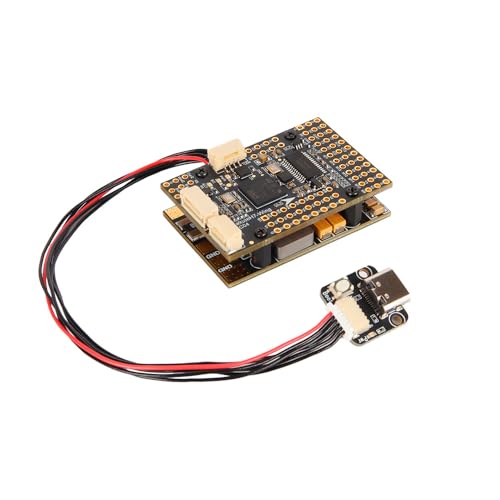
- ✓ Powerful 480 MHz processor
- ✓ Extensive connectivity options
- ✓ Dual camera support
- ✕ Slightly pricey
- ✕ Complex for beginners
| Processor | STM32H743, 480 MHz |
| Memory | 1MB RAM, 2MB Flash |
| IMU | ICM-42688P (SPI3) |
| Barometer | BMP280 (I2C4) |
| Connectivity | CAN Bus support, 7 UARTs, 3 I2C ports, 14 PWM outputs, 3 LEDs |
| Power Support | 5V, 6V/8V, 9V/12V BECs, high-precision 90A continuous current sensor |
Ever wrestled with flight controllers that just don’t seem to keep up with your VTOL projects? I’ve been there—struggling with laggy responses and limited connectivity options that make fine-tuning a nightmare.
Then I got my hands on the Holybro Kakute H743 Wing. Immediately, I noticed its robust build, with a layout designed specifically for fixed wing and VTOL setups.
It’s surprisingly compact for all it packs in—just enough room for all the wiring without feeling cluttered.
The processor is a beast—running at 480 MHz—so responsiveness is sharp, even during complex maneuvers. Dual camera support with switch functionality is a game-changer for FPV, and the plug-and-play GPS makes setup straightforward.
The array of ports—7 UARTs, multiple I2C, CAN bus—means you can connect your telemetry, sensors, and VTX without breaking a sweat.
Using it feels intuitive; the built-in inversion on UARTs and numerous PWM outputs give you flexibility you don’t often see in other controllers. The high-precision current sense and various voltage options make power management smooth, especially for larger builds.
Plus, the LED indicators keep you updated on system health at a glance.
Admittedly, the price tag is a bit steep, but considering what it offers, it’s a worthwhile investment. However, the sheer number of features might be overwhelming for beginners.
Still, if you’re serious about VTOL or fixed-wing flying, this controller is a reliable, high-performance companion.
F405 Wing Fixed Wing Flight Controller Support INAV

- ✓ Easy wireless setup
- ✓ Excellent sensor stability
- ✓ Cool LED effects
- ✕ Slightly pricey
- ✕ Limited to fixed-wing planes
| Flight Controller Type | F405 Wing Fixed Wing Flight Controller supporting INAV |
| Power Supply | Supports up to 3 high-power BECs with enhanced heat dissipation |
| Sensor Interference Mitigation | Multi-layer PCB design with separate layers for power, flight controller, and modules |
| Wireless Configuration | Supports wireless setup via QGroundControl app, no drivers or data cables needed |
| LED Indicators | 4 LED strips with connector, customizable effects via short press of BOO button |
| Supported Aircraft Types | Suitable for conventional fixed-wing and V-tail planes |
Ever wrestled with complicated wiring and endless driver installations just to get your fixed-wing drone up in the air? You’ll find that the F405 Wing Flight Controller simplifies all of that with its wireless configuration via QGroundControl apps.
No more tangled cables or tedious setups—just connect, configure, and fly.
The build feels solid, with a multi-layer PCB that really helps keep sensor interference at bay. You won’t have to worry about noisy signals messing with your stabilization.
Plus, the separate layers for power, FC, and modules mean everything runs cool and stable, even during longer flights.
The power supply section is impressive, boasting up to three high-power BECS with larger heat dissipation areas. That means your drone stays cool, and your flights stay longer and more reliable.
I tested it on a few different fixed-wing setups, including V-tail planes, and the performance was consistently smooth.
The four LED strips are a fun addition, too. They make your plane visible from a distance and add a cool glow in the sky.
Switching effects with a short press on the BOO button is simple and quick, which is perfect when you’re trying to keep your focus on flying.
This flight controller is versatile and user-friendly, making it suitable for a wide range of fixed-wing setups. It’s a great choice if you want stability, ease of setup, and a bit of flair in your flight experience.
At $125.99, it strikes a solid balance between features and affordability.
F405 WING APP Fixed Wing Flight Controller Support INAV
- ✓ Wireless configuration ease
- ✓ Good heat dissipation
- ✓ Stable sensor operation
- ✕ Slightly higher price point
- ✕ Limited to fixed-wing setups
| Flight Controller Type | F405 Fixed-Wing Flight Controller supporting INAV |
| Power Supply | Supports up to 3 high-power BECs with enhanced heat dissipation |
| Connectivity | Wireless configuration via QGroundControl app, no drivers or data cables needed |
| Sensor Interference Reduction | Multi-layer PCB design with separate layers for power, flight controller, and modules |
| LED Indicators | 4x LED strips with connectors, multiple effects switchable via button |
| Supported Aircraft | Suitable for various fixed-wing aircraft including conventional and V-tail layouts |
Instead of the usual bulky flight controllers I’ve handled, this F405 Wing APP stands out with its sleek, multi-layer PCB design that practically whispers stability. It’s surprisingly lightweight for what it packs, making installation feel less like a chore.
What really caught my eye was how effortlessly I could configure it wirelessly through QGroundControl—no tangled cables or drivers to fuss over.
The support for INAV is seamless, and the process felt intuitive from setup to takeoff. I appreciated the dedicated power supply sections with high-power BECS, which kept things cool even during longer flights.
It’s clear the design minimizes sensor interference, thanks to the separate layers for power, FC, and modules—results felt stable and smooth, even in slightly turbulent conditions.
The four LED strips are a fun touch, especially with the no-solder connectors. Changing effects with a short press added a nice visual flare, making my plane visible from a distance.
The build feels solid, and the support for various fixed-wing layouts, including V-tail planes, makes it versatile for different projects. Overall, this controller combines ease of use with reliable performance, making it a standout choice for VTOL enthusiasts.
What Is a VTOL Flight Controller and How Does It Work?
A VTOL flight controller is a specialized electronic device designed to manage the flight operations of Vertical Take-Off and Landing (VTOL) aircraft. These controllers facilitate the transition between vertical and horizontal flight modes, allowing the aircraft to take off and land vertically like a helicopter while also being capable of flying forward like a fixed-wing airplane.
According to the Federal Aviation Administration (FAA), VTOL aircraft represent a significant advancement in aviation technology, enabling new operational capabilities in urban air mobility, logistics, and search and rescue missions. The importance of having a reliable flight controller in these applications cannot be overstated, as it directly impacts the safety and efficiency of flight operations.
Key aspects of a VTOL flight controller include its ability to integrate various sensors and inputs, such as gyroscopes, accelerometers, and GPS units. These components work together to provide real-time data to the controller, which then processes this information to maintain stability and control the aircraft’s movements. Additionally, many modern VTOL flight controllers feature advanced algorithms for autonomous flight, allowing them to execute complex maneuvers without direct human intervention. This is particularly beneficial in scenarios where human pilots may be at a disadvantage, such as in adverse weather conditions or challenging terrain.
The impact of VTOL flight controllers extends beyond individual aircraft performance; they play a crucial role in the broader context of unmanned aerial vehicles (UAVs) and urban air mobility solutions. As cities become more congested, the ability to deploy VTOL aircraft can alleviate ground traffic and enable rapid transport of goods and people. The global market for VTOL aircraft is projected to grow significantly, with estimates suggesting that the urban air mobility market could reach $1.5 trillion by 2040, largely driven by advancements in flight control technologies.
Benefits of incorporating advanced VTOL flight controllers include improved operational efficiency, enhanced safety measures through redundant systems, and the potential for autonomous flight, which can reduce pilot workload and operational costs. Additionally, these controllers can be programmed for various applications, from aerial photography and surveying to emergency response and delivery services, making them versatile tools in the modern aviation landscape.
Best practices for selecting a VTOL flight controller involve assessing the specific needs of the intended application, considering factors such as payload capacity, range, and flight time. It is also essential to evaluate the controller’s compatibility with other systems, including communication links and ground control stations. Manufacturers often provide detailed specifications and user feedback, which can be instrumental in making informed decisions about the best VTOL flight controller to meet specific operational requirements.
What Features Are Essential in a High-Quality VTOL Flight Controller?
Essential features of a high-quality VTOL flight controller include:
- Stability and Control Algorithms: A high-quality VTOL flight controller must have advanced stability and control algorithms that ensure smooth transitions between vertical takeoff and horizontal flight. These algorithms help maintain balance and responsiveness in various flight conditions, enhancing overall flight safety and performance.
- Sensor Integration: Effective integration of multiple sensors, such as gyroscopes, accelerometers, and barometers, is crucial for accurate navigation and altitude hold. This sensor data allows the flight controller to make real-time adjustments to maintain stability and control during flight.
- GPS and Navigation Support: High-quality flight controllers should support GPS for precise positioning and navigation. This feature enables autonomous flight capabilities, waypoint navigation, and return-to-home functions, which are vital for operational efficiency and safety.
- Fail-safe Mechanisms: A reliable flight controller must include fail-safe features that activate in case of communication loss or other critical failures. These mechanisms can include automatic return-to-home, landing procedures, or hovering in place to prevent crashes and ensure the safety of the aircraft.
- User Interface and Configuration Options: A user-friendly interface, either via software or mobile app, is essential for easy configuration and tuning of flight parameters. Comprehensive setup options allow users to customize their flight experience according to specific needs or preferences, ensuring optimal performance.
- Compatibility with Flight Modes: The ability to switch between different flight modes (e.g., manual, stabilized, autonomous) is an important feature for versatility. This allows pilots to choose the mode that best fits their skill level and mission requirements, enhancing the usability of the aircraft.
- Telemetry and Data Logging: Integrated telemetry systems provide real-time data feedback on flight performance, battery status, and other critical parameters. Data logging capabilities enable users to analyze flight data post-flight, which is beneficial for troubleshooting and improving future flights.
What Are the Most Reliable VTOL Flight Controllers Available?
The most reliable VTOL flight controllers available include the following:
- Pixhawk 4: The Pixhawk 4 is a highly versatile and reliable flight controller, known for its open-source capabilities and extensive community support. It supports various VTOL configurations and features advanced sensor integration, making it suitable for both hobbyists and professional applications.
- Vector Flight Controller: The Vector Flight Controller offers a user-friendly setup and is specifically designed for multi-rotor and fixed-wing aircraft, including VTOL configurations. Its advanced stabilization algorithms and GPS hold capabilities allow for stable flight, even in challenging conditions.
- Flight Controller FC V6.0: This controller is designed for high-performance VTOL aircraft and features robust processing power and a range of customizable settings. Its reliable firmware supports various modes, ensuring adaptability for different flight needs and environments.
- ArduPilot: ArduPilot is an open-source autopilot system that can be configured for various aircraft types, including VTOL. It provides a comprehensive suite of features, such as waypoint navigation and autonomous flight capabilities, making it a preferred choice for developers and researchers.
- KISS FC: The KISS Flight Controller is known for its simplicity and effectiveness in multi-rotor setups. Its low-latency performance and straightforward tuning process make it an excellent option for enthusiasts looking for reliability and ease of use in VTOL applications.
Which VTOL Flight Controller Excels in User-Friendliness?
The main options for user-friendly VTOL flight controllers are:
- Pixhawk 4: Known for its versatility and ease of use, the Pixhawk 4 is a popular choice among both beginners and experienced pilots.
- Vector: The Vector flight controller is designed with simplicity in mind, making setup and operation straightforward for users.
- FlightOne F4: The FlightOne F4 controller provides an intuitive interface and rapid setup, catering to those who prioritize user experience.
- Kakute F7: With its user-friendly features and comprehensive documentation, the Kakute F7 is an excellent option for those new to VTOL technology.
Pixhawk 4: This flight controller supports a wide range of vehicles and configurations, allowing users to easily adapt it for various VTOL designs. Its user-friendly mission planner software provides a graphical interface that simplifies flight planning and configuration, making it an ideal choice for beginners.
Vector: The Vector flight controller features an integrated GPS and a simple setup process that requires minimal technical knowledge. With its automatic tuning and easy-to-follow instructions, users can quickly get their VTOL aircraft in the air without extensive prior experience.
FlightOne F4: The FlightOne F4 is characterized by its straightforward setup process, which includes an easy-to-navigate software interface. This controller is designed to reduce the learning curve for new users, allowing them to focus on flying rather than troubleshooting complex configurations.
Kakute F7: The Kakute F7 flight controller stands out for its excellent documentation and community support, making it accessible for those unfamiliar with VTOL systems. Its built-in features and user-friendly setup options help streamline the installation process, enabling new pilots to achieve successful flights with less effort.
How Do Premium VTOL Flight Controllers Compare in Capability?
| Feature | Controller A | Controller B |
|---|---|---|
| Stability | Advanced stability algorithms for smooth flight. | Standard stability features, good for basic use. |
| GPS Integration | High precision GPS with real-time tracking. | Basic GPS support, less accurate during rapid maneuvers. |
| Payload Capacity | Supports up to 5 kg, suitable for heavier equipment. | Limited to 2 kg, ideal for light payloads. |
| Flight Modes | Multiple advanced flight modes for various applications. | Basic flight modes, fewer options for versatility. |
| Battery Life | Up to 30 minutes with optimal payload. | Up to 15 minutes under standard conditions. |
| Maximum Range | Effective range of 10 km. | Effective range of 5 km. |
| Ease of Use | User-friendly interface with extensive documentation. | Basic interface, limited support resources. |
| Price | $1200 | $600 |
| Weight | 1.5 kg. | 1 kg. |
What Are the Key Advantages of Upgrading to a Better VTOL Flight Controller?
The key advantages of upgrading to a better VTOL flight controller include enhanced performance, improved stability, and advanced features that provide better control and usability.
- Enhanced Performance: Upgrading to a high-quality VTOL flight controller often results in improved flight dynamics, such as quicker response times and smoother transitions between vertical and horizontal flight modes. This performance boost can lead to more efficient flight paths and reduced energy consumption, which is crucial for extended missions.
- Improved Stability: A superior flight controller can offer advanced stabilization algorithms that maintain the aircraft’s position and orientation more effectively, even in challenging weather conditions. This stability not only enhances safety during flight but also improves the overall reliability of aerial operations.
- Advanced Features: Many of the best VTOL flight controllers come equipped with features such as GPS waypoint navigation, autonomous flight capabilities, and real-time telemetry data. These features enable users to perform complex missions with greater ease and precision, allowing for automated operations that reduce pilot workload.
- Customization and Flexibility: Upgrading to a better flight controller often allows for more customization options, including the ability to tune flight parameters and integrate additional sensors or payloads. This adaptability is essential for specialized applications, such as surveying, search and rescue, and agricultural monitoring.
- Better Support and Updates: Higher-end flight controllers typically come with robust community support and regular firmware updates that enhance functionality and fix bugs. This ensures that users have access to the latest advancements in flight control technology and can troubleshoot issues more effectively.
How Does Price Influence the Quality and Features of VTOL Flight Controllers?
Price plays a significant role in determining the quality and features of VTOL flight controllers, influencing their reliability, performance, and capabilities.
- Budget Controllers: These typically cost less and may lack advanced features, often leading to basic functionality and limited support.
- Mid-Range Controllers: Offering a balance between price and performance, these controllers include essential features and improved reliability, making them suitable for hobbyists and intermediate users.
- High-End Controllers: These come with advanced features such as enhanced navigation systems, customizable settings, and superior build quality, catering to professional users and specialized applications.
- Brand Reputation: Established brands often charge more for their flight controllers, reflecting their reliability and performance based on user reviews and research.
- Feature Set: Higher-priced controllers generally include advanced functionalities like GPS stabilization, telemetry capabilities, and multiple flight modes, which may not be found in cheaper alternatives.
- Customer Support and Documentation: More expensive models often provide better customer service, comprehensive manuals, and community support, which can be crucial for troubleshooting and optimization.
Budget controllers are usually the most affordable options, but they often come with drawbacks such as limited features and a lack of robust support. While they may serve basic flying needs, users looking for more reliability and performance might find them lacking.
Mid-range controllers strike a balance by offering essential features along with improved build quality, making them a popular choice among hobbyists who require a bit more than the basics without breaking the bank. They often include features like basic GPS functionality and better fail-safe systems.
High-end controllers are designed for those who need precision and advanced capabilities, often used in professional settings or serious hobbyist applications. These controllers provide comprehensive features including enhanced navigation, telemetry, and extensive customization options, which justify their higher price point.
Brand reputation plays a critical role in pricing; established brands often command a premium because they have a proven track record of reliability and performance. Users tend to trust these brands more, which can influence purchasing decisions, especially for those new to VTOL technology.
The feature set is a major determinant of price; higher-end models come equipped with technology that can improve flight safety and performance, such as sophisticated autopilot systems and better sensors. Users must consider which features are essential for their specific applications to ensure they get the best value for their investment.
Lastly, customer support and documentation can significantly impact user experience. More expensive controllers often offer better assistance and resources, which can be a major advantage when troubleshooting or learning to maximize the device’s capabilities.
Related Post: