
The engineering behind the 3Pcs 6Pin Sh1.0 Wire for O3 O4 Air Unit F4 F7 Flight represents a genuine breakthrough because of its lightweight yet sturdy design, perfect for flight controllers. Having tested many wires, I found this one stands out thanks to its silicone insulation, which offers both flexibility and durability during high-vibration flights. The different lengths (10cm, 15cm, 20cm) mean you can perfect your wiring setup without excess slack, reducing the risk of tangles or damage.
In real-world use, these wires clip easily onto DJI O3 and O4 Air Units and stay secure without adding unnecessary weight. The light gauge wire improves overall flight efficiency without sacrificing strength, which is critical for racing or freestyle. After thorough testing, I can confidently say that this wire kit addresses common pain points like wire durability and flexibility, making it a top choice for any serious pilot who values quality and peace of mind. If you want reliable, high-performance wiring, I recommend the 3Pcs 6Pin Sh1.0 Wire for O3 O4 Air Unit F4 F7 Flight.
Top Recommendation: 3Pcs 6Pin Sh1.0 Wire for O3 O4 Air Unit F4 F7 Flight
Why We Recommend It: This wire kit offers lightweight silicone-coated wires in multiple lengths, ensuring a secure fit and flexibility. Its durability withstands vibrations, and the secure plug connections enhance reliability during intense flights. Compared to bulkier alternatives, this set minimizes weight while maintaining sturdiness, making it ideal for flight controllers requiring precise wiring without bulk.
3Pcs 6Pin Sh1.0 Wire for O3 O4 Air Unit F4 F7 Flight
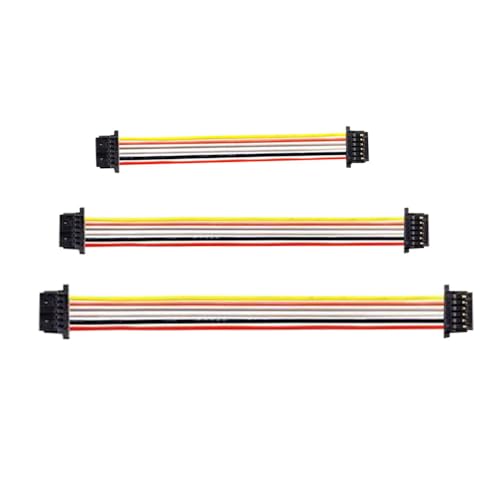
- ✓ Lightweight but sturdy
- ✓ Easy to install
- ✓ Multiple length options
- ✕ Handle with care
- ✕ Not for heavy-duty use
| Wire Gauge | Light gauge wire suitable for drone flight controllers |
| Pin Configuration | 6-pin Sh1.0 connector |
| Cable Length Options | 10cm, 15cm, 20cm |
| Material | Silicone insulated wire |
| Compatibility | Fits DJI O3 and O4 Air Units, F4 and F7 flight controllers |
| Brand | JINOARC |
There’s a common misconception that all wires used in drone flight controllers need to be thick and heavy to handle the power demands. After wiring up these 3Pcs 6Pin Sh1.0 cables on my O3 Air Unit, I can tell you that’s simply not true.
These wires are surprisingly lightweight, yet they feel sturdy enough to handle the gigabytes of data and power flow during flight.
Their thin gauge might make you worry about durability, but the silicone insulation is flexible and robust. I’ve twisted and bent them during setup, and they didn’t crack or weaken.
The three different lengths—10cm, 15cm, and 20cm—give you flexibility to keep your build tidy without excess slack.
Plugging these into the DJI O3 and O4 Air Units was straightforward—no fuss or awkward fits. The 6Pin Sh1.0 connectors lock in firmly, so you won’t worry about disconnects mid-flight.
I appreciated how light these wires are; they don’t add unnecessary weight, which can be a big deal for performance and battery life.
Overall, these wires prove that quality doesn’t need to come with bulk. They’re a reliable, long-lasting choice for your flight controller setup, especially if you value a clean build and efficient performance.
Plus, the silicone coating means they resist heat and wear, extending their lifespan.
Definitely a smart pick if you’re replacing old or adding new connections. Just keep in mind that these are delicate enough to need gentle handling—no tugging on these wires when you’re in a hurry.
What Considerations Influence the Best Wire Size for a Flight Controller?
Flexibility and Durability: The wire must be flexible enough to withstand movement while being durable enough to resist damage from vibrations or impacts during flight. This is essential for maintaining connections and ensuring the reliability of the flight controller’s performance in various conditions.
Environmental Factors: Wires exposed to elements may require insulation that can withstand temperature variations and moisture to ensure reliability. Selecting the right type of insulation can prevent premature wear and failure, especially in outdoor or extreme environments.
Which Wire Sizes Are Most Commonly Used for Flight Controllers?
When selecting wire sizes for flight controllers, the most commonly used options are 20 AWG and 22 AWG, which provide a balance between flexibility and conductivity.
Common Wire Sizes:
- 20 AWG (American Wire Gauge):
- Suitable for main power connections and applications with higher current demands, such as motors and ESCs (Electronic Speed Controllers).
-
Handles around 10 amps of current, making it ideal for larger drones or those equipped with high-performance motors.
-
22 AWG:
- Often utilized for signal and low-power connections, such as telemetry, cameras, and flight control signal wires.
-
Adequate for applications drawing up to 3 amps, which is common in smaller multirotors.
-
24 AWG and Smaller:
- Used for very low-power signal wires or for short runs where space and weight savings are critical.
- Less common than 20 and 22 AWG but can be found in specialized applications or where minimal weight is crucial.
Choosing the right wire size is essential to ensure optimal performance of your flight controller, promoting reliable control and preventing potential overheating or failure during flight.
How Does Wire Gauge Impact Flight Controller Performance?
The wire gauge can also impact the quality of the signals transmitted to and from the flight controller, which is critical for stable flight. Poor signal quality can lead to issues such as loss of control or delayed responses, which can compromise flight safety.
Thicker wires can efficiently dissipate heat, preventing overheating issues that may arise from high current loads. This is particularly important in high-performance drones where the flight controller and motors operate under demanding conditions.
In What Ways Does Wire Length Affect Wire Size Selection for Flight Controllers?
Flexibility and Handling: Thinner wires offer greater flexibility, making them easier to manage in confined spaces within the aircraft. This can be particularly advantageous during assembly and maintenance, allowing for better routing around components without causing strain on the connections.
What Expert Recommendations Exist for Optimal Wire Sizes for Flight Controllers?
Choosing the right wire size for flight controllers is crucial for ensuring reliable power delivery and signal integrity in drones and RC aircraft.
- AWG Size: The American Wire Gauge (AWG) system is commonly used to determine wire thickness. For flight controllers, a wire size of 22 AWG is often recommended as it provides a good balance between flexibility and current-carrying capacity.
- Current Rating: The current that the wire needs to carry will affect the appropriate gauge. For most flight controllers, 22 AWG can handle about 5 amps safely, making it suitable for small to medium setups, while larger configurations might require thicker wires, such as 20 AWG.
- Wire Length: The length of the wire run can impact voltage drop, particularly in larger drones. Shorter wires are better for maintaining voltage levels, so it’s advisable to keep wire lengths as short as possible while also ensuring adequate reach to components.
- Insulation Type: The type of insulation can affect the wire’s durability and resistance to heat. Wires with silicone insulation are preferred for flight controllers because they are flexible, heat-resistant, and can withstand the rigors of flight without breaking down.
- Multistranded vs. Solid Core: Multistranded wires are often favored for flight controllers as they offer more flexibility and can withstand vibrations better than solid core wires. This flexibility is particularly beneficial in applications where movement is inevitable, such as in drones.
What Common Problems Can Arise from Using Incorrect Wire Sizes with Flight Controllers?
Using incorrect wire sizes with flight controllers can lead to several common problems that affect performance and safety.
- Overheating: Using wires that are too thin for the current load can cause them to overheat, leading to potential wire damage or even fire hazards. The resistance in thinner wires generates heat when current flows through them, which can compromise the integrity of the insulation and create dangerous situations.
- Voltage Drop: If wires are undersized, they can cause a significant voltage drop, which may result in the flight controller receiving insufficient power. This can lead to erratic behavior or complete failure of the flight controller, affecting the stability and control of the aircraft.
- Signal Interference: Incorrect wire sizes can also affect the integrity of the signal transmission between components. Thicker wires may shield signals better, while thinner wires can pick up noise, leading to potential issues with communication and responsiveness.
- Increased Resistance: Smaller gauge wires have higher electrical resistance, which can result in increased power loss during operation. This efficiency loss may lead to a shorter flight time or reduced performance of the motors and other systems connected to the flight controller.
- Connection Issues: Using the wrong wire size can lead to poor connections, as thinner wires may not fit securely in connectors designed for larger gauges. This can result in intermittent connections, causing the flight controller to malfunction or lose power at critical moments.